by Alma Santang
On Curator: The Museum Journal, an article written by Kathleen McLean titled “Do Museum Exhibitions have a future?” sparked interest in me. In this article, she questioned whether or not exhibitions can keep pace with the interactions available elsewhere. She concluded this article by saying that exhibitions will have place on the playing field only if they allow for “multiple forms of — the sharing of knowledge and work — in real time.”
If that is the case, Nike has done it again with its live exhibition: The Melbourne Department. This exhibition was held in FAB9, a creative space in Footscray, for two days only; 23rd & 24th of March 2019. The Melbourne Department was a series of global events celebrating Nike Air, Design, Creativity and Learning. Nike has always come up with new, innovative products and equally innovative way to sell them. Nike’s President, Mark Parker, said, in order to stay relevant, Nike turns its design eye toward modern culture, pushing way beyond its roots as a performance running-shoe company.
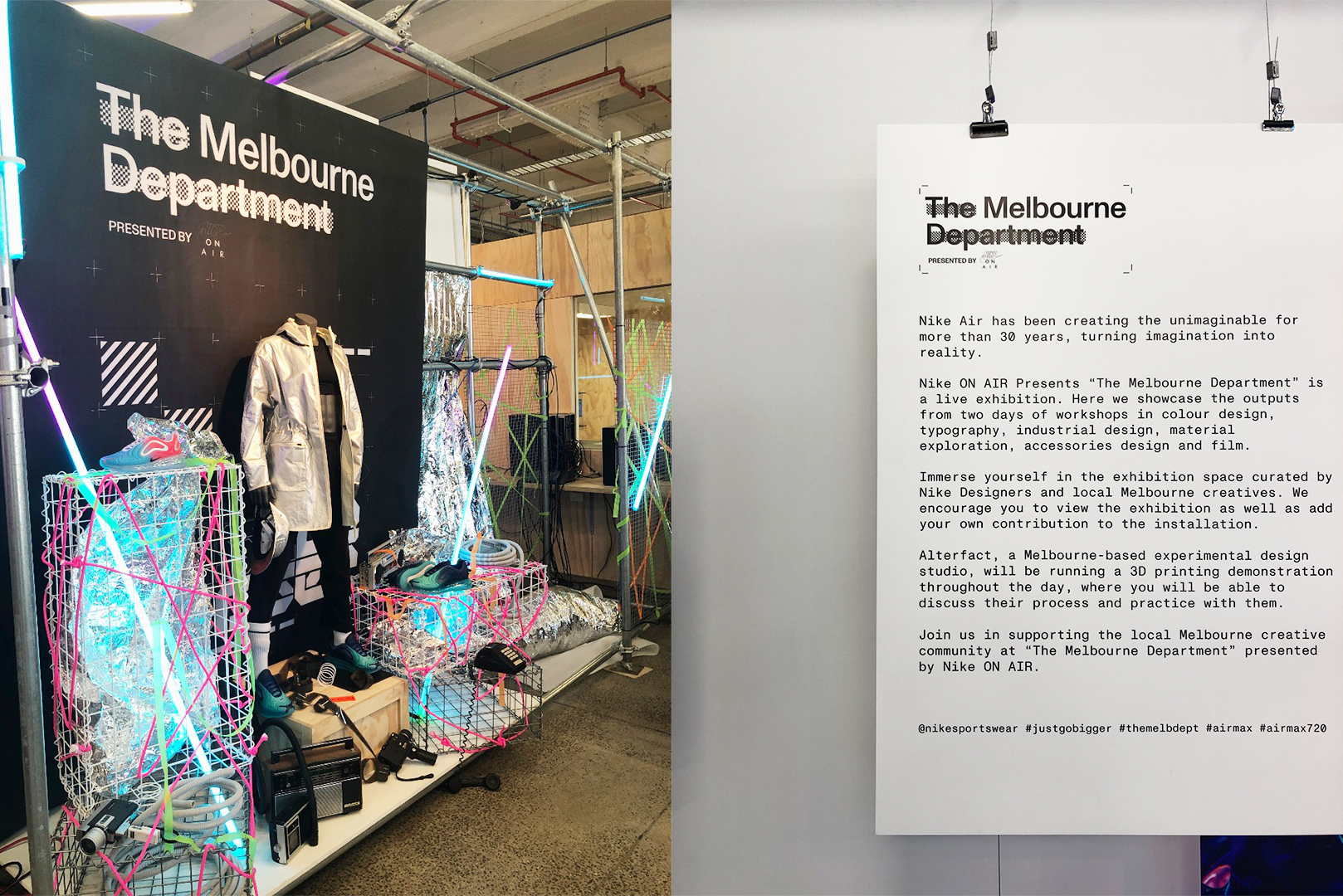
I can totally feel Nike’s energy and vision as I walked into the exhibition. Near the entrance, there was an installation with the sign that says, ‘The Melbourne Department,’ accompanied with a mannequin that showcased Nike outfit and a couple of Nike Air Max 720. “Nike Air has been creating the unimaginable for more than 30 years, turning imagination into reality,” was written on the label.
Even though the live exhibition was to celebrate Nike Air (the shoes), they showcased creative outputs across workshops in colour design, typography, industrial design, and material exploration. They also had workshops in accessories design and filmmaking that was running on the day.
I find it really interesting how Nike, a brand that is well known for its shoes and athletic wear, come up with this idea to bring together creatives from different industries to create something completely different from what is usually showcased on the shopfront. However, this all makes sense since Nike is a brand that is “dedicated to innovation” in the word of Phil Knight, Nike’s co-founder and current chairman.
The highlight of this exhibition was the fact that attendees could contribute to the exhibition. On this space, scattered there were old magazines, some Nike shoes that people had cut into pieces, a box filled with the famous swoosh patches, and other materials attendees could use to create whatever their heart desires, all works have to be inspired by Nike Air of course.
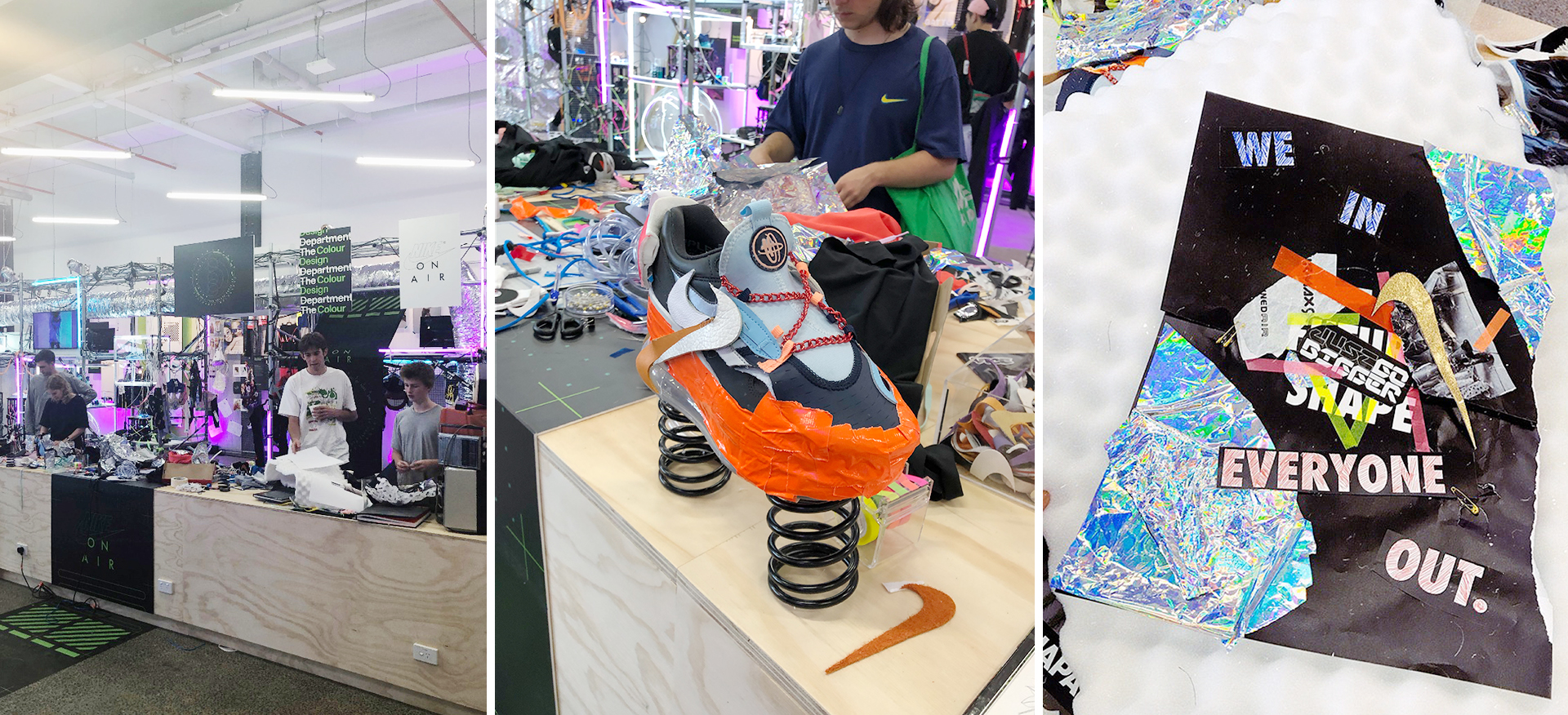
The whole ambience of the exhibition was firing one’s imagination. The displayed works had made me realise that you can do so much with creativity, especially when you are being surrounded by other creatives. I found the whole concept of this live exhibition and the pieces that were showcased, fascinating, as there were no limitations in what the participants could achieve during the workshops. This live exhibition is a great example of what Participatory Design is (later referred to as PD). Matthew Holt, on Transformation of the Aesthetic: Art as Participatory Design, stated that PD is “more concerned with ‘up-skilling’ its participants than being commercially focused on the production of objects.”
Previous statement by Holt confirmed that design is now interactive and participatory. I think the concept of live exhibition is more appealing to the masses because we like to feel as if we are a part of something, especially in today’s world where almost everything is made ready for us. This has something to do with ‘co-creation,’ as Holt, reciting Muller, stated that it is the increased awareness of audience participation in the co-creation of meaning, and the realisation that exhibitions are not so much overviews but exercises or laboratories in speculative modes of interaction. Will live exhibition take over the conventional museum exhibition in this creative industry? Do we desire collaboration or co-creation that much?
References:
Frisch, Aaron. The Story of Nike. North Mankato, Minn.: Smart Apple Media, 2004.
Greene, Jay. Design Is How It Works: How the Smartest Companies Turn Products into Icons. New York: Portfolio, 2010.
Holt, Matthew. “Transformation of the Aesthetic: Art as Participatory Design.” Design and Culture, Volume 7:2 (September 2015): 143-165.
McLean, Kathleen. “Do Museum Exhibitions Have a Future?” Curator: The Museum Journal, Volume 50:1 (January 2010): 109-121. Accessed April 10, 2019. https://onlinelibrary.wiley.com/doi/10.1111/j.2151-6952.2007.tb00253.x

 Design Practices
Hi Alma Santang,
My thoughts are about the exhibition is the Melbourne Department presents a well-designed, interactive and experimental live exhibition, and includes six workshops. I agree with McLean, in terms of the future museum policy. The museum might take a leadership role in developing new models for learning and critical thinking, so that people can inspire, engage, and reflect. The authors says that interactivity provides deeper connection with humanity, with beauty and with the natural world.1 Also, museums might be open places for everyone in order to reach wider mass.
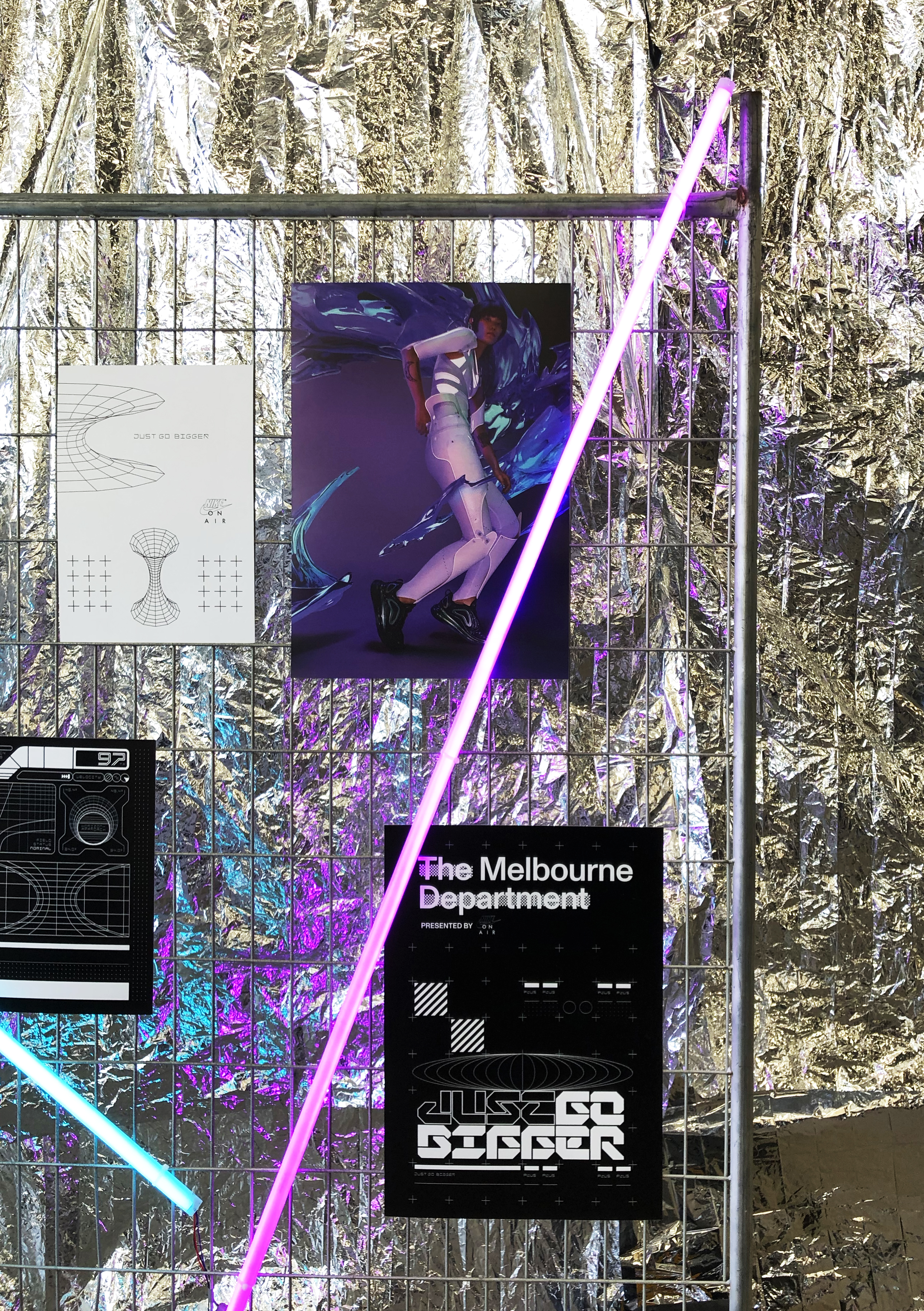
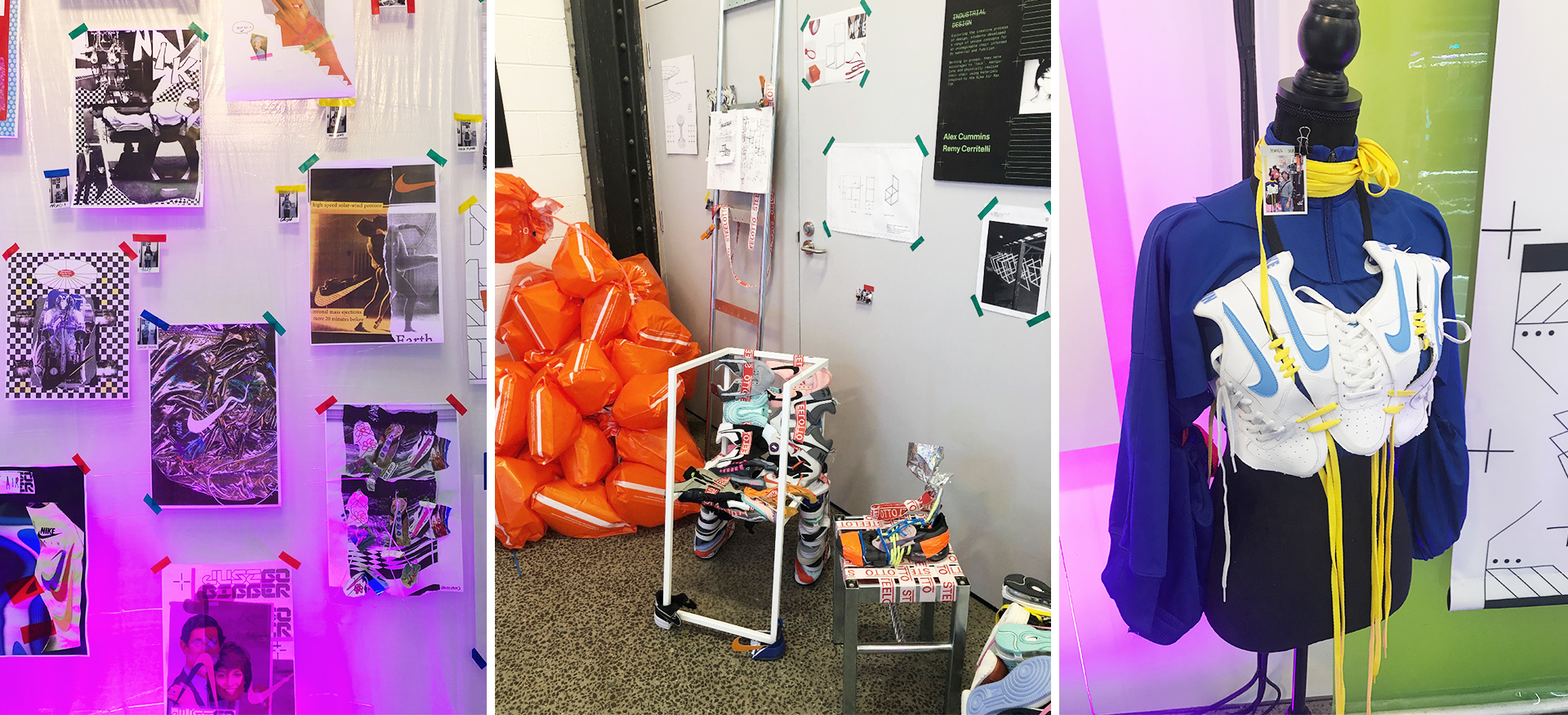
The visual presentation of posters and installation are based on 80’s themes, such as postmodernism and futuristic with neon colours. 80’s popular electronic devices and shoes components were utilised as an element at installations. Electronic devices give a nostalgic texture in installations while shoes components were used and combined as another material or design elements such as a chair. This shows how Nike Air became a beloved sub brand in 30 years in terms of shoes designs, textures, and material. People interpreted the idea of combination with another form.
Overall, the information that you mentioned in your review is informative. The connection between the future of museum policy and participatory design support the main point of your review. In the future, museum should focus on educative purpose, and be interactive places where people can continuously create artworks. The exhibition is a good example of how the future of exhibitions should be.
The additional link below is about international celebration of the iconic Air Max sneaker, if you are interested in a different presentation of exhibition design, including a wide range of mediums.
https://www.behance.net/gallery/37424755/Launch-of-Nikes-Air-Max-Con-2016
Thanks,
Gokcan
1. McLean, Kathleen. “Do Museum Exhibitions Have a Future?” Curator: The Museum Journal 50, no. 1 (2007): 109-21.
LikeLike