By Pin Chen Chen
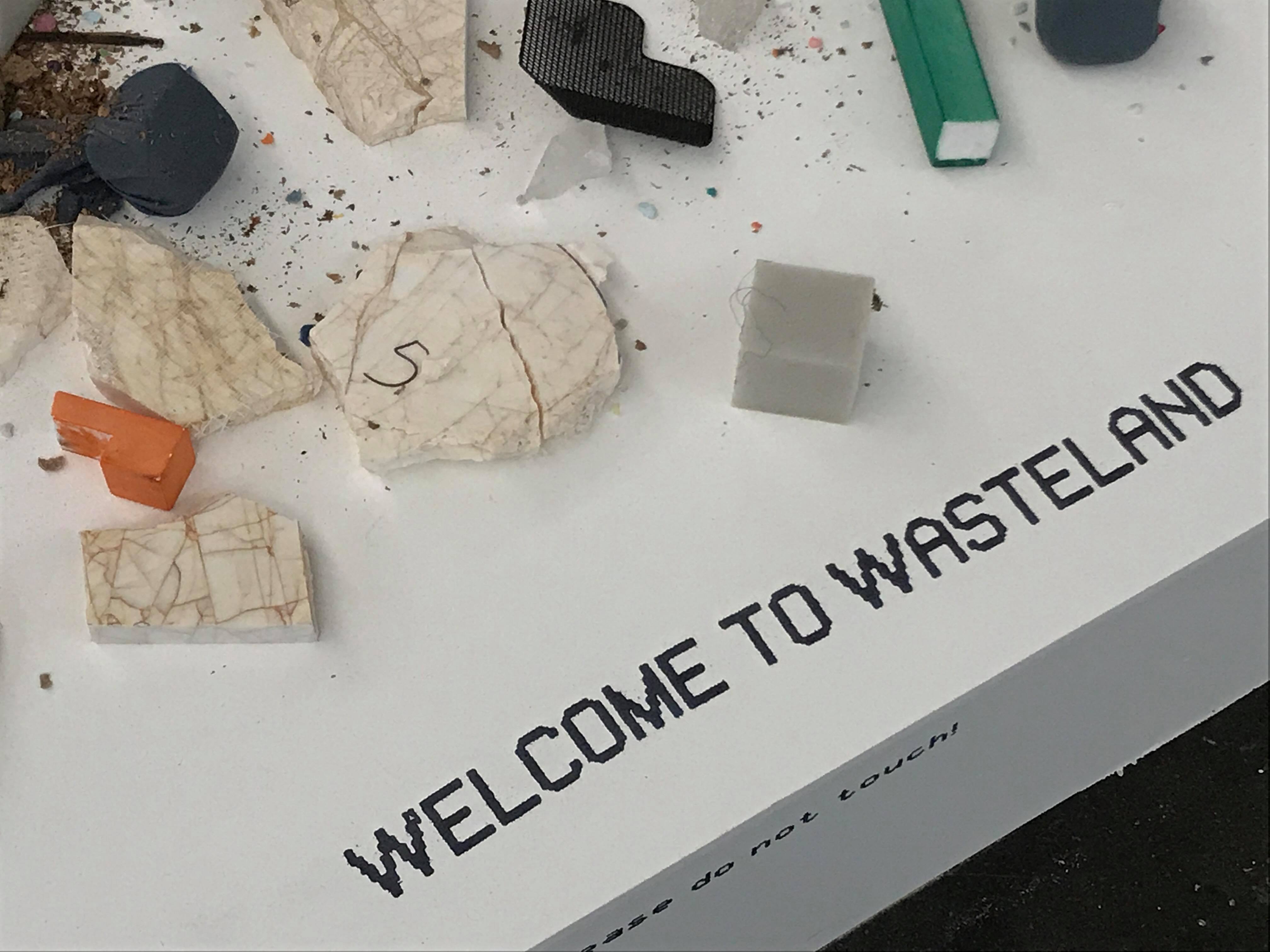
Melbourne design week 2019 has released with the theme called Design Experiments which has been curated under five thematic pillar. The one that I went to visit was called Welcome to Wasteland, it is under the category of The War on Waste, emphasises the problems within this world such as waste and pollution, which define the “moral issues of our time” from “ecosystems to individual consumer choices.”[1] Complicated situations need the designers to be innovative and considerate in order to transform our world.
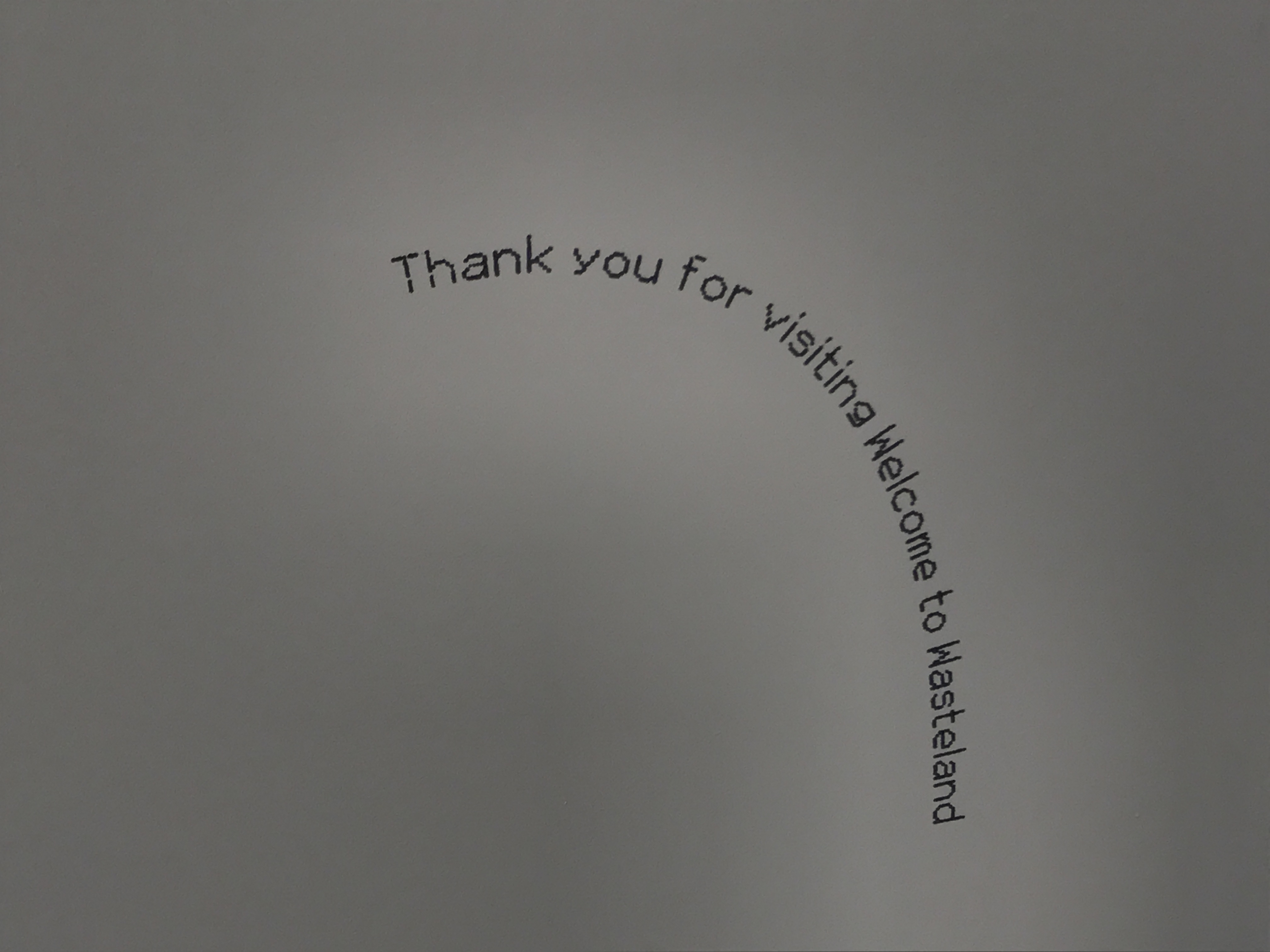
The exhibition was located in Collingwood with 31 experiments presented by more than thirty designers, not just industrial designers but also including architects, communication designers and more. This exhibition wants us to imagine all of the items that have been generated in our daily lives but where did they go? Exploring the use of waste materials where designers have transformed the waste into a new form. All of the details within this space have been well considered by the curators Dale Hardiman and Tom Skeehan, such as the labels that were used by the industrial handheld inkjet guns instead of typical industrial tools. Likewise, the website is run by a solar panel to generate less energy, which it also counts as waste. The designs were well displayed for visitors to feel the textures, the majority of them can be touched except for the centre piece(figure 1-3).
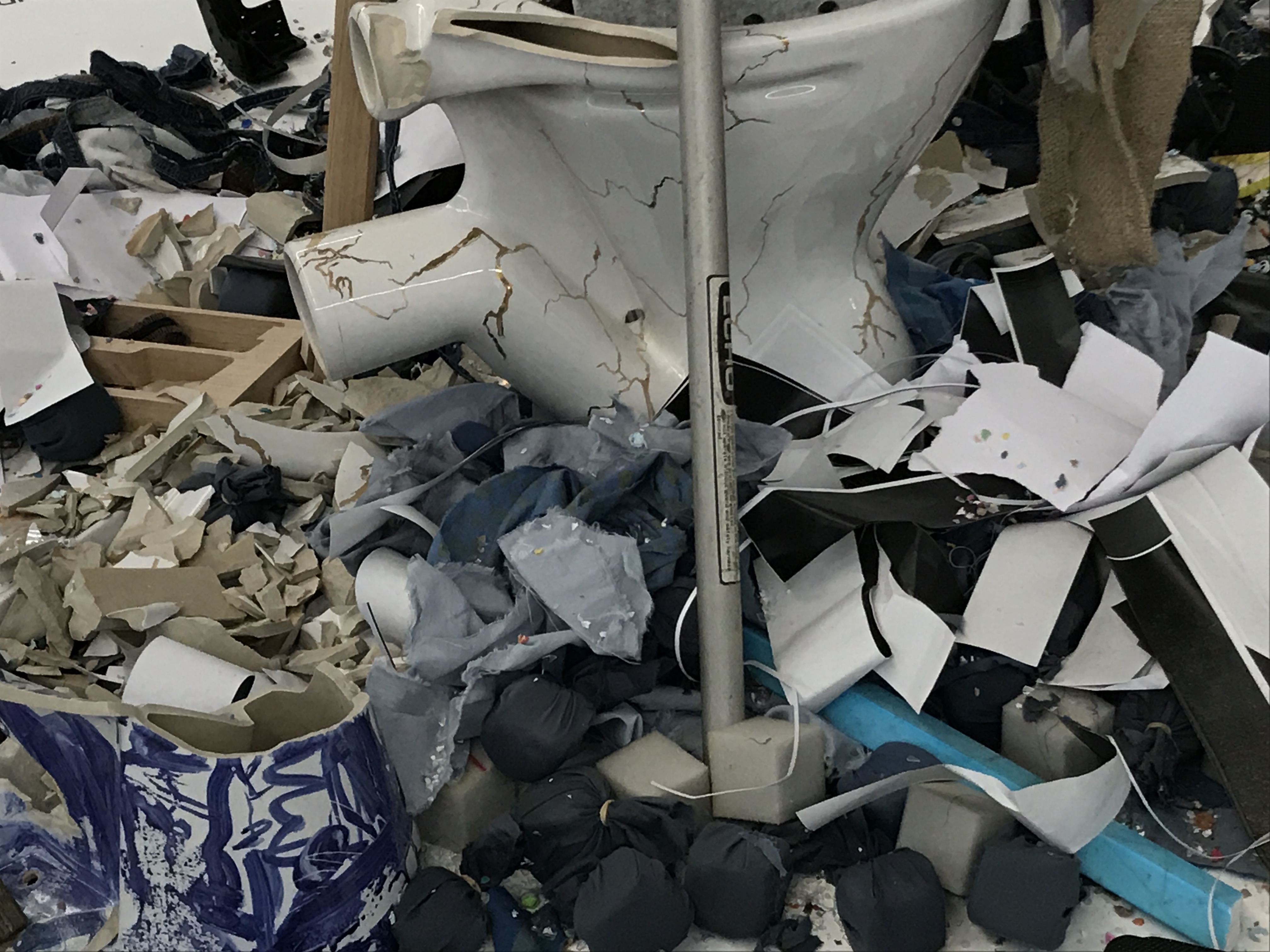
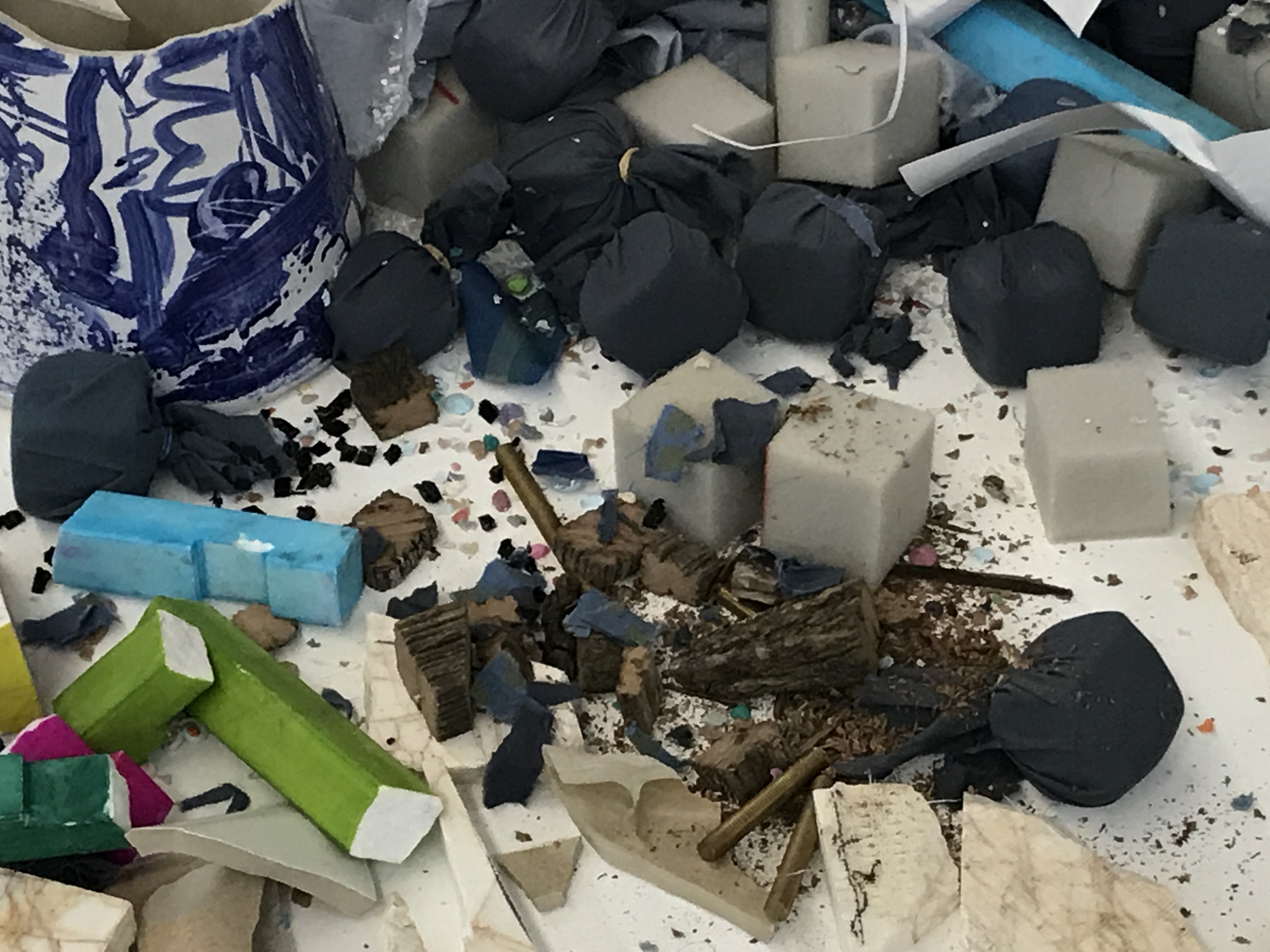
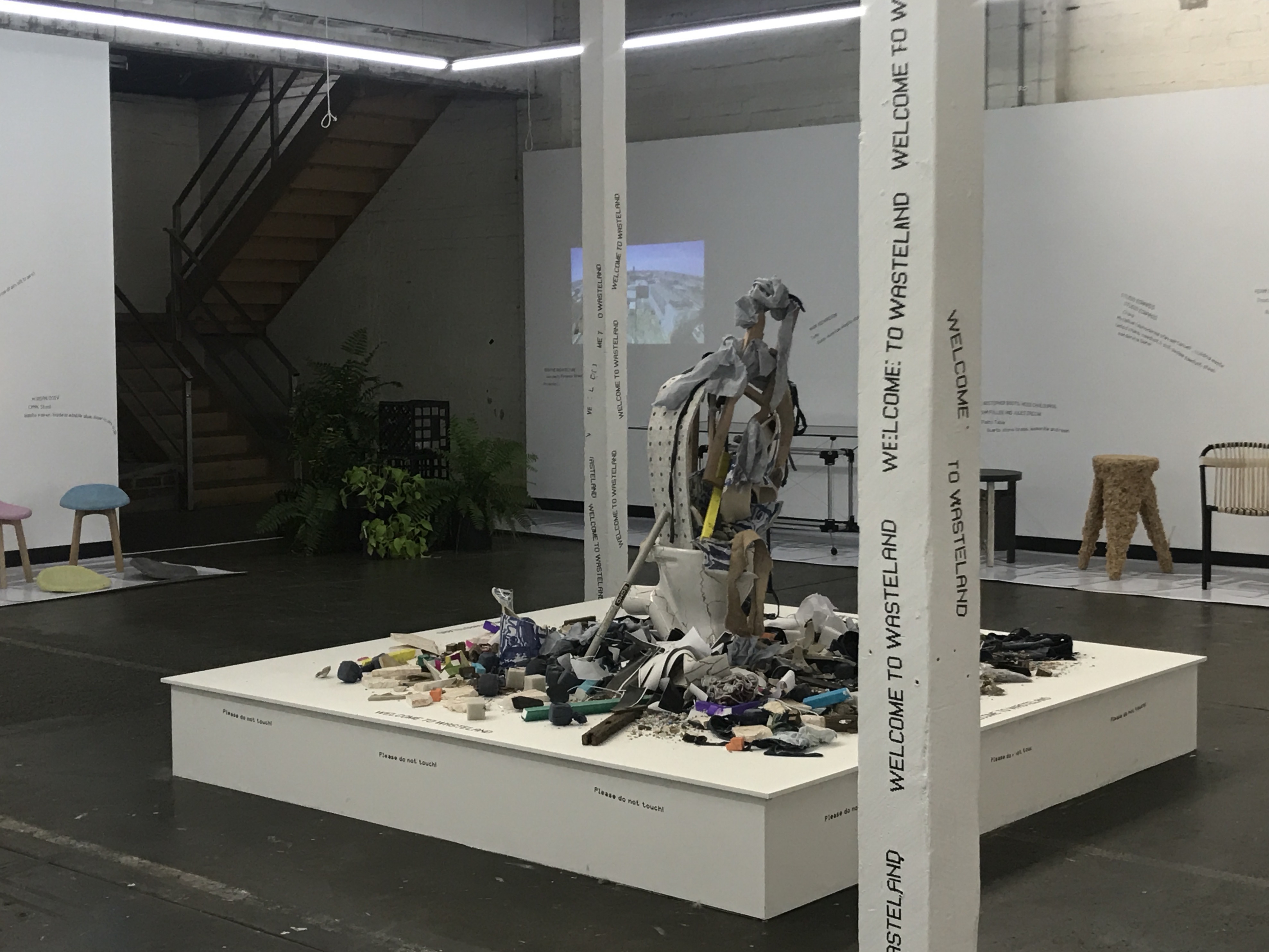
Left to right: Figure 1&2,
Details of the Centred piece,2019 ,2019, Figure 3, Interior space of Welcome to Wasteland,2019
The centre piece got me thinking the most. It has all the waste that came from all the projects in this show to put on display and ideally, the designers will come, pick it up and transform to something new in the future. This got me thinking of what should be considered within design, Clarke said “design without both material and social impact in the world would not be design.”[2] I can feel the intention within Hunt’s quote that we, as a designer, must act in a sense because for what we create, the outcomes reflect not just our society but also the world as a whole.
At the end of this visit, the staff and I were discussing about designer’s responsibility which she briefly said “I definitely think it is the designer’s responsibility to make sure they consider waste materials and take into account the end of the life cycle of these variety of designs.” Just like what the curators said “waste is just resources with a bad name” and proposing designers should have a sensibility to “discern good and bad forms”[3] of waste in order to repair, reuse or recycle. Also, the reading of critical design talks about the concept of future cones which suggested that “including the principle of speculative design thinking [would] raise awareness of design potential to influence the future towards the preferable.”[4]
This world is becoming a wasteland, and we, as designers or as a whole should raise awareness on how we perceive and create design in a more attentive way to protect this world for a better future.
References
[1] National Gallery of Victoria, “The War on Waste,” National Gallery of Victoria, local government, Melbourne Design Week, accessed April 8, 2019, https://www.ngv.vic.gov.au/melbourne-design-week/highlights/the-war-on-waste/
[2] Clarke, Alison J. Design Anthropology : Object Culture in the 21st Century. Edition Die Angewandte, University Press.(Wien ; New York: Springer, 2011), 36.
[3] Guy Keulemans, ”Welcome to Wasteland Exhibition, Catalogue Essay (Notes on the idea of a wasteland), Friends and Associates, manifesto, accessed April 8,2019, http://solar.friendsand.associates/manifesto
[4] Jakobsone, Liene. “Critical Design as Approach to next Thinking.” The Design Journal20, no. Sup1 (2017): S4259

 Design Practices
It seems that Welcome to Wasteland is an exhibition that every designer must see. I really like your approach to questioning the designer’s responsibility within this world. One statement that caught my attention is that said by Clarke, “design without both material and social impact in the world would not be design.” Sure, there are many definitions on what design is; however, I do resonate with this one the most.
Also, Welcome to Wasteland reminded me of one particular work by Studio Formafantasma that was exhibited in NGV Triennal (2018), titled Ore Stream, a project that you might also find interesting and relevant (please see here: https://www.youtube.com/watch?v=oPUcADGvlsA). This project is a two years research exploring e-waste, fastest growing stream of waste in the world. The work presents itself as an attempt to extract and recycle e-waste, while the goal is to offer a platform for reflection and analysis on the meaning of production and how design could be an important agent in developing a more responsible use of resources.
You also talked about resources in this post, which is the statement said by the curators, “waste is just resource with a bad name.” This statement made me question myself, as a designer, have I been using the right resources? Or have I just simply been adding “waste” to this society or the world as a whole? I do hope those who read this article will ask themselves the same questions since I think it is crucial for designers to question their design practice now and then, just to re-center, and re-connect with the world.
LikeLike
The entire blog article has been well structured. I love that you have provided with a range of information about this exhibition. It is great to see that you have also mentioned about the exhibition’s website, which is an evidence to show how designer has considered generating less waste from varieties of aspect, instead of just working with physical object. The image’s of centrepieces at the exhibition has got my interest to see what designers can transform them into in the future. I suggest you could write more about your thought, just on the centrepieces, such as where those materials might come from. From looking at your figure three in the blog, I could see some of the other works exhibited around the centre artwork, and I think you could also talk about what are those things. As you have mentioned that designers who presented experiments for the exhibition was “not just industrial designers but also including architects, communication designers and more”. It will be great to hear what kind of experiment architecture has created. I agree with your argument that as a designer we should consider what we could do by using our design skill to transform waste into something meaningful again. Providing with staff’s opinion on designer’s responsibility is good, to hear someone’s voice who might not come from the art or design field.
LikeLike