Written by Gokcan Selem
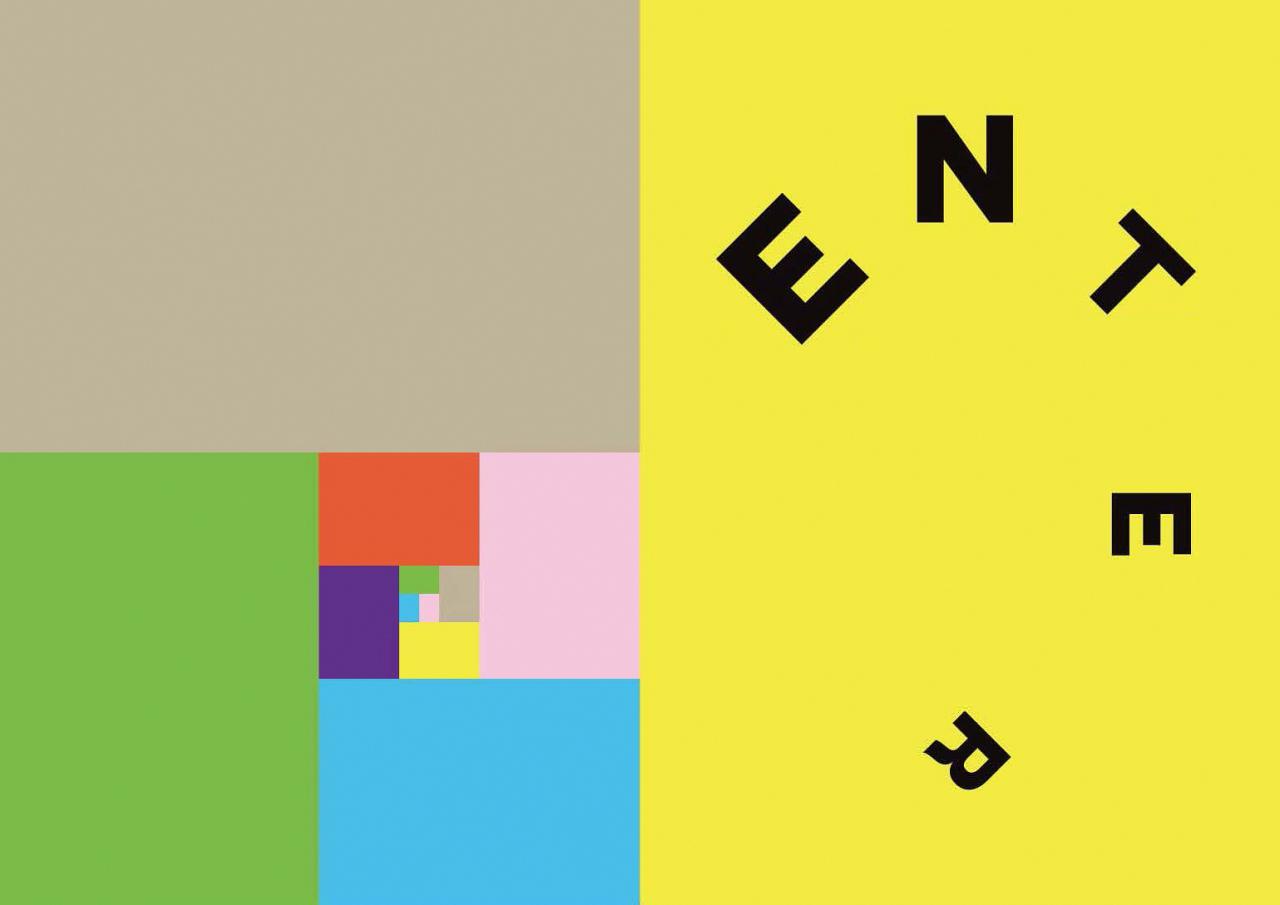
Exhibition ‘ENTER’ is presented by The Lyon Housemuseum Galleries in Melbourne between 16 March to 21 July 2019.1 The inaugural exhibition for the new Housemuseum Galleries presents newly commissioned works, introducing experimental contemporary art, architecture and design works.
The exhibition interprets the dynamic interrelationship between artworks, the museum space and viewers’ intervention with artworks, hosting leading Australian contemporary artists, including a wide range of mediums which are video art, sculpture, plastic art, assemblage, installation and tapestry.2
Each artist interprets the theme by posing the questions “what does it mean to enter the civic space of a city through a new cultural venue; how do audiences enter and explore the ideas inherent in the works of art; how does architecture mediate the experience of art and, more broadly, what does the term ‘ENTER’ evoke in the context of our contemporary political, social and cultural context”.3
One of the artwork is MMXIX by Ry David Bradley who creates digitally rendered paintings. He is internationally known as a famous Australian artist and one of the pioneers of new artistic theories and practices in terms of investigating digital technologies’ impact on contemporary art and societies.4
MMXIX is the combination of woven art (see figure 1), and digital screen printing and technology. The artwork is only fabricated in three colours as a RGB screen pixel construction in order to express digital characteristics. The texture of the artwork creates the illusion of a digital screen.5 In the creation of the artwork, artificial intelligence participated as a partner to process, position and to paint.6
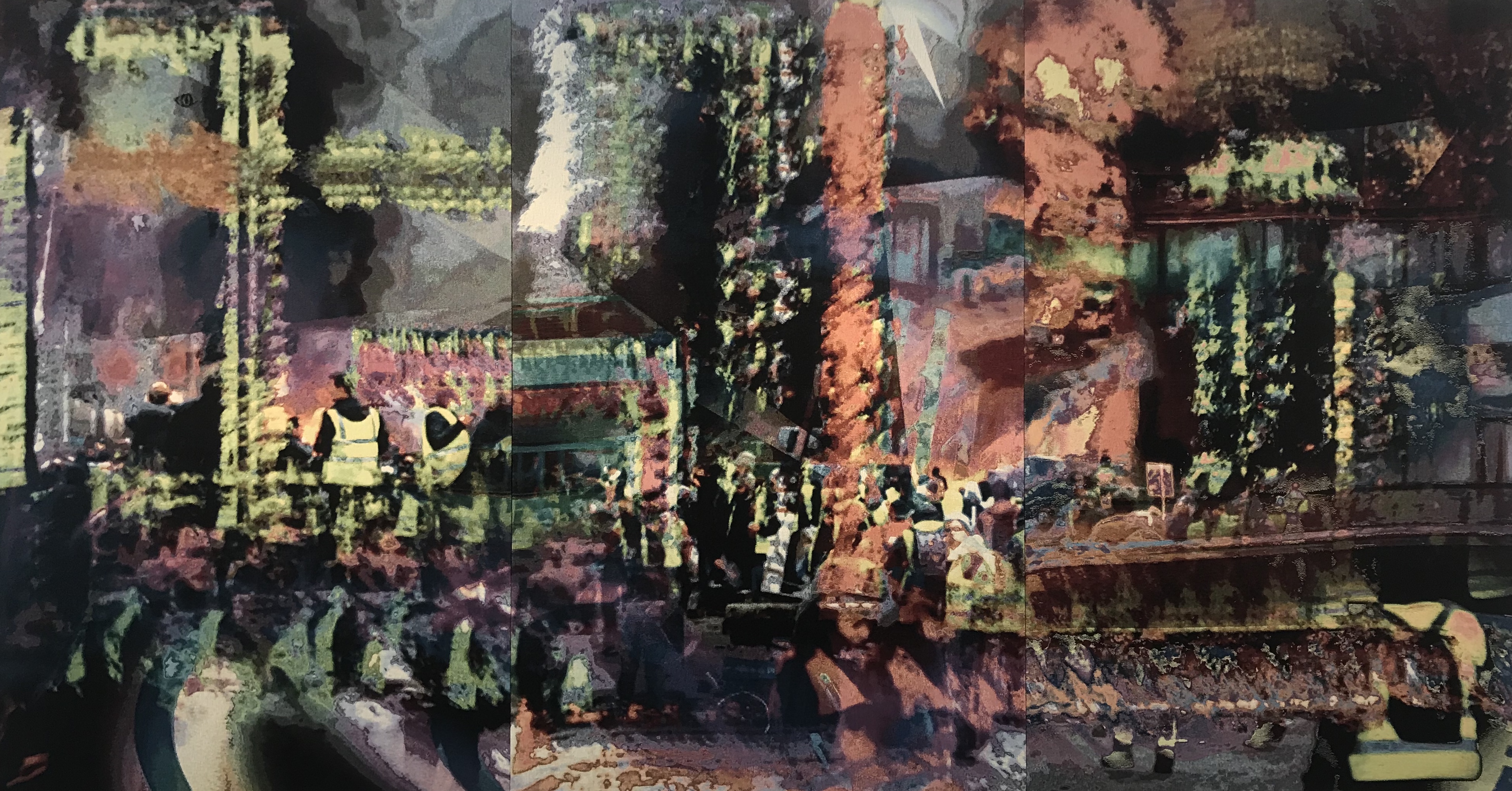
The artwork presents the political movement of yellow vests in France. At first glance, digital manipulation is highly recognisable on the image. Colours are over saturated, light is over exposed on the artwork which reduces details, and some parts of the artwork are blurry. This manipulation creates a chaotic environment which can be barely seen. The manipulation is like a burn effect on the image, which might suggest the violence of the conflict between the government and protestors. What was initially a democratic protest became an anarchic resistance because of the wrong government violence policy on streets.
In terms of collaboration with AI, according to the article Transformation of the Aesthetic: Art as Participatory Design, participation art explores technological developments to extend the capacity and effect of collaboration between human, science and art.8 One of the newest software developments is Artificial intelligence, which might contribute to creative processes through intelligence, insight, or inspiration.9 According to Weiner, “there is an active role between the piece of art and the viewer, and the viewer is the co-creator, transforming, re-creating and changing.”10 The new interactive collaboration between artists, viewers and AI can create a new form of aesthetic as participation art.
In conclusion, the exhibition ‘ENTER’ provides viewers a way to explore and engage with the space between them and artworks in museum. MMXIX represents a contemporary political tension in digital media medium. The aesthetic form of artwork is based on collaboration between artist and AI. These technologies may alter and advance the form of participation art without needing an artist as a participant in art and design, and the technological engagement with participatory Design will present a way of creating new practices.
__________________________________________________________________________________
1. Lyon Housemuseum, “Intro,” Corbett and Yueji Lyon, accessed April 10, 2019, http://lyonhousemuseum.com.au//intro.
2. Art Almanac, “‘ENTER’ Lyon Housemuseum’s Inaugural Exhibition,” Next-media, accessed April 11, 2019, https://www.art-almanac.com.au/enter-lyon-housemuseum/.
3. Lyon Housemuseum, ‘ENTER’ 2019. Wall text accompany the exhibition “The text shown at ENTER exhibition, Housemuseum Galleries: Lyon Housemuseum, 16 March – 21 July . Visited on 10 April 2019.
4. Sophia Contemporary, “Ry David Bradley,” Sophia Contemporary Gallery, accessed April 11, 2019, https://sophiacontemporary.com/artists/68-ry-David-Bradley/biography/.
5. Kathleen Linn, “Ry David Bradley: MMXIX,” Art Almanac, accessed April 11, 2019, https://www.art-almanac.com.au/ry-David-bradley-mmxix/.
6. The United London, “Immortalising the Digital Generation in Tapestry,” The United London, accessed April 12, 2019, https://theunitldn.com/blog/82/.
7. Ry David Bradley, MMXIX, 2019, Triptych, 330 x 645 cm, Lyon Housemuseum, Melbourne.
8. Matthew Holt, “Transformation of the Aesthetic: Art as Participatory Design.” Design and Culture 7, no. 2 (2015): 143-65.
9.Rama Allen, “Ai will be the Art Movement of the 21st Century,” Quartz, accessed April 15, 2019, https://qz.com/1023493/ai-will-be-the-art-movement-of-the-21st-century/.
10. Ken Weiner, “Can Ai Create True Art?,” Scientific America, accessed 15, 2019, https://blogs.scientificamerican.com/observations/can-ai-create-true-art/.

 Design Practices