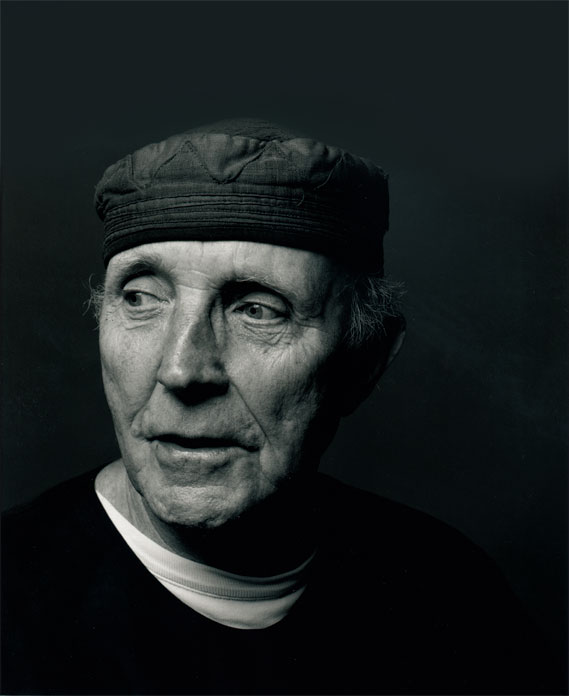
The Pursuit of a Future in Design: How Ken Garland has influenced my design practice

Ken Garland

I am currently working on a conceptual project for a studio unit in my third year study of communication design at MADA, under the title Pupils. The project is an instigation of a longing for discussion, questioning, answering and unity; inspired by the work of the designer Ken Garland, specifically his manifesto First Things First.

Garland initially published First Things First in London in 1964 across multiple international design journals – it was later revisited and updated again in 2000. Achieving significant acclaim and sparking controversial reactions from the international design community, Garland’s reflective thoughts on the purpose and practices of a designer called for a reformation. According to Rick Poynor (1999): “It is no exaggeration to say that designers are engaged in nothing less than the manufacture of contemporary reality” [1]. Garland challenged this very statement in his manifesto thirty years prior, and still does to this day; writing a follow-up response to his initial manifesto in 2012 entitled Last Things Last. Garland presents a final critique on his original philosophy with regard to the coming generations of designers and the future; how our relationships with “the ruthless exploiters of our skills”, or ‘clients’, should be viewed as a collaborative partnership with an opportunity to do good things [2].
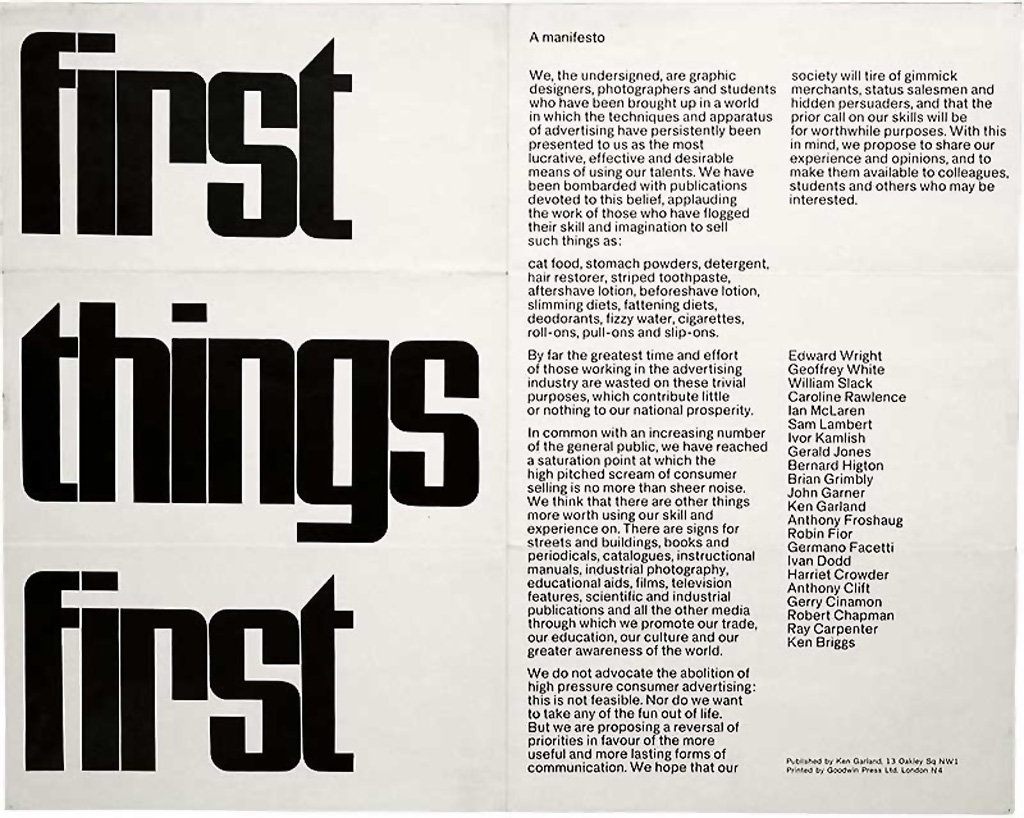
First Things First, 1964.
Ken Garland

In response to First Things First and Last Things Last, the purpose of my project is to investigate and propose a need for discussion about the journey from design degree to design career and the trials and tribulations faced along the way. Targeting design students within the MADA community and abroad, the outcome of the project sees to create an open and friendly forum environment for students to ask questions, discuss, debate and talk about a future in design; with aid of guest speakers and industry mentors to provide insight and experience. Pupils forum is a solution to a personal and colloquially need for an environment that builds thought, consideration and identification of our responsibilities as designers, and how we may address and better serve the community with our abilities.
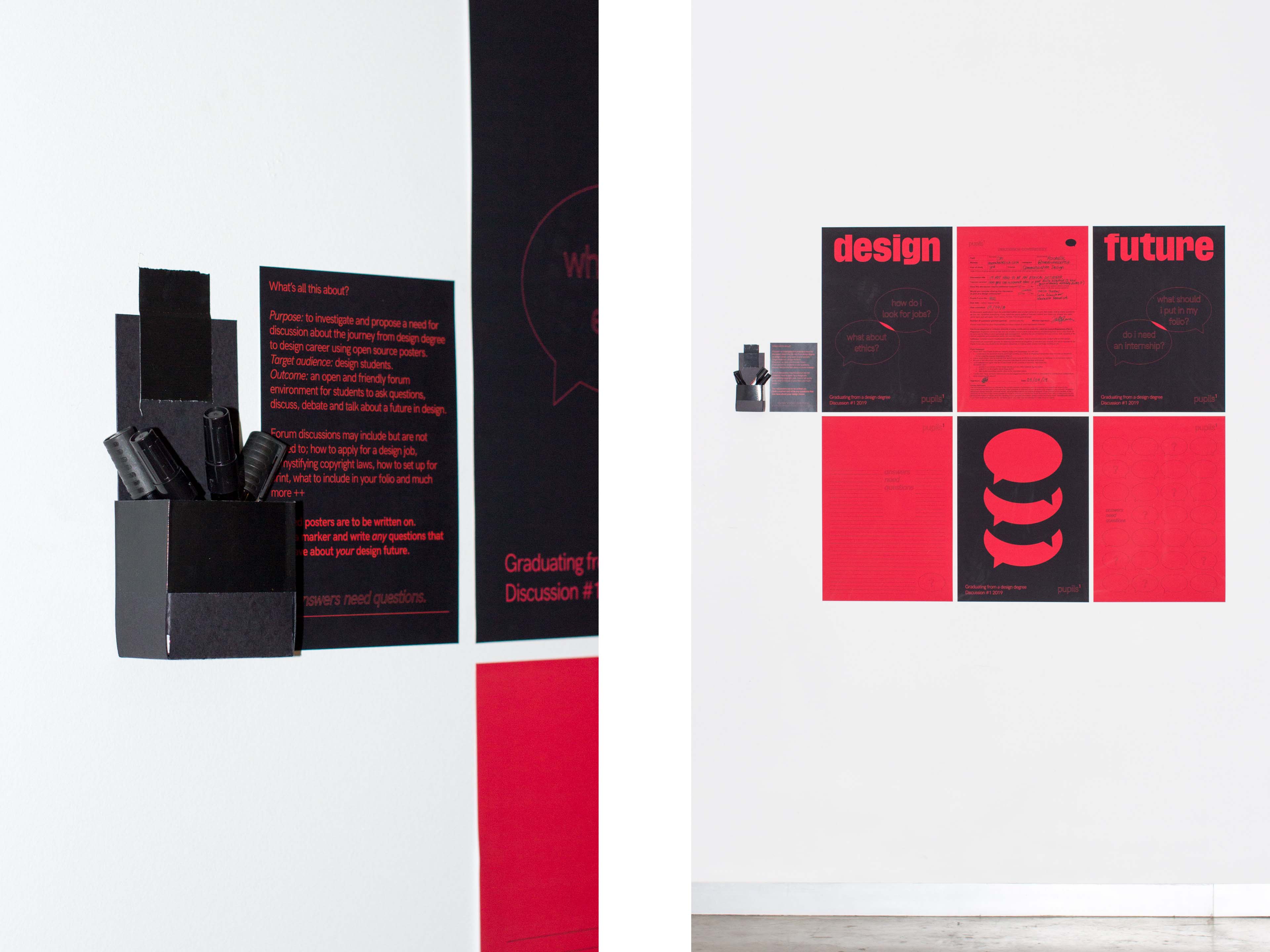
Pupils Forum Posters, open source 2019.
Photography and design by Alexander Rothmeier

Through an array of ‘open source posters’ I have created a direct link of interaction between the supposed Pupils forum event, specifically it’s discussion content, and the design community within MADA. Black markers are provided beside the posters, to enable and encourage students to write any design related questions or thoughts they have onto the red posters. These questions are to be then transcribed into discussion material to be brought to attention at the proceeding Pupils forum.

Similarly to the concepts of participatory design presented by Matthew Holt in his writing Transformation of the Aesthetic: Art as Participatory Design, the Pupils poster series aims to work as both an ‘incomplete’ participatory design (PD) tool that involves input from a community audience in order to achieve an ‘informed’ outcome: the forum discussion.  “The basic definition of PD is that it involves people in the design process who have a stake in the outcome of the design from the very beginning, rather than being an end-user or a temporary source of feedback in the development stage” [3].

According to Jamer Hunt: “Design without both material and social impact in the world would not be design; designers must act in the sense that their outputs change the facts on the ground” [4]. I as a design student benefit from the incite of my colleagues, their questions and answers, and the guidance from my academic superiors – the Pupils project is a vessel to achieve challenges such as those posed by Hunt, and ultimately, that of the philosophies of Garland; it provides an opportunity to learn and to grow.

References

[1] Poynor, Rick. First things first Revisited. Emigre 51. (1999).

[2] Garland, Ken. Last Things Last. Eye: The International Review of Graphic Design. 21, no. 83. (2012): 79.

[3] Holt, Matthew. “Transformation of the Aesthetic: Art as Participatory Design.” Design and Culture 7, no. 2 (2015): 65-143.

[4] Hunt, Jamer. Prototyping the social: temporality and speculative futures at the intersection of design and culture. (2011): 35-36. Cited in Clarke, Alison J. Design Anthropology : Object Culture in the 21st Century. Edition Die Angewandte, University Press. Wien; New York: Springer, 2011.

Also

Jakobsone, Liene. “Critical Design as Approach to next Thinking.” The Design Journal 20, no. Sup1 (2017): 4253-262. Fry, Tony. Design Futuring: Sustainability, Ethics and New Practice. Australian ed. Sydney: University of New South Wales Press, 2009: 2-46.
Fry, Tony. Design Futuring: Sustainability, Ethics and New Practice. Australian ed. Sydney: University of New South Wales Press, 2009: 2-46.
After Nature: A Call for Change

By Alexander Rothmeier

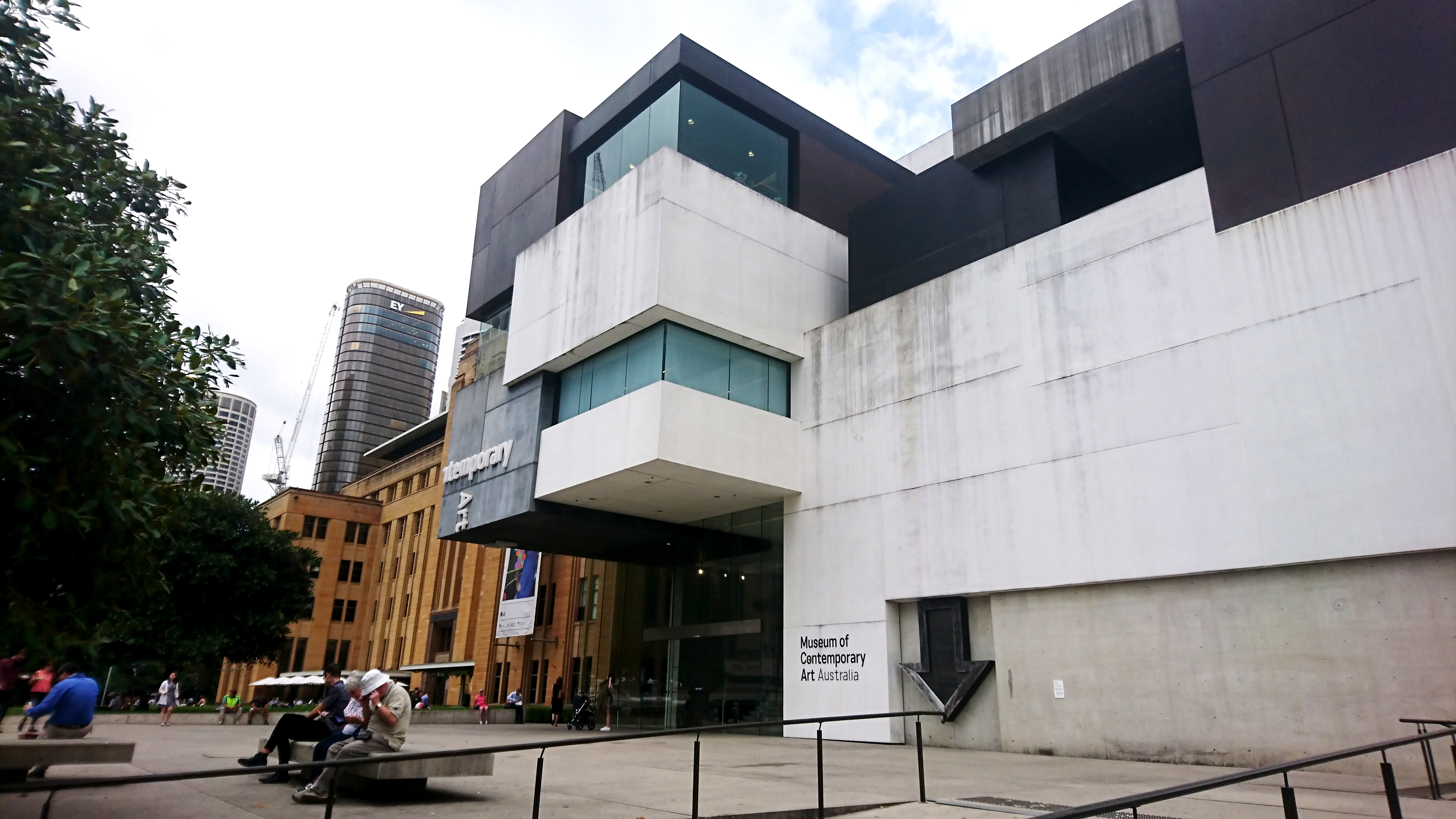
I recently made a trip up to Sydney for a weekend away. It’s a place I don’t often visit so I was excited to check out the art and design scene while I was there. After some internet searching I found myself at the Museum of Contemporary Art (MCA), at an exhibition by Australian artist Janet Laurence. Initially intrigued by the building’s facade, I was sure that whatever was inside the MCA would be something special – I was right.

Figure 1: The Museum of Contemporary Art, Sydney Australia. Personal photograph.

After Nature is a survey exhibition that encompasses Laurence’s expansive career as a multidisciplinary artist, showcasing her works from the early 1990’s up until the present day. Through her paintings, photography, sculpture, installations and videos Laurance encompasses the beauty and fragility of nature, while primarily seeking to provoke the key theme of Anthropocene [1]. A sense of reflection radiates throughout each piece, a call to action in the eyes of Laurence: “We are in a period of the Anthropocene where we are thinking, how do we live on our planet now?” [2]

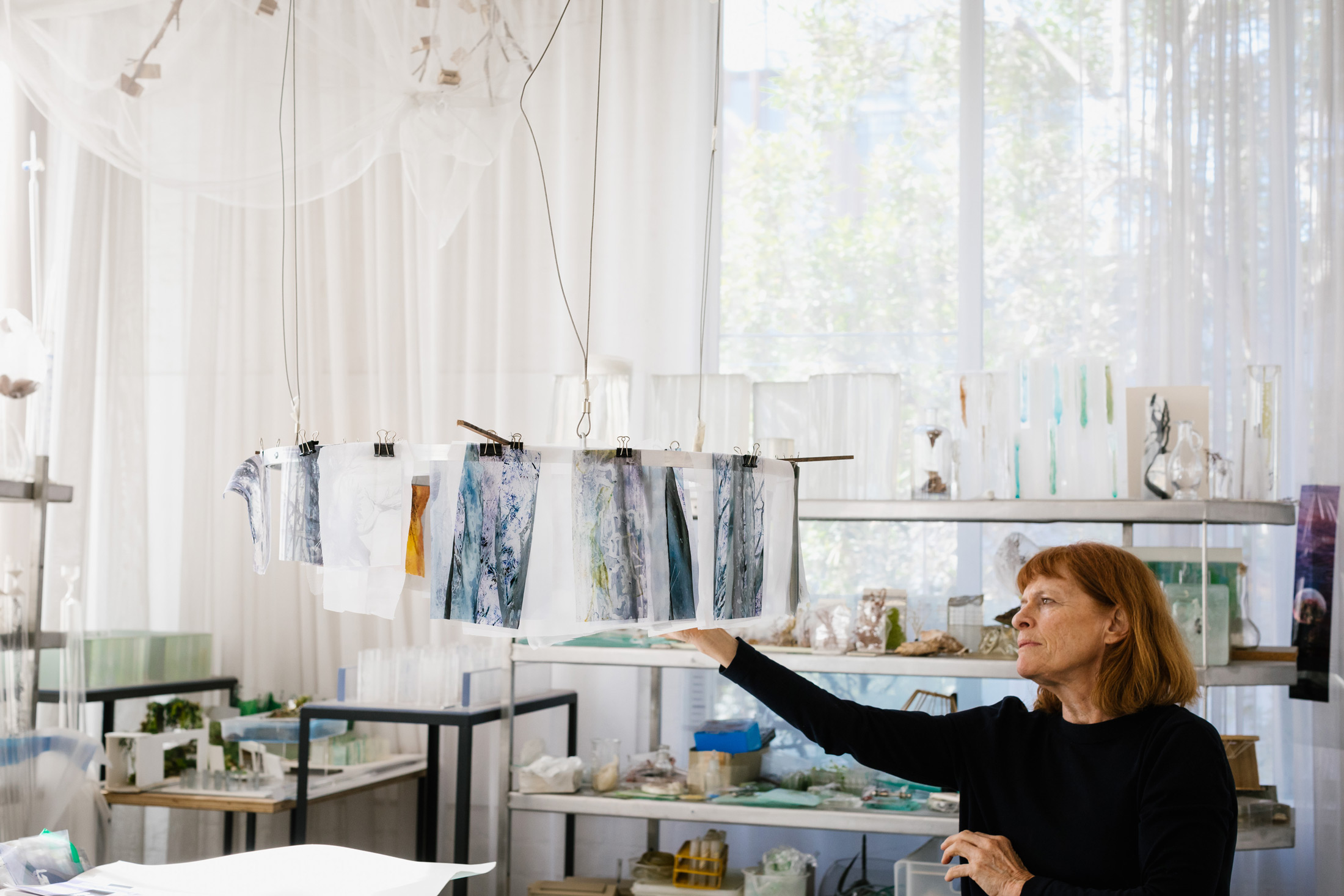
Figure 2: Janet Laurence in her Sydney studio.
Photograph: Jacquie Manning

Laurence’s use of raw materials such as minerals, oxides, plant matter and taxidermy in conjunction with medical and scientific instruments and vessels portrayed a wunderkammer experience and a strong sense of intrigue within me. I was set adrift through the gallery space, much like the roots of a tree spreading under the surface; each piece of art a breath of fresh air within an enclosed space. Vertical compositions and natural biological forms drew the organic elements of Laurence’s works back toward the earth and out of the clutches of the stark and sterile white gallery walls.

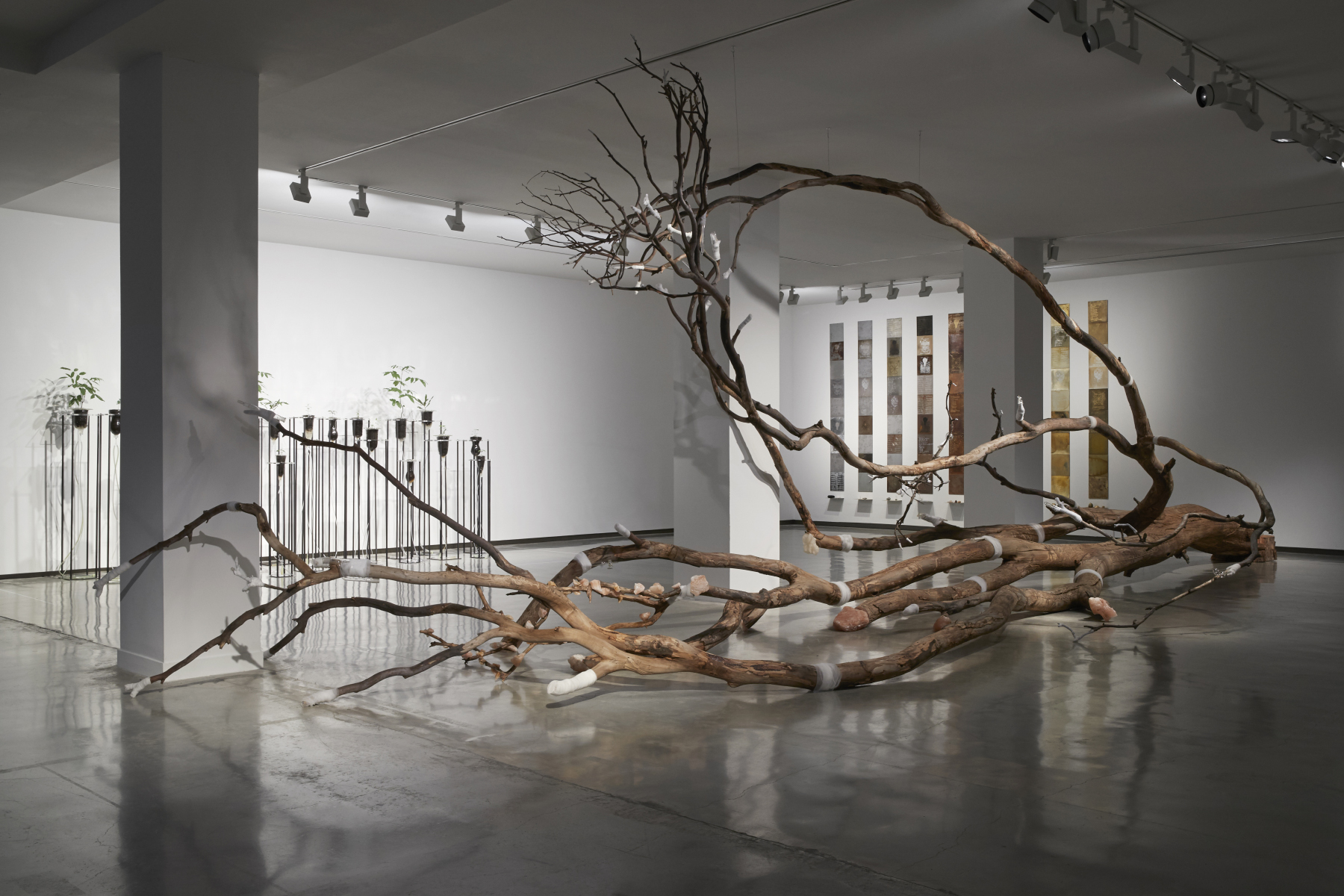
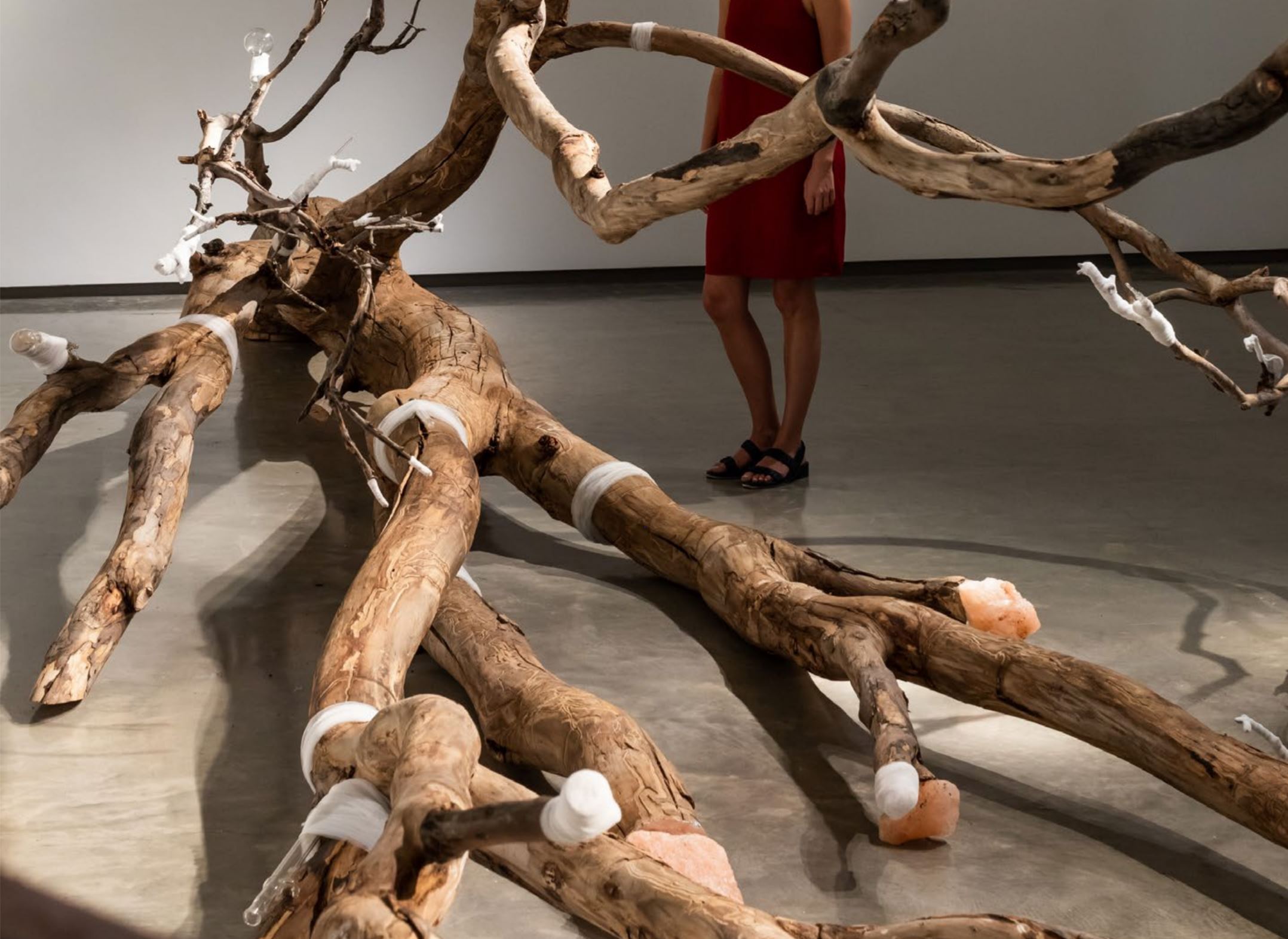
Like a lifeless specimen placed upon a steel operating table, Laurence’s work Heartshock  2008/2019 (figure 3, figure 4) spreads itself over the menacingly cold polished concrete floor in an entanglement of browns and white-pink polka dots. Heartshock consists of a deceased gum tree with a network of slithering branches that are covered in white bandage and rock salt. Some of the branch tips are capped over with bandage; other limbs of the tree are hooped with the soft white material, like a patient with a damaged arm. Chunks of pink Himalayan rock salt teem from the trees pores in many locations.

Figure 3: Heartshock 2008/2019 (After Nature), gallery view, MCA, Sydney, 2019. Photograph: Zan Wimberley
Figure 4: Heartshock 2008/2019 (After Nature), (detail),
Photograph: Jacquie Manning

Without an armour of bark to protect itself the idle tree sits exposed in its most bare form; revealing a sporadic surface inscription of curving impressions, ‘drawings’ describes Laurence, created by burrowing insects [3]. The tree had died due to drought and was extracted by Laurence from the Australian Botanic Garden in Mount Annan New South Wales after it was deemed necessary for it to be cut down.

Laurence attempts to create a sense of empathy within the audience through her incorporation of human related objects. The bandage and rock salt crystals appear to be healing the tree in a medical, mythological and spiritual manner – as if it were human. This collaboration of materials evokes familiarity and in turn breeds sympathy for the tree. After some contemplation I found myself reflecting upon my own path in life; one of a designer, and how I can navigate the ‘post-natural’ world Laurence had visualised in a sustainable and responsible way. I was left questioning how I can critically and ethically approach both my practice and ideology of design.

Philosopher of design and sustainability Tony Fry explores the concepts of ‘defuturing’ in his texts; a perception of design that diminishes the future through an inconsiderate outlook of the present [4]. Fry suggests a need for radical change amongst the design industry where “designers place the current needs of the market in second place to the politico-ethical project of gaining sustainability” [5]. In order to achieve this, Fry states that design “must be understood anthropologically” [6].

After Nature has instilled and deepened my concerns about the contributions that the design world makes to our Anthropocene time-frame; with the constant marketing of consumer products and promotion of unsustainable capitalist philosophies. The question remains as to if we as designers can work hand-in-hand to better keep our precious earth from degrading beyond reach. We have the power to communicate; we have the power to unite our global community. “Many of us now feel we must use whatever weapons we have to raise the alarm for extinction and ecosystem depletions. Laurence’s new exhibition sounds that warning bell” [5].

References
[1] Kent, Rachel. Curatorial Essay of After Nature: Janet Laurence. Sydney: Museum of Contemporary Art Australia, 2018. Accessed April 5, 2019. https://www.mca.com.au/stories-and-ideas/after-nature-janet-laurence/

[2] MCA Digital Media Department. “Janet Laurence: After Nature (behind the scenes)” (online video). Published October 22, 2018. Accessed March 25, 2019. https://www.mca.com.au/artists-works/exhibitions/829-janet-laurence/.

[3] Ibid.

[4] Hunt, Jamer. Prototyping the social: temporality and speculative futures at the intersection of design and culture. (2011): 35-36. Cited in Clarke, Alison J. Design Anthropology : Object Culture in the 21st Century. Edition Die Angewandte, University Press. Wien; New York: Springer, 2011.

[5] Fry, Tony. Design Futuring: Sustainability, Ethics and New Practice. Australian ed. Sydney: University of New South Wales Press, 2009: 2-46.
[6] Ibid.

[7] Gibson, Prudence, and University of New South Wales.  Janet Laurence: After Nature sounds an exquisite warning bell for extinction. The Conversation. Accessed April 5, 2019. https://theconversation.com/janet-laurence-after-nature-sounds-an-exquisite-warning-bell-for-extinction-112942