Written by Carla Romana
Escher x Nendo Between Two Worlds held at the National Gallery of Victoria is an exhibition which started from December 2, 2018 until April 7 2019. This exhibition features two magnificent creators – M. C. Escher and Oki Sato/Nendo. The overall idea of the exhibition was to create a space where balance and harmony works between two forces – art and design. Nendo wanted to re-create Escher’s idea of making two dimensional things that are inspired by three-dimensional things, by doing the opposite in the gallery space [1].
After looking around the exhibition, it became clear that there was a connection between the Escher’s work and Nendo’s design space. Nendo created the space around Escher’s work. It gave individuals the chance to see two dimensional work but transformed into three dimensional forms through the gallery space. Each room was different, and conveyed a different mood. Although it was intentionally black and white just like Escher’s magnificent work, it created solitary but also harmony.
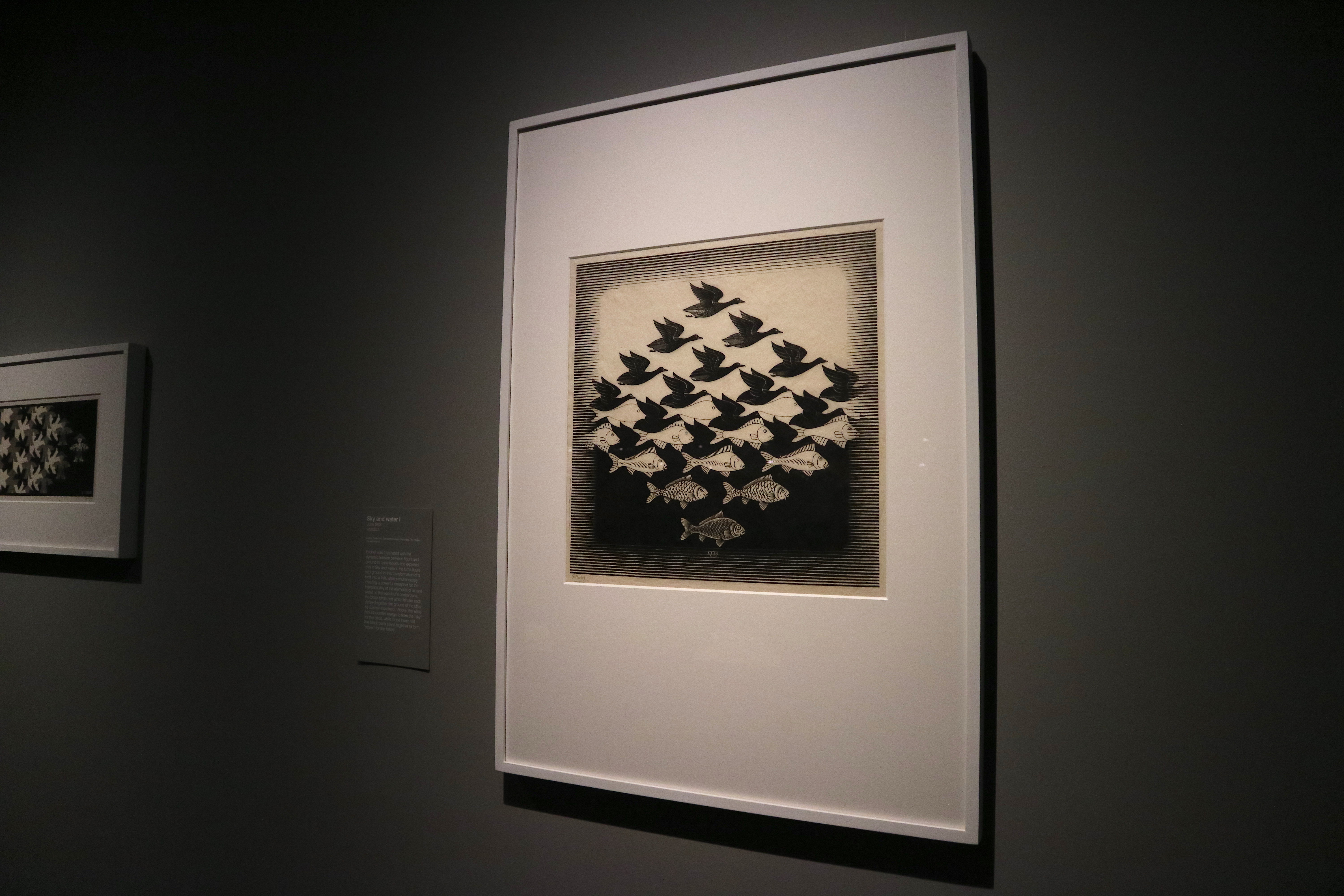
Escher explored the Regular Division of the Plane and was particular obsessed with the idea of patterns interlocking shapes to create a bigger picture. Escher was able to ‘achieve a seamless metamorphosis of form in his images, creating an expression to his imaginary world of ‘inner visions’ [2].
Escher’s ‘Sky and Water’ (Figure 1) woodcut artwork shows the idea of his theory – the creation of tessellations morphing from one state to another. Escher connects the bird and the fish as well as the sky and the water. I found it interesting that both are opposites however they both relate to one another. Escher was fascinated by the idea of the figure and ground in this transformation whilst simultaneously creating a powerful metaphor of the elements of the air and water [3].
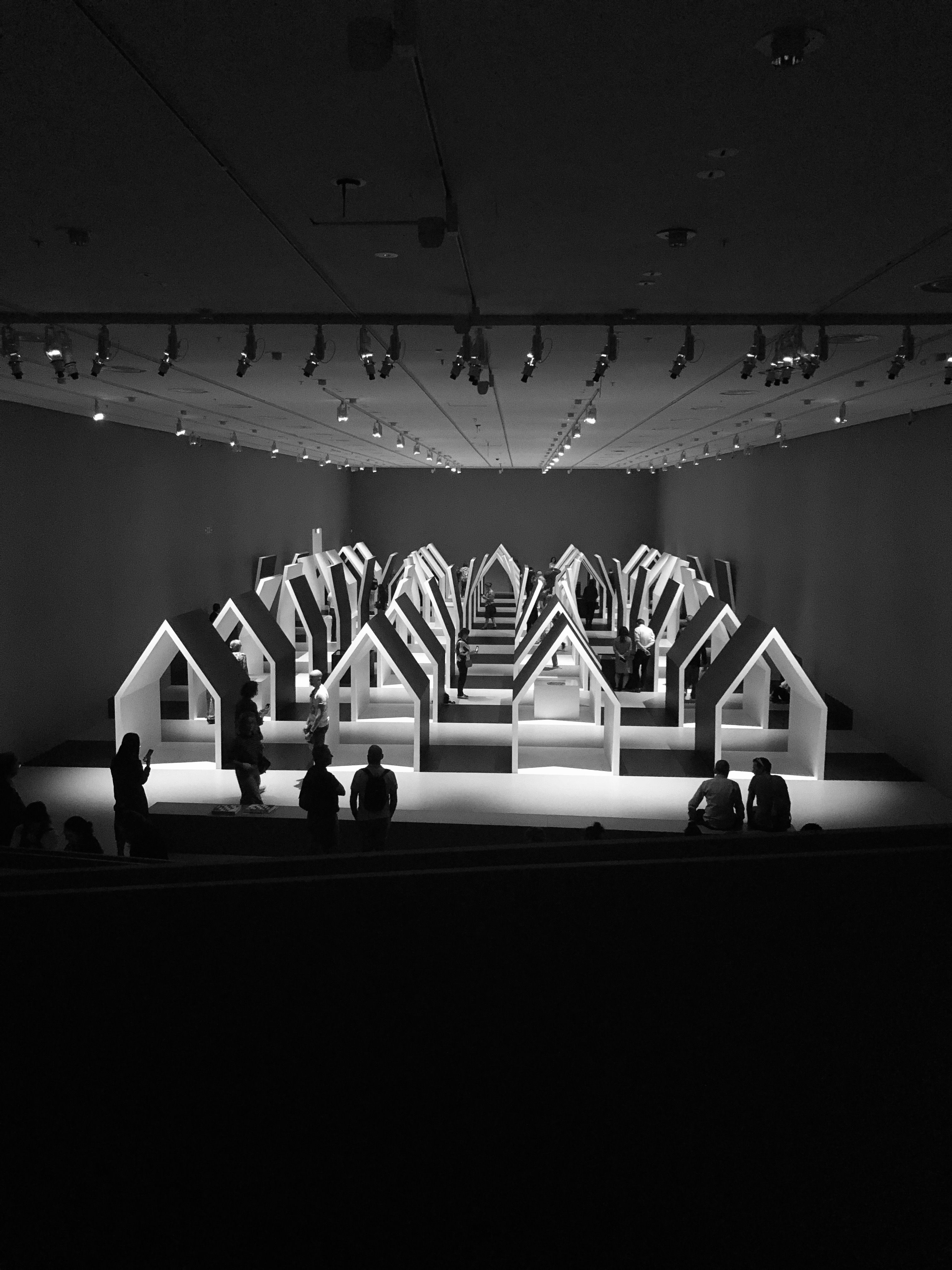
Figure 2, Photo I took in the NGV, Nendo, Transforming House, 2018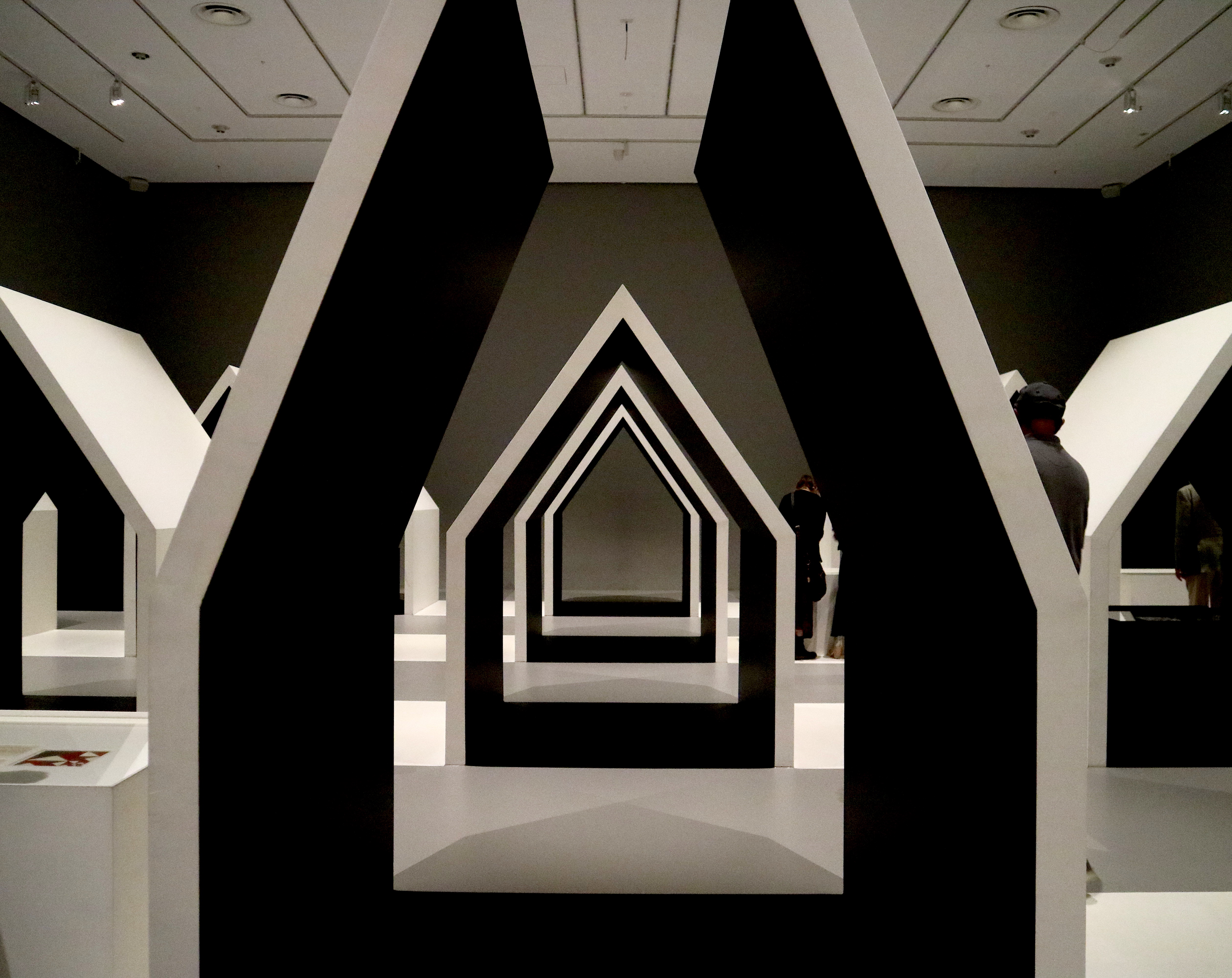
Figure 3, Photo I took in the NGV, Nendo, Transforming House, 2018
Nendo’s ‘Transforming House’ (Figure 2 & 3) installation design [4] was the space that was surreal compared to the photos that I’ve seen on Instagram. The installation gives individuals a chance to be within the space and be a part of artwork. The roofs of the house gradually open up and out, as if turned inside out [2]. From the centre of the installation, you are able to experience the roof unfold and turn into another form of a house towards the end. Nendo’s design gives an illusion of being able to step into a two dimensional picture. Viewers are able to wander around the space and discover Escher’s works as they immerse themselves within the installation.
Being within the space, and walking into the room and seeing the installation from a higher perspective, hearing the people in awe gave me the thought that this exhibition was a success. Not only were you able to just see the artworks but you’re able to interact with it. Comparing both ‘Sky and Water’ to ‘Transforming House’ people are able to see the relation between two and three dimensional things. The split gallery space present two different viewing experiences, allowing individuals to become immersed with the atmosphere.
[1] Escher x Nendo | Between Two Worlds, Audio Transcript, accessed April 11, 2019, https://www.ngv.vic.gov.au/wp-content/uploads/2019/03/NGV_EXN_AUDIOTRANSCRIPT.pdf
[2] “Escher x Nendo | Between Two Worlds, National Gallery of Victoria (NGV), accessed April 10, 2019, https://www.ngv.vic.gov.au/exhibition/escher-x-nendo-between-two-worlds/
[3] Escher’s ‘Sky and Water’ (June 1938) woodcut artwork
[4] Nendo’s ‘Transforming House’ (2018) installation design
[5] Escher x Nendo | Between Two Worlds, NGV Gallery Book, 105-109
[4] Oki Sato Interview, Escher NGV, accessed April 10, 2019, https://www.dezeen.com/2019/01/17/video-interview-oki-sato-nendo-mc-escher-national-gallery-victoria-movie/
 Design Practices