By Jenny Lam
Entering the National Gallery of Victoria (NGV), the line for Escher X Nendo was consistently prolonged. The exhibition featured many extraordinary arts of the Dutch Artist M.C Escher. Consisting of many iconic images during the twentieth century, there was an overall of 160 prints and design. Nendo comes from the name of the Japanese Design studio where the work was commended.
Walking around the exhibition there were many designs big and small which captured the eyes of many around. Putting into perspective of the eye, it involved movement to capture the image of the artworks by the designer. Including animations, it was very lively and intriguing, making it playful to the viewers.
This isn’t the first time the NGV has innovated past the standard “white cube” exhibition model. The world has accepted and legitimized new forms of art and the situation where new forms of design are appearing as rapidly as art movement. [4]
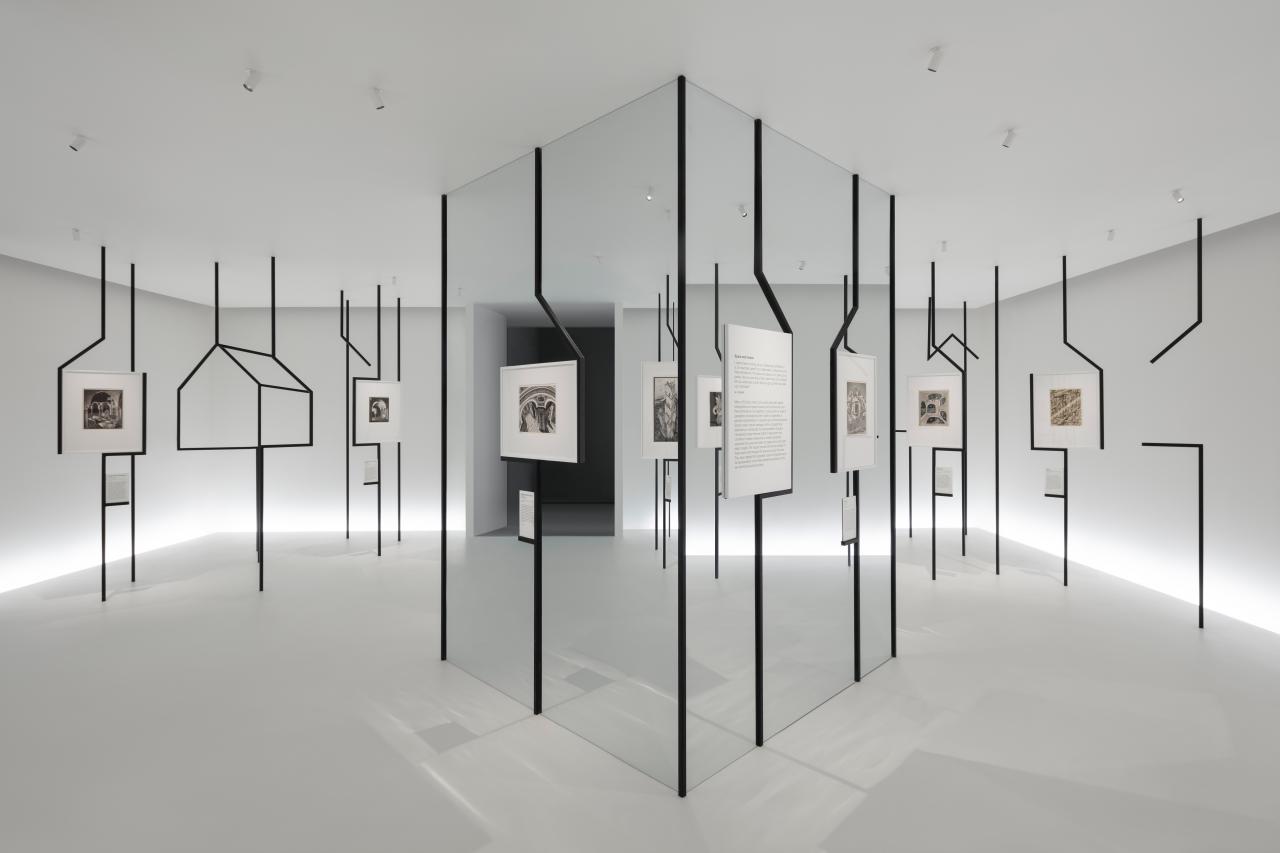
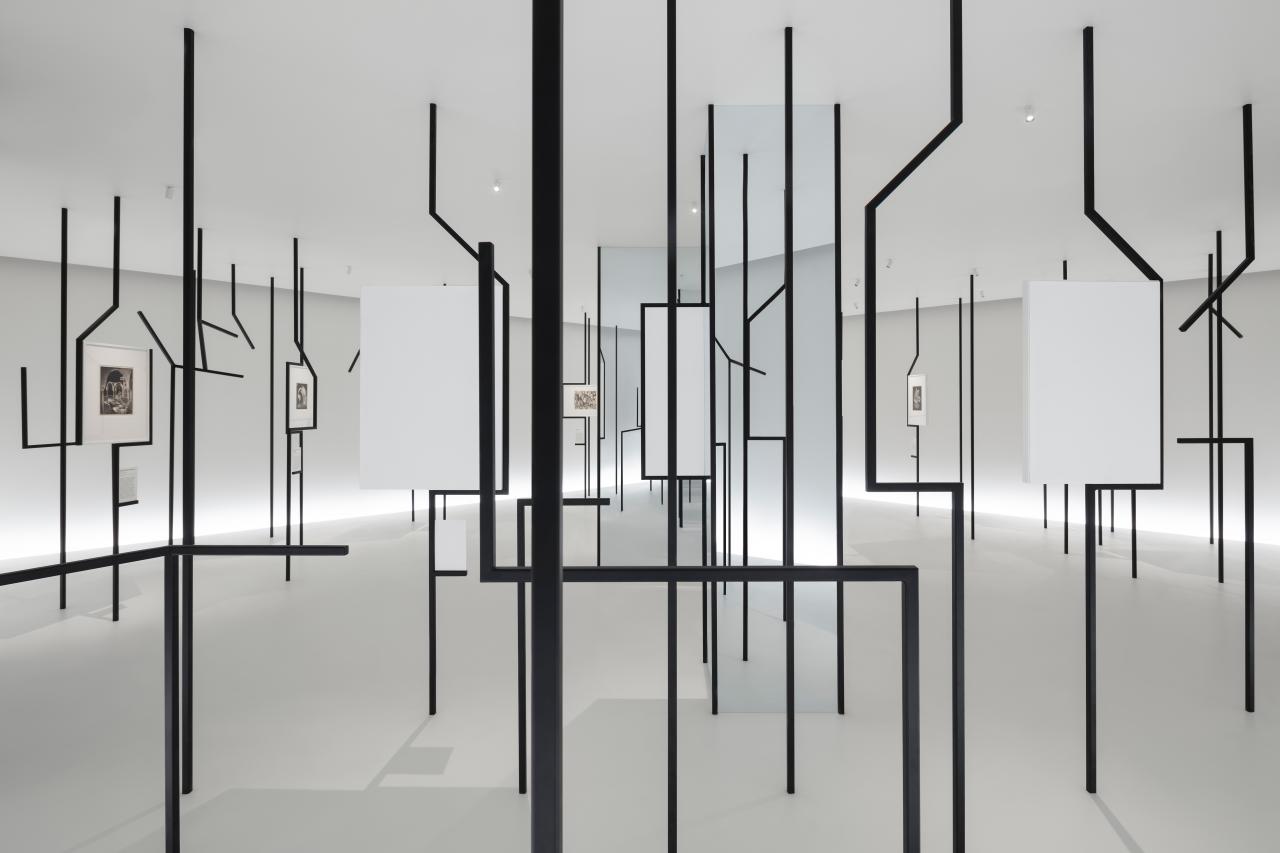
Two rooms that stood out for me was the “House in Perspective”. Walking around the first room to see black metal rods, I was quite confused on what I was supposed to see. (Figure 1) Placed in a clutter; it took me awhile to realize that I had to look from a specific angle which then formed a house. (Figure 2) The rods enabled the works to be displayed in a new spatial arrangement rather than simply being mounted on the walls. [1] The way the house motif is developed shows this amazing capacity for subtle change, creating a kind of theater of the object. [3]
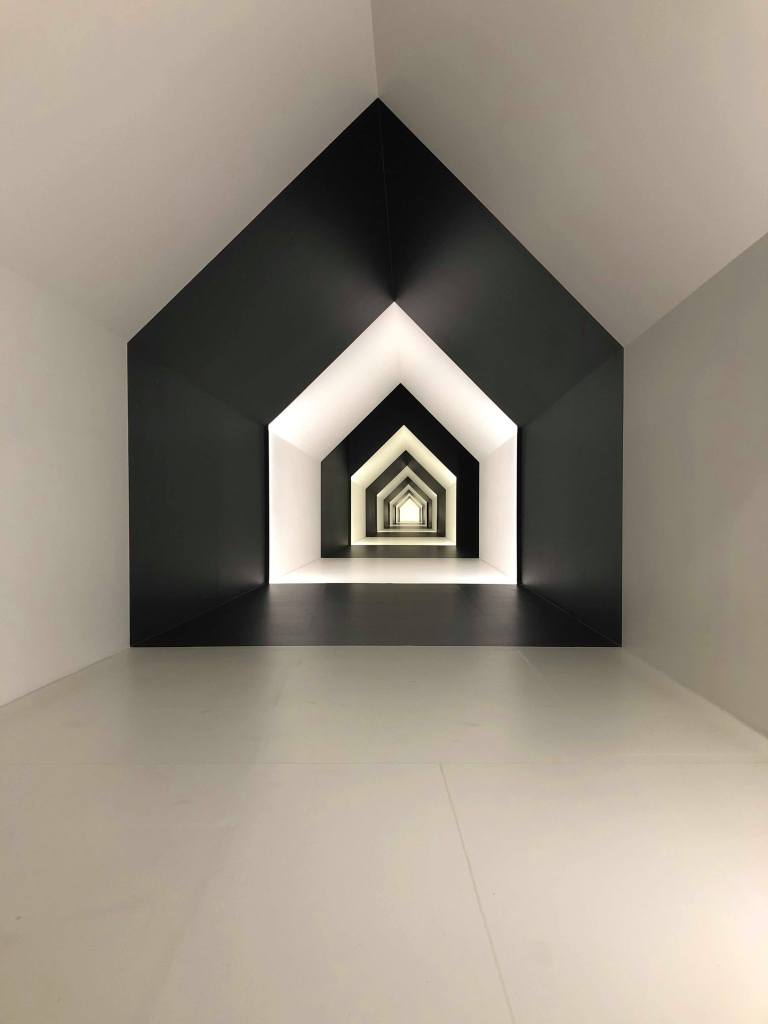
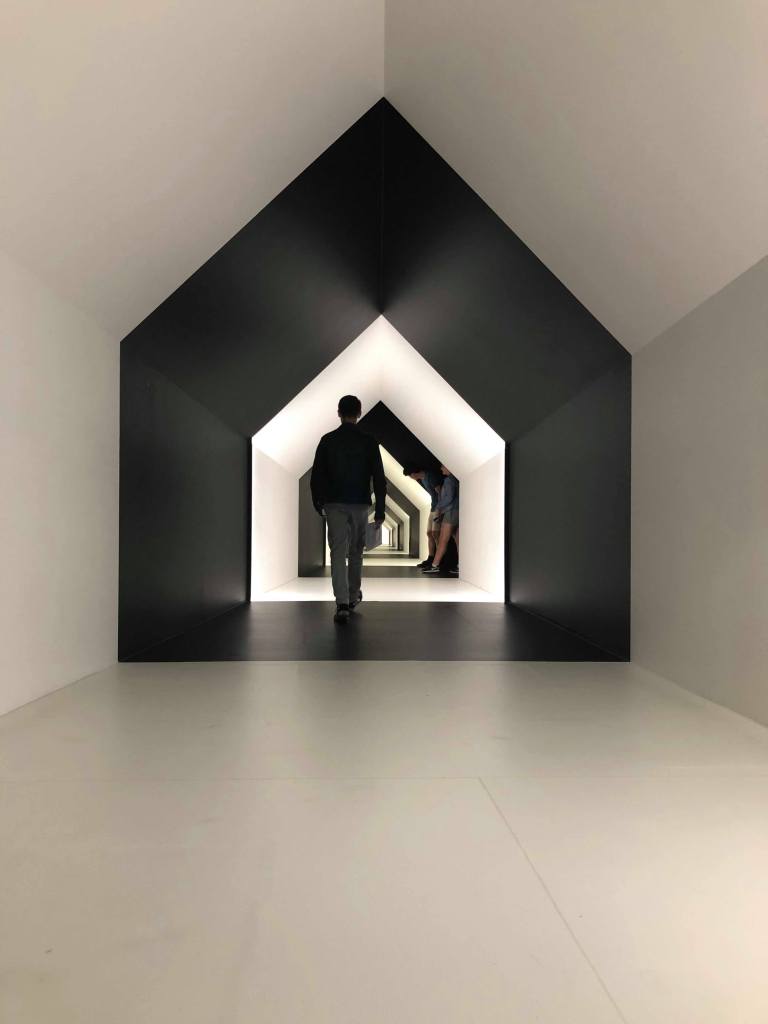
Still a part of the House of Perspective, there was a house-shaped corridor which was a catalyst work for their whole design.(Figure 3 & 4) It was one of the main attractions for everyone. Watching people take photos for memories as well as for their social medias, I can say I was also one of them. Walking through, it felt like I was travelling down a rabbit hole like the movie, Alice in Wonderland. Gradually becoming smaller and lower, it became an optical illusion as it was alternating with black and white patterns whilst decreasing in size.
The information provided with the artworks, the exploration of shapes and space were brought along into the design concept. I noticed it was related to maths and psychology which brought me back to my high schools where I learnt those subjects. To the socially recognized hierarchy of the arts, and within each of them, of genres, schools or periods. [2]
The aesthetics all around whilst walking, not many you can fault with just the simple colours of black and white. As the work was about engagement and movement with the audience, Escher and Nendo without a doubt ticked those boxes.
For choosing a favourite between Escher and Nendo, I’d prefer the works of Nendo as his work was more hands on and allowed everyone to have a feel of the design. His work was more engaging towards everyone around which gave me a sense of playfulness.
I would recommend this exhibition to everyone, not only towards the design lovers. Receiving inspiration from the designs, it gives a sense of freedom in what we do alongside creativity.
[1] Escher X Nendo // Between Two Worlds, National Gallery of Victoria; NGV. Accessed 8th April, 2019. https://www.ngv.vic.gov.au/exhibition/escher-x-nendo-between-two-worlds/#themes
[2] Pierre Bourdieu (1984) Distinction: A Social Critique of the Judgement of Taste (WK 5 Reading)
[4] Maxim Boon, The NGV has Entered a New Dimension with its immersive Escher blockbuster; TimeOut. Accessed 8th April, 2019. https://www.timeout.com/melbourne/news/the-ngv-has-entered-a-new-dimension-with-its-immersive-escher-blockbuster-120318 11 April
[3] Victor Margolin (2013) Design Studies: Tasks and Challenges, The Design Journal, 16:4, 400-407 (WK 1 Reading)

 Design Practices