Josef Muller Brockmann as Form

Written by Gokcan Selem

In the article of Good Taste vs. Good Design: A Tug of War in the Light of Bling, authors investigates the relationship between good design and good taste. According to Rampell, the basis of good design was formed by modernist values.1 In terms of graphic design, modernism developed visual design by centralising a function of form in order to minimise ornamentation and communicate with viewers for a commerce purpose.2 Ahl and Olsson mentions ‘form’ rather than ‘taste’. Good taste is similar with good form language, and Crozier adds that “an understanding of good form is based on subjective values.”3

I examine two similar design understandings which are based on modernism, and explore how individual taste in aesthetic is utilised to shape their visual communication. 

International typography Style and my design understanding is based on the functionality of form so “form follows function” principle altered 20th century modernist ideology, and that shapes form according to function. In terms of graphic design, the ideology assimilated with the Bauhaus. The principle creates direct and simplistic communication between viewers and work to convey visual and textual information.4  

Josef Muller Brockmann established the pioneer practitioner and theorist international typography style. He advanced using grid structure based on the golden ration, and created harmony and hierarchy between geometrical shapes, typography and images.5
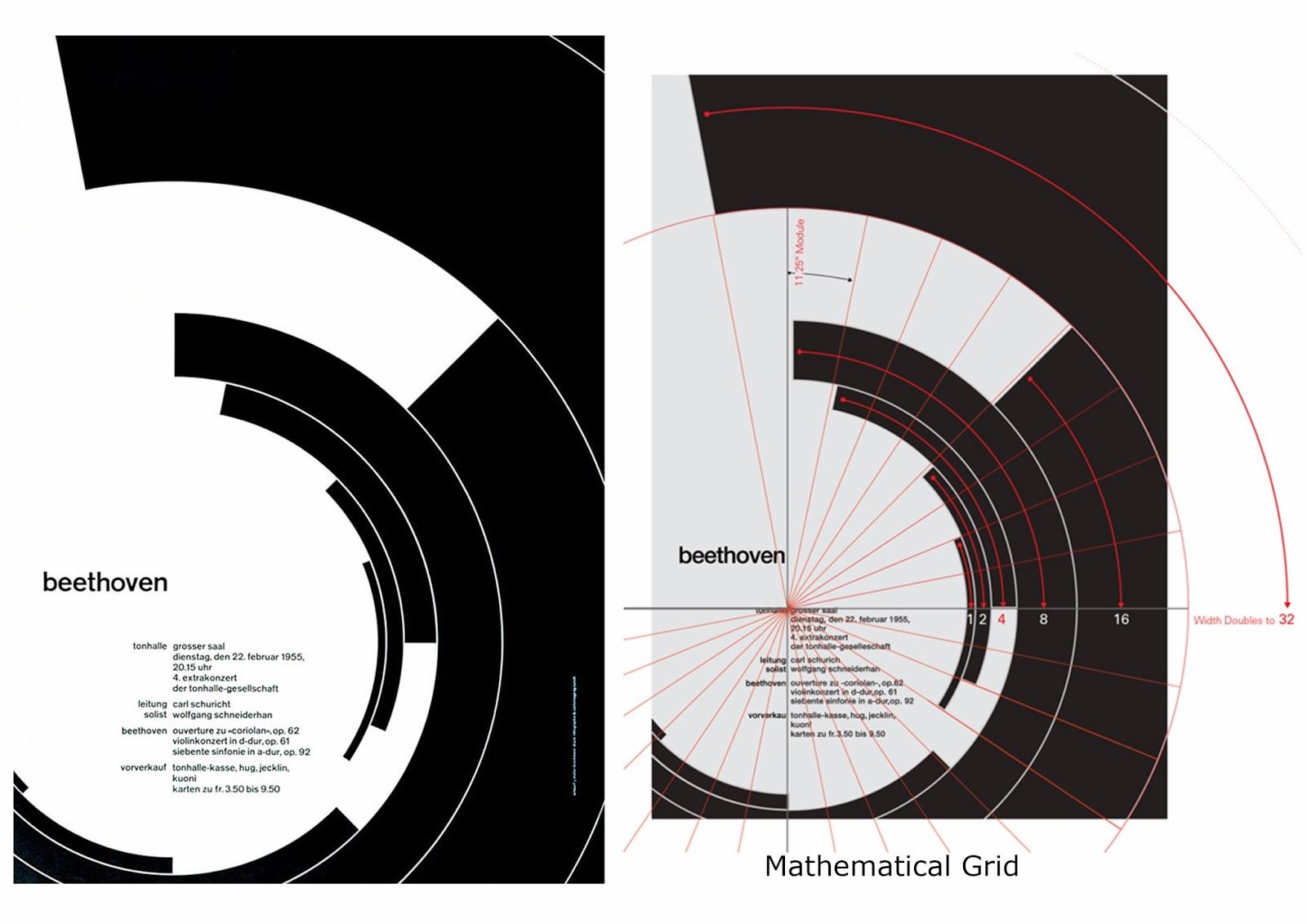
Figure 1. Zurich Tonhalle by Josef Muller Brockmann.

On the Concert Posters: II, Muller-Brockmann created a rich sense of harmony and melodic rhythm through the diameter of arc (see figure 1). The poster shows the visual reflection of Josef Muller’s understanding of design which is based on mathematical grid structure. The posters were designed to infer the visual representation of modern music. As the chosen colours are black and white, the poster represents a note on a manuscript paper. Also, the placement of typographic and geometric shapes creates unified form, and the shapes drive viewers’ eyes on to the text.7  

Figure 2. MDW by Gokcan Selem.

The project of Melbourne Design Week is designed for Branding for Design unit in second semester 2018 (see figure 2). The purpose of project is to design an identity and campaign, including online, internal applications, and public space which improve a brand perception in order to reach more audiences. Targeted audiences are those who are professionally in the industry, artists, students and people generally interested in design fields. The function of the annual event internally and nationally is to present the up to date direction of the design world, prepare audiences for the future, and debate current drawbacks and outcomes in the society. 
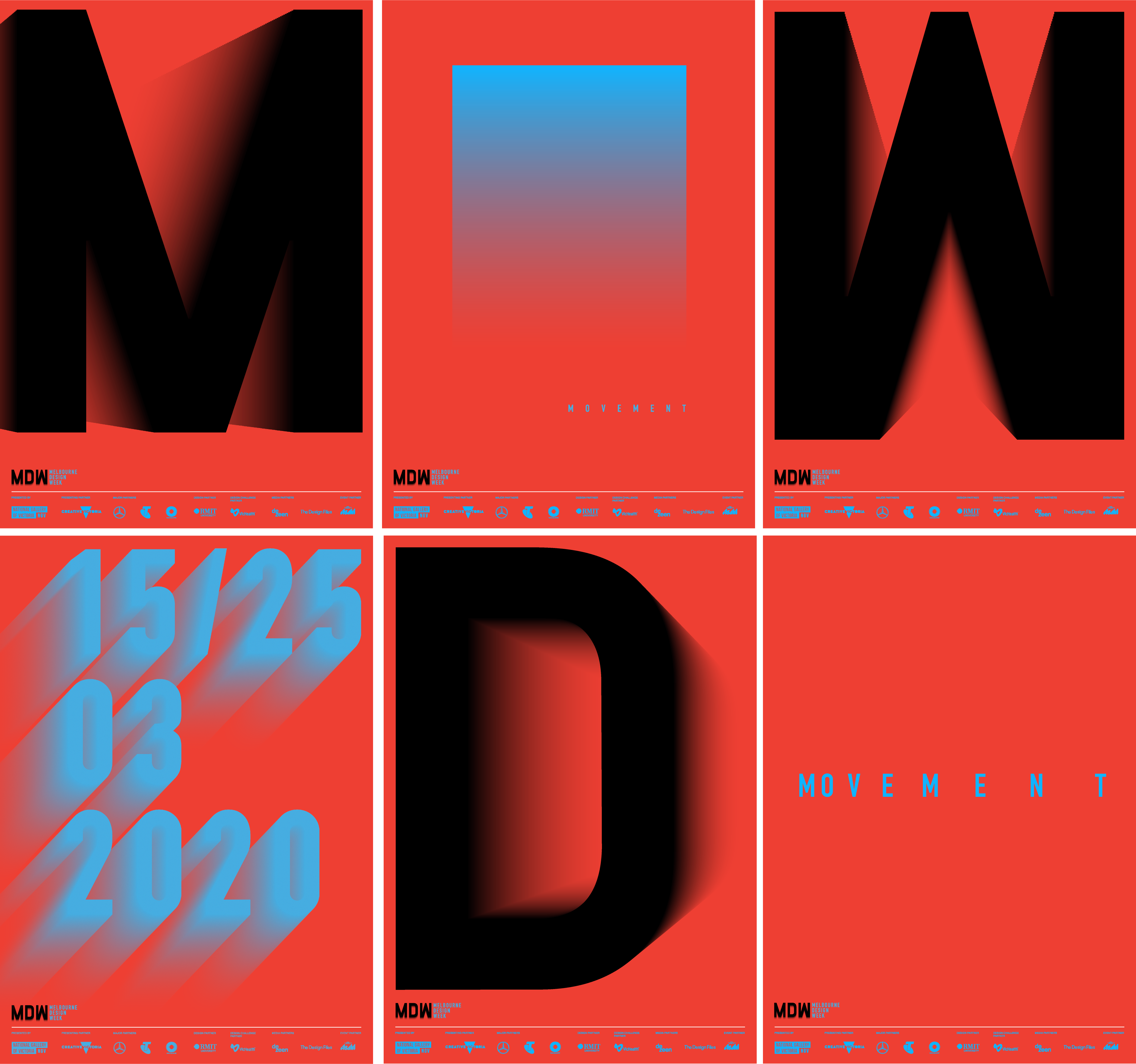
Figure 3. MDW poster series by Gokcan Selem.

So, I decided to utilise the vocabulary of movement because the lexicon meaning is similar to the functionality of Design weeks “a group of people working together to advance their shared political, social, or artistic ideas” The theme was visually applied on graphic elements throughout the project to create united textual and visual communication in order to convey the brand purpose. 

The composition of poster is minimalistic, and has the letter M representing movement, which is placed at the focal point of the poster to highlight the theme of the event and which includes a gradient effect between background and font colours to visualise physical movement effect. At the bottom of the poster, the name of event and theme and date are placed according to hierarchy principles. 

In conclusion, In terms of the Functionality of form differently formalised in two projects. Muller-Brockmann prioritises the placement of elements by his personal grid structure which provides the connection of text and shapes each other. The composition represents a sound wave including asymmetric but rhythmic forms of music. On the other hand, in my project, my major focus is the connection between textual meaning and shape in order to convey a direct message, and my design understanding is shaped based on design principles, and my personal aesthetic taste is seen as the selection, size and placement of design elements. As a result, good design and good taste integrates each other. A designing good design needs the judgment of good taste (form) which is shaped by modernism and subjective values. However, professional development and skill are one of the most effective element to create a well designed visual system, if who wants to provide creative visual communication instead of only utilising standardised design principles. 

____________________________________________________________

1. Despina Christoforidou, Elin Olander, Anders Warell & Lisbeth Svengren Holm, “Good Taste vs. Good Design: A Tug of War in the Light of Bling.” The Design Journal 15, no. 2 (2012): 185-202.

2. Juliette Cezzar, “What is Graphic Design?,” AIGA, accessed April 26, 2019, https://www.aiga.org/guide-whatisgraphicdesign.

3. Despina Christoforidou, Elin Olander, Anders Warell & Lisbeth Svengren Holm, “Good Taste vs. Good Design: A Tug of War in the Light of Bling.” The Design Journal 15, no. 2 (2012): 185-202.

4. Philip B. Meggs and Alston W. Purvis, Meggs’ History of Graphic Design, 6th ed. (New York: John Wiley & Sons, Incorporated, 2016), 345-351.

5. Ibid., 405-407.

6. Josef Muller Brockmann, Zurich Tonhalle, 1955, offset, 127.5 x 90 cm, acceseed 26 May, 2019, https://www.behance.net/gallery/9862277/Mueller-Brockmanns-Beethoven-Poster-Geometric-Analysis.

7. Kerry W. Purcell, “Josef Muller Brockmann,” 1st ed. (New York: Phaidon Press, 2006), 161.
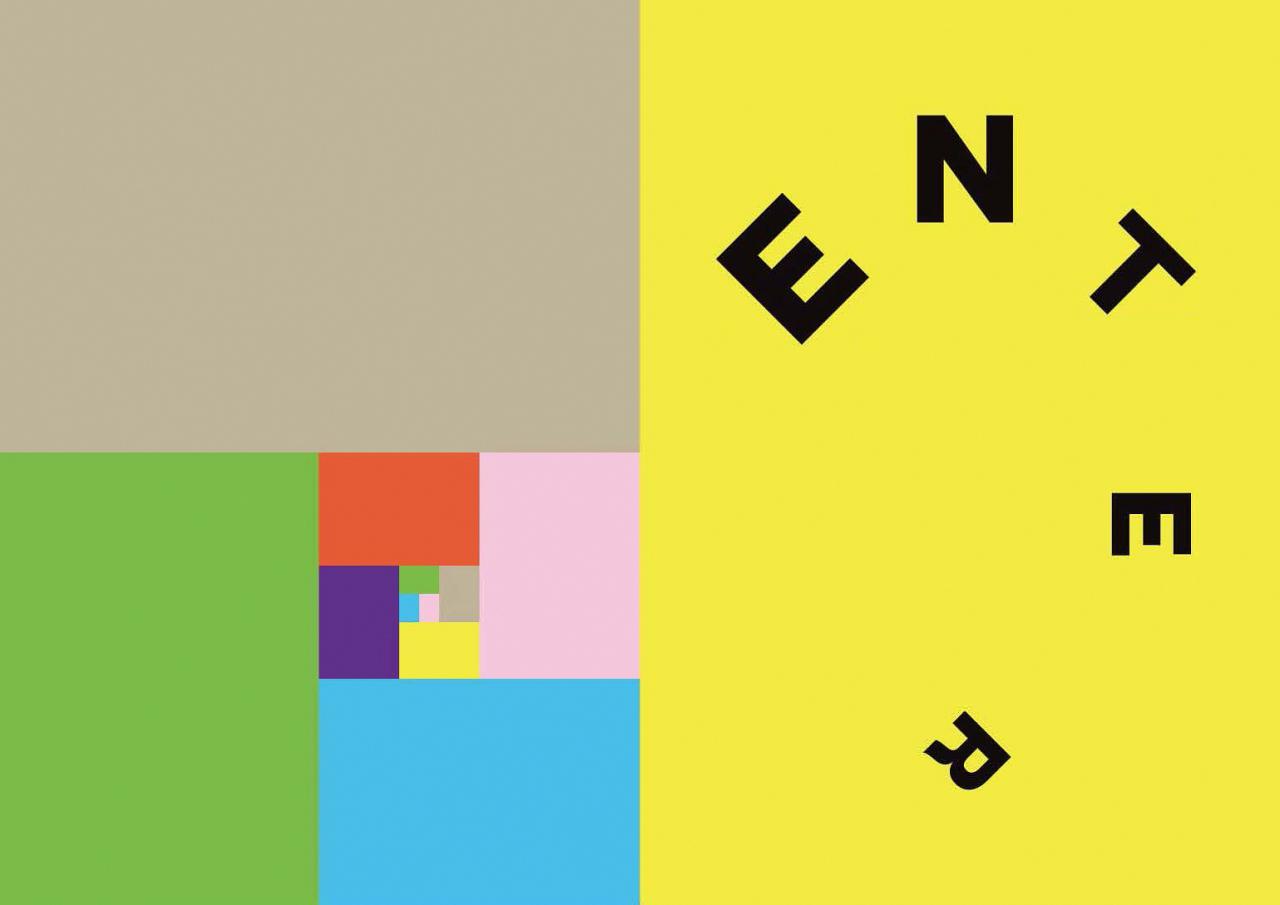

Exhibition ‘ENTER’

Written by Gokcan Selem

Exhibition ‘ENTER’ is presented by The Lyon Housemuseum Galleries in Melbourne between 16 March to 21 July 2019.1 The inaugural exhibition for the new Housemuseum Galleries presents newly commissioned works, introducing experimental contemporary art, architecture and design works.

The exhibition interprets the dynamic interrelationship between artworks, the museum space and viewers’ intervention with artworks, hosting leading Australian contemporary artists, including a wide range of mediums which are video art, sculpture, plastic art, assemblage, installation and tapestry.

Each artist interprets the theme by posing the questions “what does it mean to enter the civic space of a city through a new cultural venue; how do audiences enter and explore the ideas inherent in the works of art; how does architecture mediate the experience of art and, more broadly, what does the term ‘ENTER’ evoke in the context of our contemporary political, social and cultural context”.3

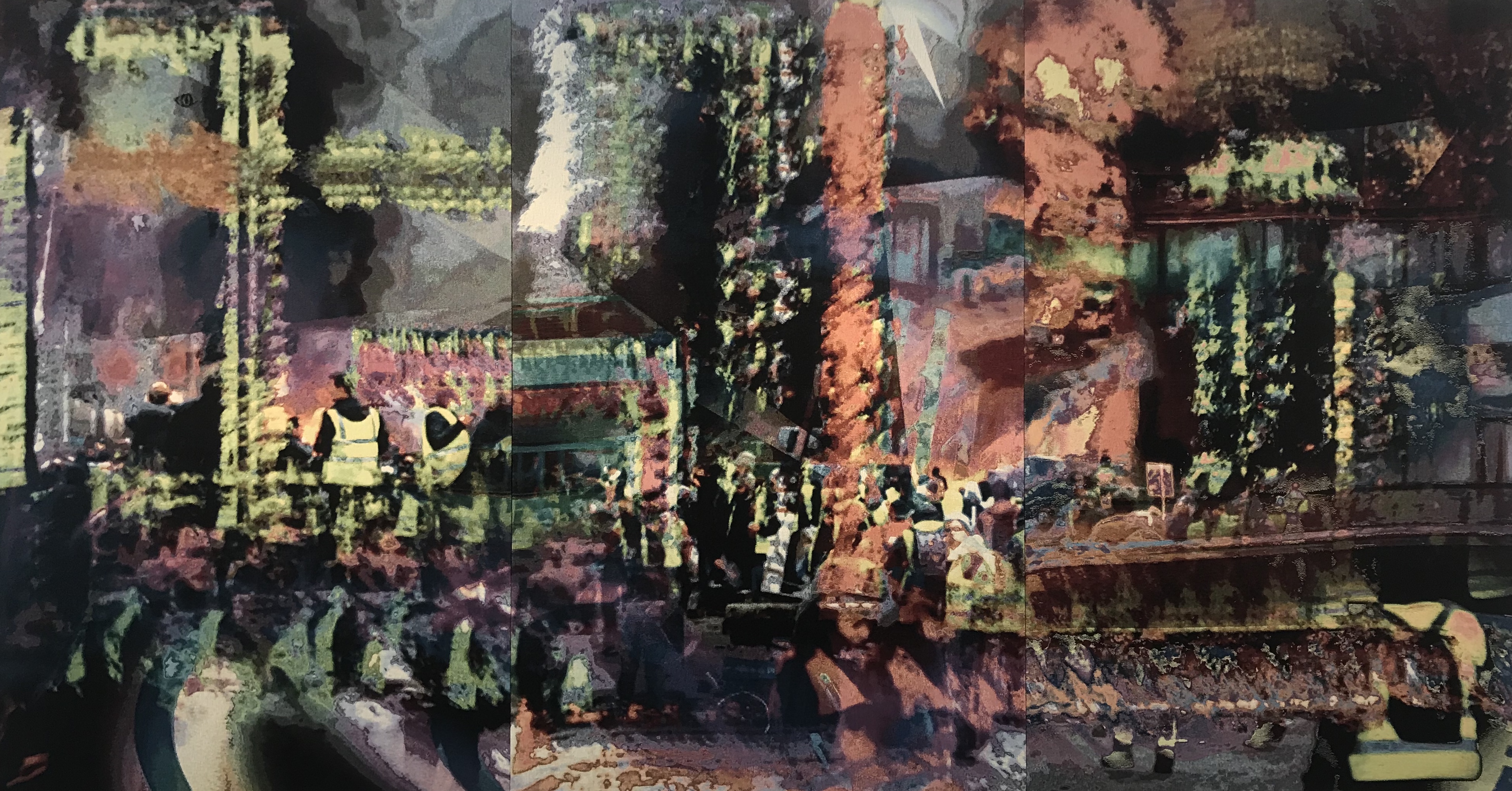
One of the artwork is MMXIX by Ry David Bradley who creates digitally rendered paintings. He is internationally known as a famous Australian artist and one of the pioneers of new artistic theories and practices in terms of investigating digital technologies’ impact on contemporary art and societies.4

MMXIX is the combination of woven art (see figure 1), and digital screen printing and technology. The artwork is only fabricated in three colours as a RGB screen pixel construction in order to express digital characteristics. The texture of the artwork creates the illusion of a digital screen.5 In the creation of the artwork, artificial intelligence participated as a partner to process, position and to paint.6 

Figure 1. MMXIX by Ry David Bradley.

The artwork presents the political movement of yellow vests in France. At first glance, digital manipulation is highly recognisable on the image. Colours are over saturated, light is over exposed on the artwork which reduces details, and some parts of the artwork are blurry. This manipulation creates a chaotic environment which can be barely seen. The manipulation is like a burn effect on the image, which might suggest the violence of the conflict between the government and protestors. What was initially a democratic protest became an anarchic resistance because of the wrong government violence policy on streets.

In terms of collaboration with AI, according to the article Transformation of the Aesthetic: Art as Participatory Design, participation art explores technological developments to extend the capacity and effect of collaboration between human, science and art.8 One of the newest software developments is Artificial intelligence, which might contribute to creative processes through intelligence, insight, or inspiration.9 According to Weiner, “there is an active role between the piece of art and the viewer, and  the viewer is the co-creator, transforming, re-creating and changing.”10 The new interactive collaboration between artists, viewers and AI can create a new form of aesthetic as participation art. 

In conclusion, the exhibition ‘ENTER’  provides viewers a way to explore and engage with the space between them and artworks in museum. MMXIX represents a contemporary political tension in digital media medium. The aesthetic form of artwork is based on collaboration between artist and AI. These technologies may alter and advance the form of participation art without needing an artist as a participant in art and design, and the technological engagement with participatory Design will present a way of creating new practices.

__________________________________________________________________________________

1. Lyon Housemuseum, “Intro,” Corbett and Yueji Lyon, accessed April 10, 2019, http://lyonhousemuseum.com.au//intro.

2. Art Almanac, “‘ENTER’ Lyon Housemuseum’s Inaugural Exhibition,” Next-media, accessed April 11, 2019, https://www.art-almanac.com.au/enter-lyon-housemuseum/.

3. Lyon Housemuseum, ‘ENTER’ 2019. Wall text accompany the exhibition “The text shown at ENTER exhibition, Housemuseum Galleries: Lyon Housemuseum, 16 March – 21 July . Visited on 10 April 2019.

4. Sophia Contemporary, “Ry David Bradley,” Sophia Contemporary Gallery, accessed April 11, 2019, https://sophiacontemporary.com/artists/68-ry-David-Bradley/biography/.

5. Kathleen Linn, “Ry David Bradley: MMXIX,”  Art Almanac, accessed April 11, 2019, https://www.art-almanac.com.au/ry-David-bradley-mmxix/. 

6. The United London, “Immortalising the Digital Generation in Tapestry,” The United London, accessed April 12, 2019, https://theunitldn.com/blog/82/.

7. Ry David Bradley, MMXIX, 2019, Triptych, 330 x 645 cm, Lyon Housemuseum, Melbourne.

8. Matthew Holt, “Transformation of the Aesthetic: Art as Participatory Design.” Design and Culture 7, no. 2 (2015): 143-65.

9.Rama Allen, “Ai will be the Art Movement of the 21st Century,” Quartz, accessed April 15, 2019, https://qz.com/1023493/ai-will-be-the-art-movement-of-the-21st-century/. 

10. Ken Weiner, “Can Ai Create True Art?,” Scientific America, accessed 15, 2019, https://blogs.scientificamerican.com/observations/can-ai-create-true-art/.


Forgotten Hero: Zheng Shengtian

MUMA’s current exhibition Shapes of Knowledge showcases eight artistic projects from Australia and the world, and by doing so, it invites the audience to think about the interrelationship between art and their own ways of knowing. Not only does the exhibition challenges the conventional knowledge of the public that concerns us in the present world, as discussed in my other blog “Fossil Fuels + the Arts?” it also brings up things that happened in the past.

One of its participants, Asia Art Archive, provides rich materials on how the activities of art institutions make great impacts on the history of art in Asian countries. There is one person, whose work and stories almost take up an entire section that was on display. His name is Zheng Shengtian – artist, designer and scholar who built the bridge between artists between China coming out of isolation, and the rest of the world.

China’s history of isolation, to some extent, can be traced back to the 1400s. However, the years between 1966-1976 were especially hard for Chinese people that lived in the 20th century. During the ten-year-long Cultural Revolution, China’s tertiary and higher education was completely suspended. Art practitioners like Zheng Shengtian were instructed to produce propaganda art for the state in Socialist Realism style – a genre of oil painting that portray an idealised lifestyle of the people. (Figure 1) All other forms of art were abolished, whether it was modernist or traditional. Art produced in this period were closely linked to politics, and the movement’s impact on Chinese art history was disastrous.

Figure 1. Zheng Shengtian, sketch for a propaganda poster, 1977

Today, the Cultural Revolution has become a phrase that the entire country would rather forget, and it is difficult to find an estimation on how many pieces of propaganda art were produced during the ten years. These art pieces float around Chinese internet mostly in the form of memes today. When people see these images, they would not even raise questions such as who created them and why were they created, but everybody would know that these artworks were painted for the state. The presence of the individual artists was greatly reduced. I cannot help but compare these artists to the collective art groups that emerged in Australia around the same era. Both the collective art groups in Australia and the anonymous propaganda artists in China were creating art to politicise people, even though one is radical and self-generated, the other one is state controlled and has no artistic freedom.

Of course, painting propaganda is not the reason I consider Zheng as a forgotten hero. What makes him a hero is what he did to help art “heal” in the post Cultural Revolution years.

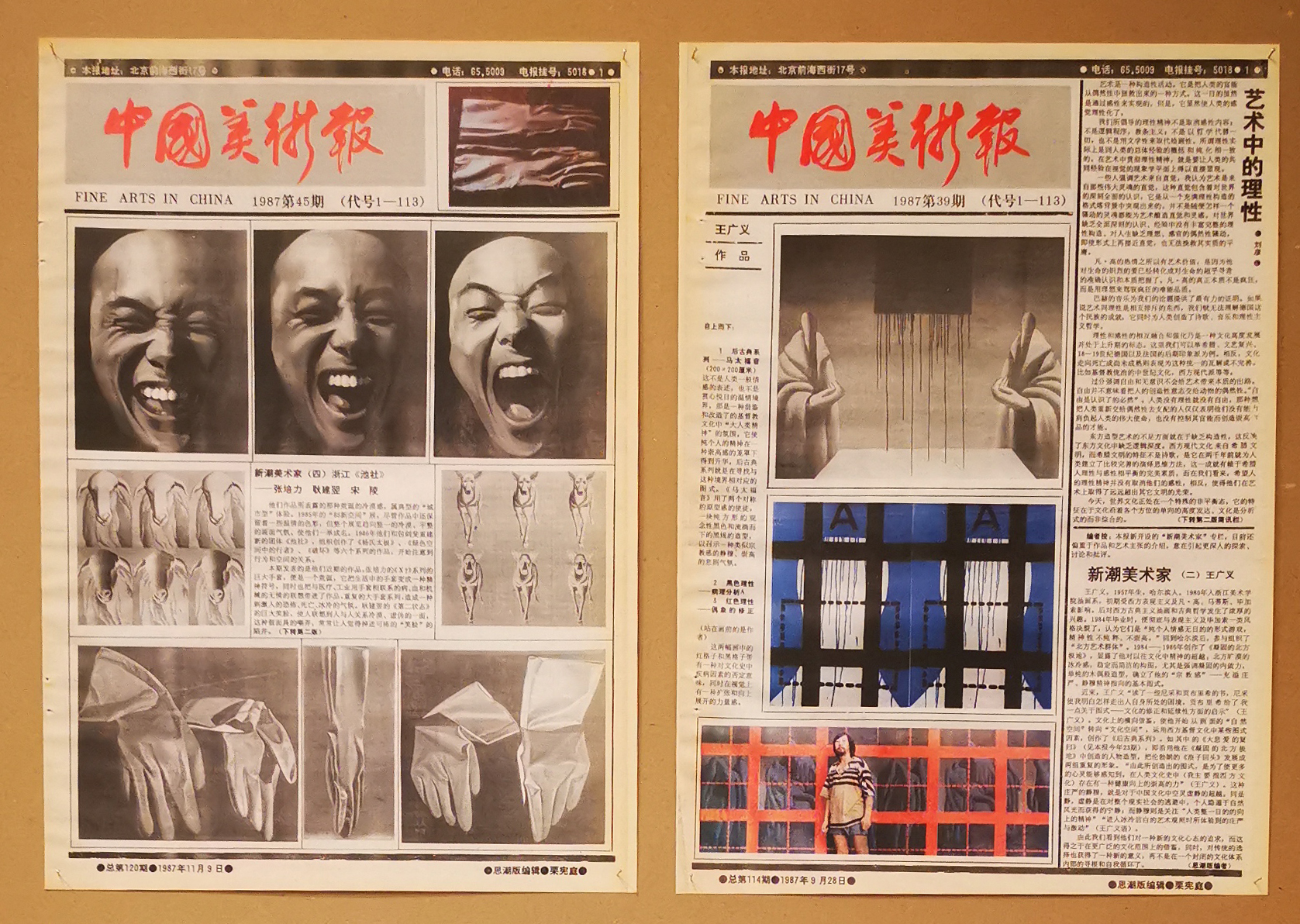
Zheng teached at one of the best art academies in China. After the end of the Cultural Revolution, he was the first ever artist that passed the English exam and was allowed to visit abroad. With the two cameras he had on him, Zheng took the opportunity to document every single artwork he saw while visiting international galleries, from New York to Vienna. What he brought back to China eventually, in 1983, was thousands of images of Western art to inspire and educate artists and the younger generations. He single-handedly opened a gate of communication between the Western art world and Chinese artists. Students in China at that time had the freedom to experiment and create – which led to the New Waves Movement of the 80s, where the very first group of contemporary artists emerged in China. (Figure 2)

Figure 2, Works by members of Pond Society, Fine Arts in China, vol 45, 1987.

Tianlan He (Tina)

References:

  1. Asian Art Archive, “Interview with Zheng Shengtian on Chinese contemporary art in the 1980s” (online video) , published March 2011, accessed April 2019, https://www.youtube.com/watch?v=rm2h_6HJ3uQ
  2. Jess Berry, Earthworks and Beyond (2010),https://lms.monash.edu/pluginfile.php/8323623/mod_resource/content/2/earthworks%20book%20chapter.pdf
  3. Monash University, “MADA Art Forum: Asia Art Archive: Art Schools from Asia,” Monash University Museum of Art, accessed April 2019, https://www.monash.edu/muma/events/2019/MADA-Art-Forum-Asia-Art-Archive-Art-Schools-from-Asia-Part-2-ChinaIndia
  4. Monash University, “Asia Art Archive: Art Schools from Asia: Three Case Studies,” Monash University Museum of Art, accessed April 2019, https://www.monash.edu/muma/exhibitions/exhibition-archive/2019/Shapes-of-knowledge/asia-art-archive

“Square Word Calligraphy Classroom”


From July 21st to October 21st Xu Bing has held his solo summation exhibition ” Thought and Method” at Beijing Center for Contemporary Art[1]. This exhibition includes more than sixty highlight artworks over Xu Bing’s forty years of his artistic career. It presents a wide range of drawings, prints, painting, film documentary as well as mixed media installation art. The exhibition mainly focuses on Xu Bing’s thinking of methodology and motivation in his Chinese contemporary art. His works have responded to social contexts and the surroundings he lives by which have been divided into three sections in this exhibition. So that allows visitors an insight into Xu Bing’s three main turning points of his design thinking over forty decades.

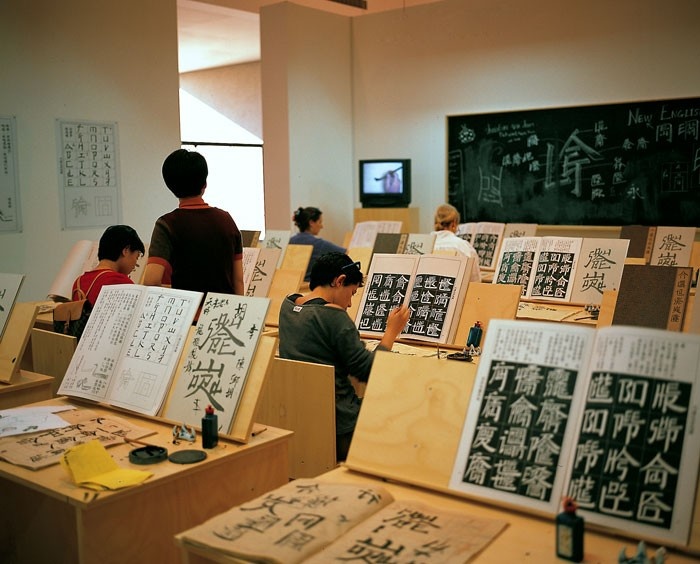
One of the highlight installation pieces is a mixed media installation called “Square Word Calligraphy Classroom.”[2] Its intention is to set up a classroom-like experimental workshop in a gallery space. The installation featured the basic principles of Xu Bing’s “New English Calligraphy” via instructional video, blackboard, and textbooks. Visitors were all invited to participate in the classroom and experience the new characters with ink and brushes.

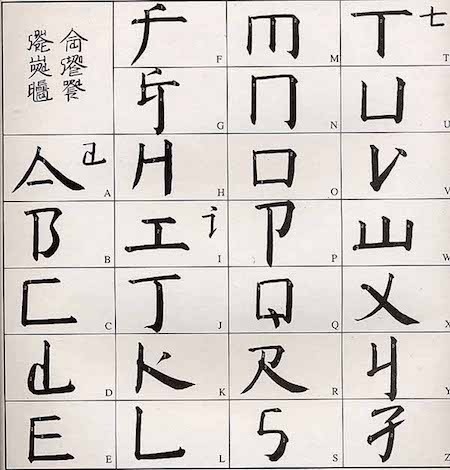
In this artwork, Xu Bing has developed his lettering system using the English alphabet to resemble Chinese words. It’s a fusion of two different language system. From the textbook can find out that each English alphabet has slightly altered its form and shaped into a square-like structure, therefore the character takes on the ostensible form of a Chinese Character but remains legible to the English reader.

After emigrated to New York, Xu Bing engaged with Western norms as well as challenged at the narrow confines between Western and Chinese contemporary art. He commented on “Square Word Calligraphy Classroom” on his book that “original idea of this work is caused by the conflict between language and culture,[3] but in fact, this work shows how the cultural shift from one and other, how they communicate, and the convergence of things between the two countries. This classroom allows viewers to have an immersive experience in a new cultural environment which create by my lettering system. I want to give people a new perspective of the world through the artworks; let people realize that the basic way of thinking can be broken and changed.” Just as the visitors may first think about it was a classroom that teaches Chinese character, but when they participated in writing, they then found out they were actually writing English.

According to the paper “transformation of the Aesthetic: Art as Participatory Design” Participatory Design is the imposition of the already designed upon a situation, it is a way of making an argument for reversing the flow of information.[4]
In Xu Bing’s work, it not only emphasized how different languages can obtain in a new system. But also challenge the basic epistemic assumption. The work attacked viewer’s habitual thinking patterns that have been ingrained since they learned how to read.
“Square Word Calligraphy Classroom” also well established the notion of Environment Design, it has been introduced into two parts: an increased awareness of audience participation, and the realization that exhibition is not just overview but an exercise of interaction. More importantly, exhibition design is now shifting from displaying knowledge about a subject to the subject representing itself.

In conclusion, Xu Bing has engaged directly with Participatory design through his new letting system work. His real goal is to generate the logical transposition of two cultural conflicts, by engaging viewers participate in experimental work of learning new letters. The work remains viewers that the basic way of thinking can be broken and changed.

[1] Art, C. f. (2018, seven 21st). Xu Bing: Thought and Method. Retrieved from Center for Contemporary Arts
http://ucca.org.cn/en/exhibition/xu-bing-thought-and-method/
[2] Square Word Calligraphy. (n.d.). Retrieved from XU BING
http://www.xubing.com
[3] BingXu. (2015). 我的真文字. China: China CITIC Press Corporation.

[4] MathewHolt, “Transformation of the Aesthetic: Art as Participatory Design. “
Design and Culture, Vol. 7 No.2. 144.


Do you know Pierre Davis?

by YING HUI TOI

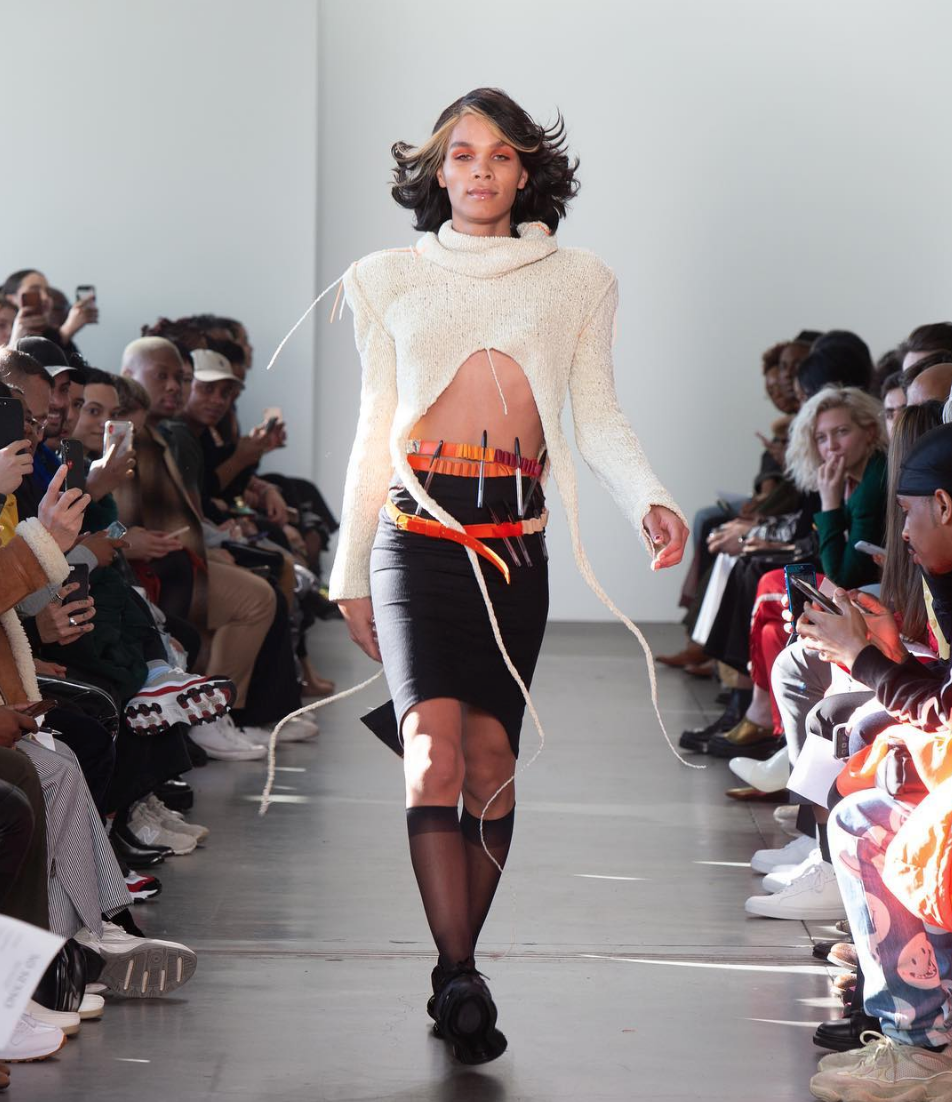
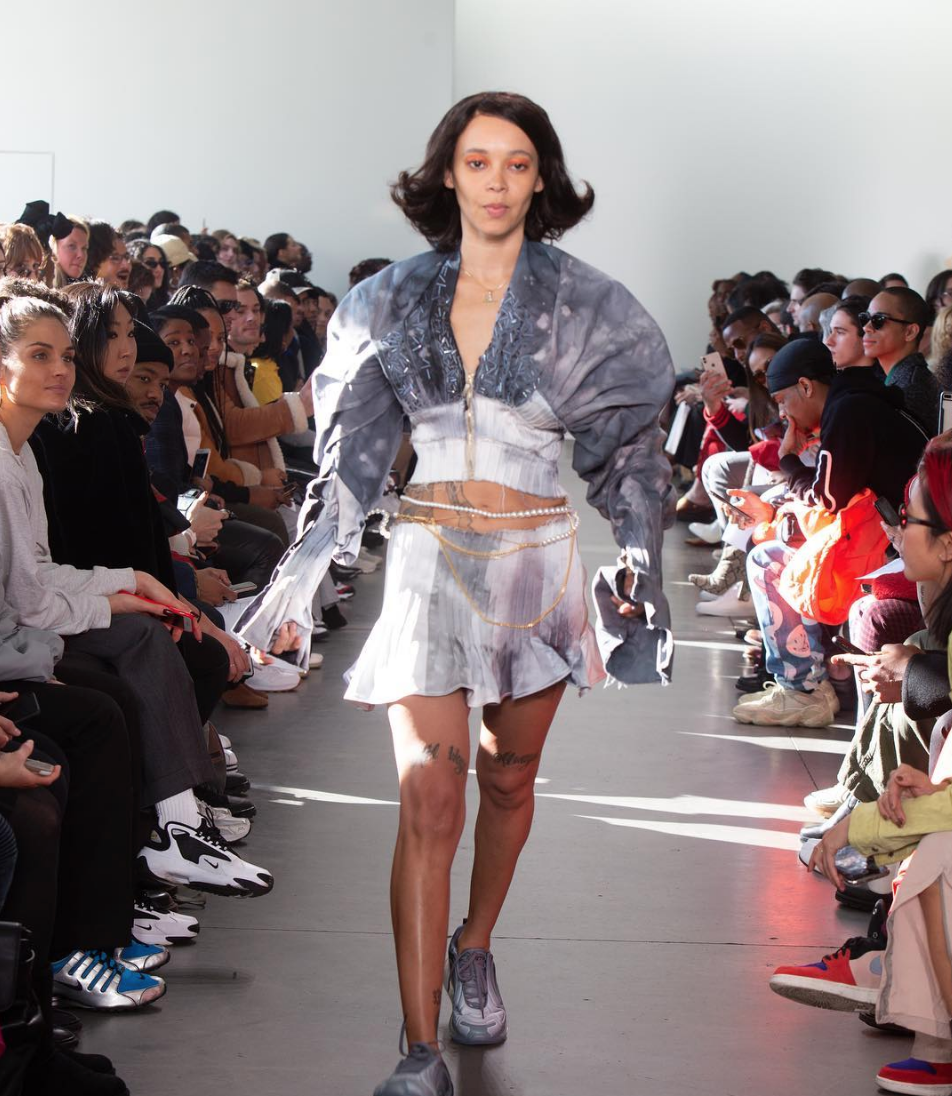
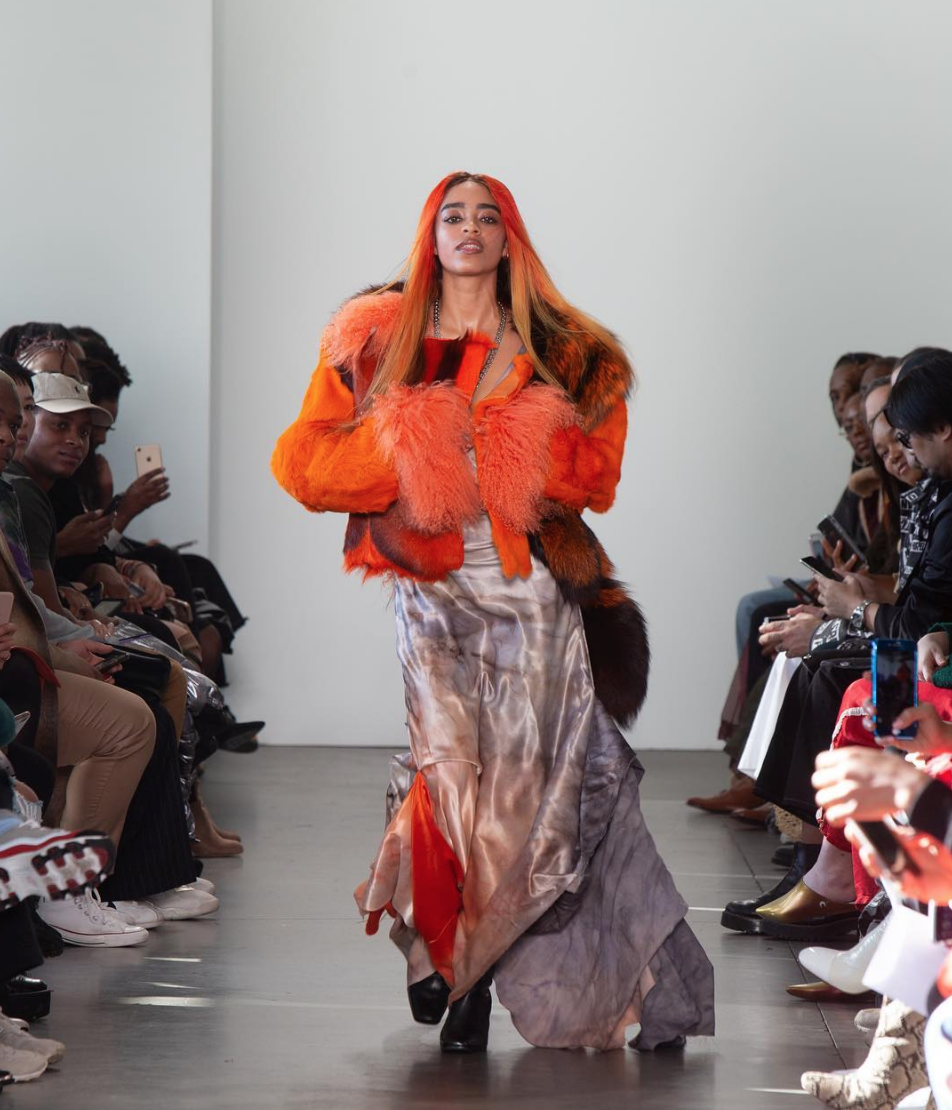
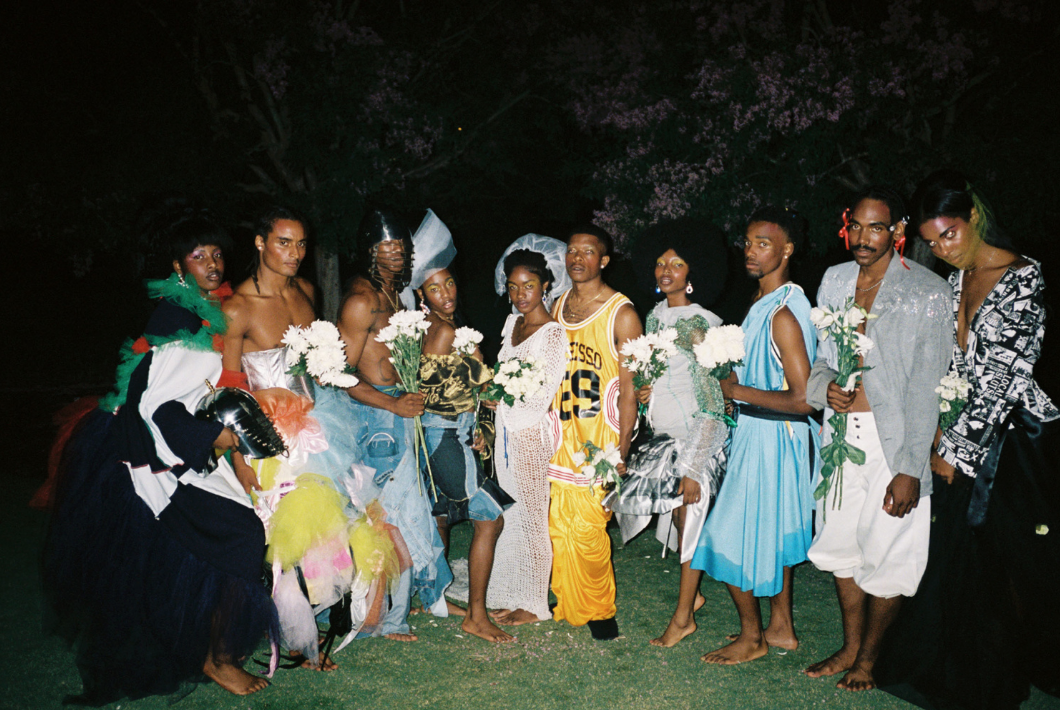
Pierre Davis is the first transgender fashion designer to debut in the recent AW19 New York Fashion Week (NYFW). [1] She is the founder of the brand NO SESSO, based in LA. The name NO SESSO means ‘No Sex’ in Italian, which stands for the direction of it is brand being an agender, creating a gender-fluid collection that caters for people with any pronoun and gender identity. [3] Davis’ goal is to “inspire people to be more community-minded and to realize not everything is just about aesthetics or commerce. It’s also about humanity.” [4] During the fashion week, her collection is worn by transgender models, male and female model of all size, showing that No Sesso is a fashion brand is all about inclusivity. [5] No Sesso might just be the catalyst of making the fashion industry to be more open-minded. In an interview with Pinterest, Davis states that her creativity comes from looking inwards and exploring self-thought then showing it to the outside world. [2] Despite being in a competitive industry, Davis insists to stay true to herself and work with her peer to design clothing that accommodates to the LGBTQ+ community. [6] No Sesso pushes the boundaries, where she sees her creation a form of art.

You might be wondering, why would be Pierre Davis a forgotten hero when she on the right track while holding on the title of being the ‘first transgender design’ in NYFW? Just when I was all thrilled about this news and decided to go on to Youtube to look for more interviews with Pierre Davis, but sadly there isn’t any. The only two videos that showed is the video of the runway, nothing more in-depth. A blog post dedicating to Pierre Davis’s show in Elle’s site states that CFDA (Council of Fashion Designers of America) claims Davis’s being the first transgender designer showing their collection in NYFW would be ‘making NYFW history’. [1] Ironically, so little attention was given to this transgender designer. During NYFW, Pierre Davis was all over lifestyle magazines and online newspapers, in content in most of it are similar, and some even exactly the same. Immediately after NYFW, her name faded away. To an extent, the purpose of the post published is questioned, as only a few shares an in-depth story of Pierre Davis and her brand. In Cultured Magazine, Davis claims that representation of non-cisgender people is often used as a marketing tool for companies. [6] The brutal truth is, do they really stand for the LGBTQ+ community? All and all, Pierre Davis isn’t a name for companies to use to attract a broad diversity of market. She is a female fashion designer that needs to be remembered for what she has accomplished and continues to strive for a better future in the fashion industry for her community. 

_____

  1. “The First Transgender Designer Just Showed At New York Fashion Week”, ELLE, Last modified 2019, https://www.elle.com/uk/fashion/a26151490/pierre-davis-transgender-designer-new-york-fashion-week/.
  2. “My Creative Mindset — Pierre Davis”, Vimeo, Last modified 2019, https://vimeo.com/304930661.
  3. “NO GENDER, NO SESSO — DRØME”, DRØME, Last modified 2019, https://www.wearedrome.com/no-gender-no-sesso.
  4. “New York Fashion Week Debuts First Ever Transgender Designer”, The Independent, Last modified 2019, https://www.independent.co.uk/life-style/fashion/new-york-fashion-week-transgender-designer-pierre-davis-no-sesso-autumn-winter-2019-nyfw-a8765481.html.
  5. “Pierre Davis Is The First Transgender Designer To Debut At NYFW | V Magazine”, Vmagazine.Com, Last modified 2019, https://vmagazine.com/article/pierre-davis-is-the-first-transgender-designer-to-debut-at-nyfw/.
  6. “No Sesso’s Pierre Davis Is Creating Her Own Definition Of Success | Cultured Magazine”, Cultured Magazine, Last modified 2019, https://www.culturedmag.com/no-sesso-pierre-davis/.
  7. “Pierre Davis Is The First Transgender Designer To Debut At NYFW | V Magazine”, Vmagazine.Com, Last modified 2019, https://vmagazine.com/article/pierre-davis-is-the-first-transgender-designer-to-debut-at-nyfw/.

What about the Escher X Nendo: Between Two Worlds exhibition?

by YING HUI TOI

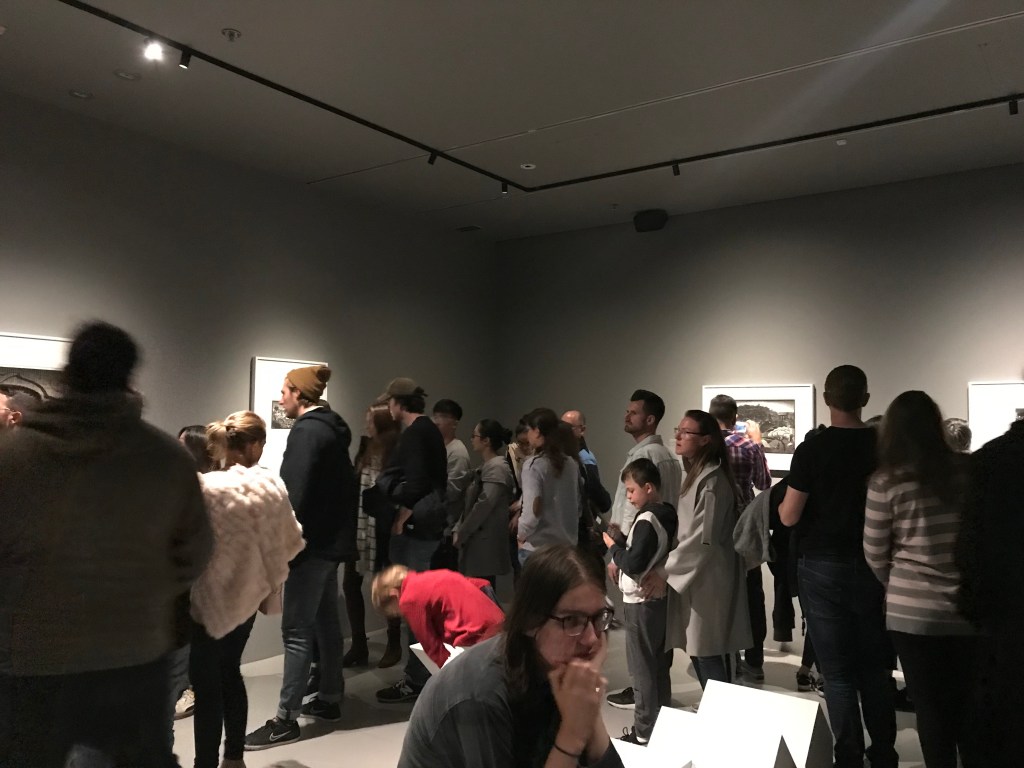
If there’s one thing I’ve learned about visiting a gallery, especially to a popular exhibition, is that it is not a wise choice to go during peak hours. I visited the Escher X Nendo: Between Two Worlds exhibition on a busy Sunday evening, I literally feel like a sardine in a can. Space was packed with people, but I guess everyone else is just like me, grabbing the last chance to see this highly rated Escher exhibition before it ends.

Maurits Cornelis Escher (M.C. Escher) is a Dutch graphic designer that is known for his iconic tessellation art, woodcut and self-portrait in the mirror. [1] This exhibition is a collaboration between M.C. Escher and Nendo, a Tokyo design studio. Visitors were given a chance to embark upon witnessing the chemistry between 19th-century art and contemporary design; seeing Escher’s artwork through the eye of Oki Sato, the founder of Nendo.

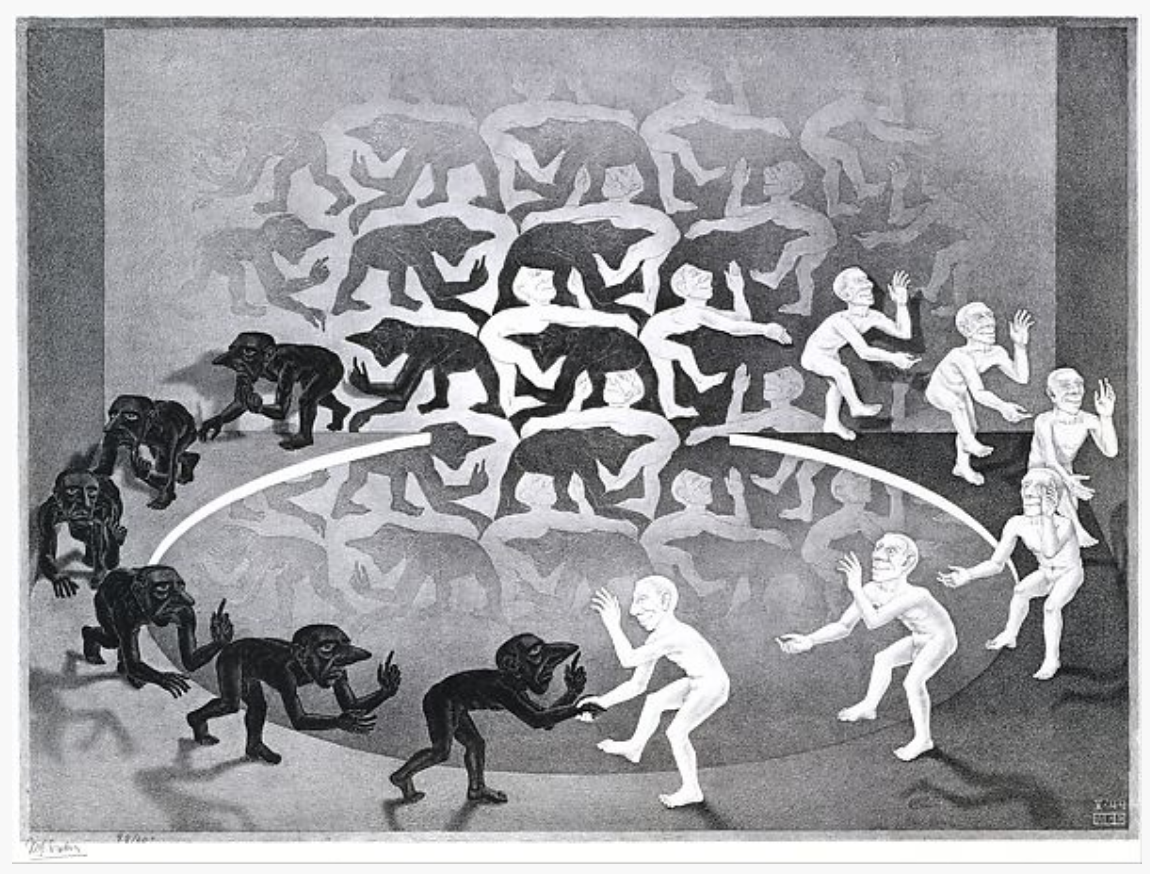
Before visiting the exhibition, I have never come across the name, Escher. However, some of the artworks presented in the gallery weren’t foreign to me, especially the tessellations. Sato perceived Escher as an artist of immense patience and almost “robotic” focus. [2] He further describes that Escher’s drawing technique of tessellations works like a plugin, adding a specific feature to the subject of the artwork. [2] I was intrigued by artwork, in particular, The Encounter, a lithograph created in 1944. [3] I would describe it is a coloured black poker face man encountering a smiling white man in white, it seems like a scene where two personalities of a person meet. This artwork was placed in the upper level of a split-level gallery, where space was separated by a descending zigzag pathway that led us down to “Transforming House”. [4]

Transformation House

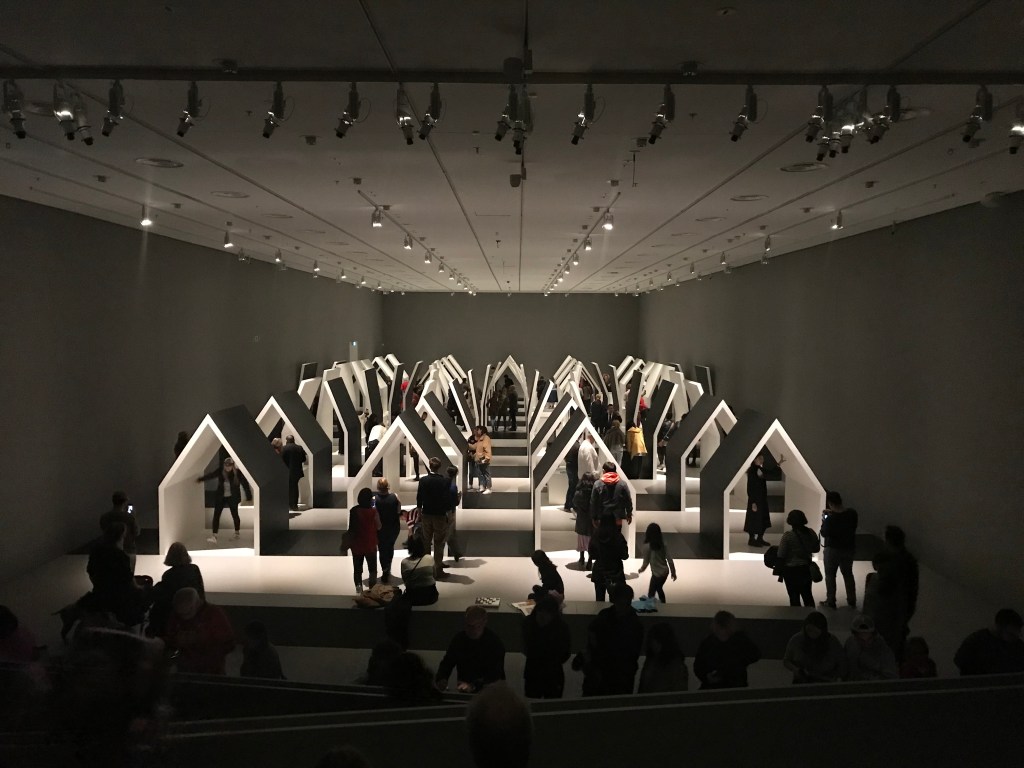
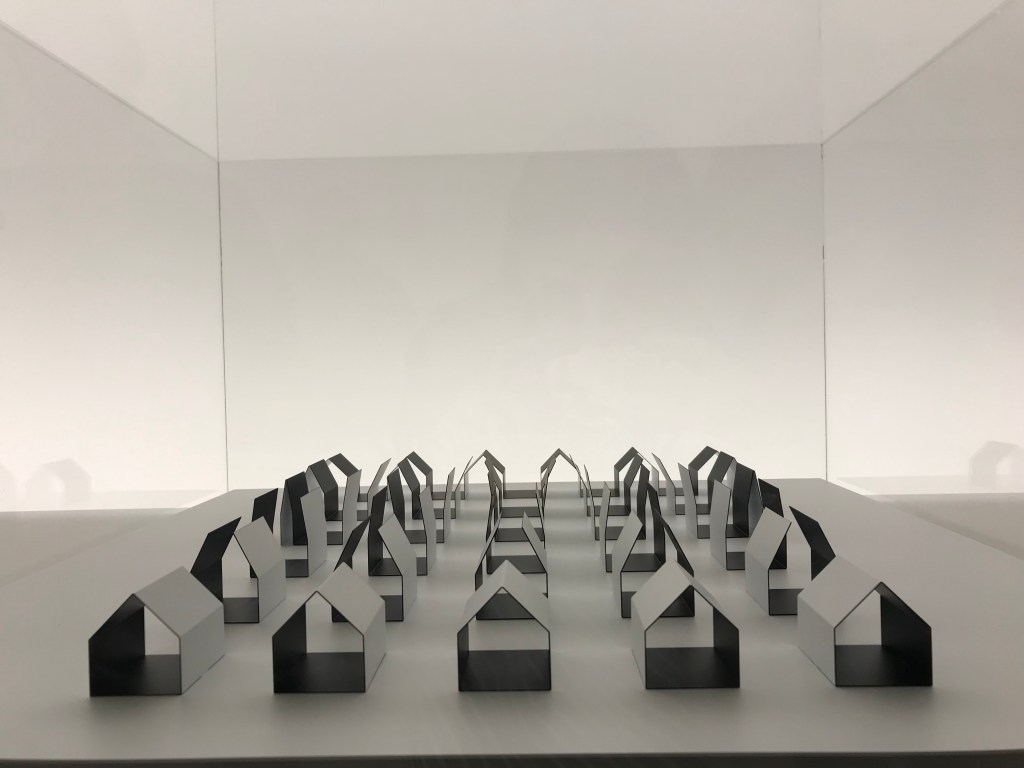
The “Transformation House” is an installation by Nendo that translates the concept of Escher’s tessellation art in a three-dimension form. [4] I discern Nendo has a good taste in designing the space that includes Escher’s tessellation artwork and the installation. Despite the term ‘good taste’ is subjective as it is socially structured, space attracts many visitors with a diverse cultural background and they were willing to spend more time wandering around in this room. Christoforidou explains that people express their personal taste through their action. [5] Consequently, it is the action of the visitors lingering in the space that proves that Nendo has good taste in designing.

Nendo manifests that 19th-century art can be demonstrated through contemporary design. The installation takes up a large space immersed with 3D simplified house-shaped lined up from closed to an opened roof, inspired by tessellation art. This space serves a purpose, where visitors were able to have a physical engagement with Escher’s art. Some said they are seeing Escher’s art in a whole new perspective. [2] In this case, space is considered a good design, because the outcome of the exhibition corresponds with the intention of Nendo. Which is to deliver the message of “…you thought you knew Escher, but you really didn’t.” [2] I reckon Nendo successfully uses their profession to create a space for people to understand Escher’s art accessible.

____

  1. “Escher X Nendo | Between Two Worlds | NGV”, Ngv.Vic.Gov.Au, Last modified 2019, https://www.ngv.vic.gov.au/exhibition/escher-x-nendo-between-two-worlds/.
  2. Sasha Grishin, “Review: Escher X Nendo, National Gallery Of Victoria”, Artshub Australia, Last modified 2019, https://visual.artshub.com.au/news-article/reviews/visual-arts/sasha-grishin/review-escher-x-nendo-national-gallery-of-victoria-256989.
  3. Dee Jefferson, “Reckon You Know Escher? Not As Well As You Think.”, ABC News, Last modified 2019, https://www.abc.net.au/news/2018-12-06/escher-x-nendo-exhibition-at-national-gallery-of-victoria/10575694.
  4. “M.C. Escher – About Escher”, Mcescher.Com, Last modified 2019, https://www.mcescher.com/about/.
  5. Despina Christoforidou et al., “Good Taste Vs. Good Design: A Tug Of War In The Light Of Bling”, The Design Journal 15, no. 2 (2012): 185-202, doi:10.2752/175630612×13258652805095.
  6. “The Encounter,May 1944”, Metmuseum.Org, Last modified 2019, https://www.metmuseum.org/art/collection/search/365239.

Fossil Fuels & the Arts?

Shapes of Knowledge, an exhibition that is currently on at MUMA (Monash University Museum of Art) till 13 April, offers an experience like no other. It challenges the audience to reflect on their own ways of knowing, and poses the big question of “how art is transformed by learning, and, in turn, how learning is transformed by art”, which everyone should have their own answer after the visit. Eight projects across time and the globe were brought into this big survey, which allows the audience to explore the entangled relationship between knowledge and art practices.

Fossil Fuels + the Arts, by A Centre for Everything

Figure 1, Fossil Fuels and the Arts (network map) 2019

If you ask someone what is the link between the fossil fuels industry and the arts institutions, the majority of people in Australia probably don’t know the answer. The relationship between the two is indeed complex and may seem distant, but there is still a relationship.

The first glimpse at this large map on the wall (figure 1) has utterly overwhelmed me. Looking back at it again I still do not think it would be considered as “good design” because of the lack of clarity in the way information is displayed. It was not until I sat down and caught the end of the video lecture made by the creators of this map, that clarified my confusion.

The video ruthlessly revealed how does the fossil fuel industry ingratiates itself to the public, and how do big corporations like banks make profits by investing in this industry – the industry that is the biggest contributors of carbon emission and climate change – without telling everyone, of course. What’s more shocking to me, is that those businesses are also dominating the field of the arts through offering “gratitude” sponsorship, as discussed in the video, making artists “a marketing arm of the fossil fuels industry”, as stated by the creator Gabrielle de Vietri. What this is implying is that the fossil fuels industry can have a say on what kind of art should be exhibited, which in turn influences what artists create nowadays.

Figure 2, A Centre for Everything: Maps of Gratitude, Cones of Silence and Lumps of Coal

I have to admit that this is one of the very few times where I have sat down in an art gallery and actually spent time to appreciate the video material provided by artist. It’s also one of the very few times where I felt I actually learnt something from a gallery visit. For most of the time I only have time to glance at the artifacts and purely appreciate the aesthetic value of them. Or as Pierre Bourdieu explained in “Distinction: A Social Critique of the Judgement of Taste”, what I am used to is to appreciate art for its “primary stratum” based on my experience, instead of decoding art’s “secondary meanings.” I’m no artist or graphic designer, but when I create my own form of art, I would emphasis more on the pure aesthetics of it. In another words, when I create an illustration piece, I draw what I think would look nice on paper. What “secondary value” was implemented was never of my concern.

I actually visit the NGV quite often, and interestingly, NGV is among one of the galleries that were sponsored by the fossil fuels industry, as listed by A Centre for Everything project. I presume most people, including myself, would consider the NGV exhibits are of good taste art and design, and educational to an extent, judging by the popularity of them as well as how they are always celebrated on mainstream social media. But now when I think of the NGV I cannot help but be reminded of the business side of it, also to reflect on myself: do I really get to choose the knowledge I want to acquire, or do people present me with what they want me to learn?

Tianlan He (Tina)

References:

  1. Rebecca Shanahan, “Gabrielle de Vietri discusses links between art and fossil fuels,” Art Guide Australia, accessed April 2019,https://artguide.com.au/gabrielle-de-vietri-discusses-links-between-art-and-fossil-fuels
  2. Pierre Bourdieu, Distinction: A Social Critique of the Judgement of Taste (1984), https://lms.monash.edu/pluginfile.php/8323618/mod_resource/content/1/Wk%202%2C%20Pierre%20Bourdieu%2C%20Introduction%20from%20Distinction%20%281%29.pdf
  3. Monash University, “A Centre for Everything,”Monash University Museum of Art, accessed April 2019, https://www.monash.edu/muma/exhibitions/exhibition-archive/2019/Shapes-of-knowledge/a-centre-for-everything
  4. Monash University, “Shapes of Knowledge,” Monash University Museum of Art, accessed April 2019, https://www.monash.edu/muma/exhibitions/exhibition-archive/2019/Shapes-of-knowledge

Understanding Ethics and Sustainability

The design world of the 21st century is a rapidly evolving one, especially when it comes to its impact on the earth. Sustainability in design is a value I that I have recently come to appreciate and understand, and I believe it is important to maintain an environmentally conscious mindset when approaching design. 

The fashion label ABC.H World is a brand that strives for the most ethical outcomes and at the same time does not compromise for style. Not only are the fabrics they use sustainable, but the process in which they are made meet ethical standards and working conditions [1].

(A.BCH World)

Last year I participated in the Monash Prato study tour, where we were taken on excursions to various fabric production companies. I was able to grasp a better understanding of the origins of materials, the unethical working conditions in which some were made, the water wastage through dying and washing fabrics and the lack of transparency that many well known fashion labels fail to deliver. It also came to my attention that for a label to mention the usually glorified “Made in Italy”, only 20% of the physical item has to uphold this. 

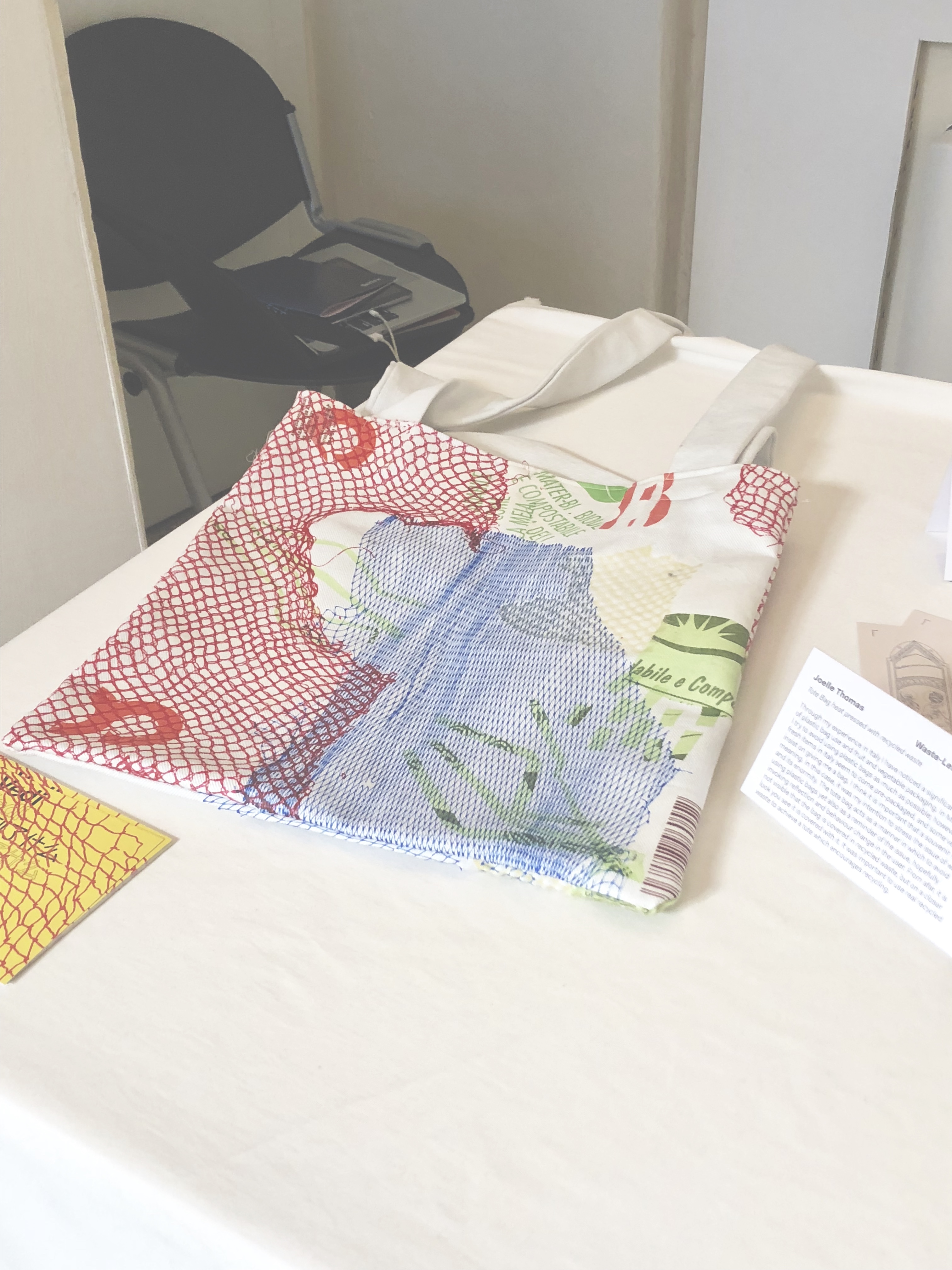
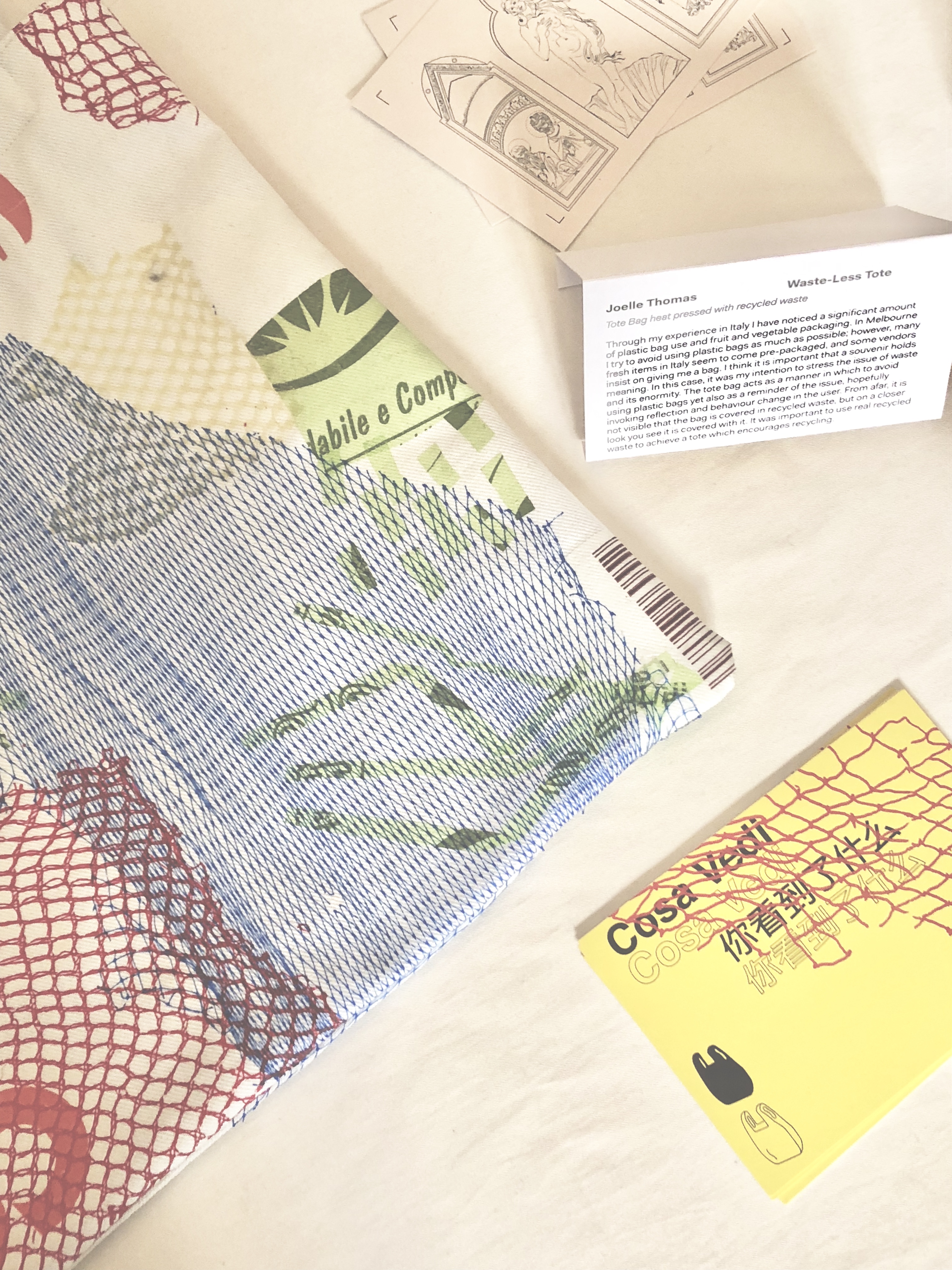
As a result, for my project during that stay, I decided to ensure an ethical process and outcome, from start to finish. The brief was to create an unconventional souvenir, something that went beyond the stereotypical fridge magnet or keyring, and spoke more of Italy and my experiences there. I had noticed the amounts of waste, especially at supermarkets. Packaging, plastic bags, and an excessive amount of receipts. Having had access to a heat press at the Lottozero, I created a tote bag sewn out of second hand material, and utilised the heat press to seal in various plastic waste such as shopping bags and fruit nets. As a result the bag acts as a substitute for single use bags and simultaneously speaking of the excessive amounts of unnecessary waste. I enjoyed creating something both practical and ethical.

Good Taste vs. Good Design discusses the connotations of ‘bling’ and whether the price value of bling can dictate it as ‘good design’ [2]. This makes me re-consider how big prestigious brands such as Louis Vuitton, Armani and Prada are labeled luxurious, yet fail to meet so many ethical standards. The fashion might be on trend, but at what cost? Can their clothing still be perceived as ‘good design’ if it is not made ethically?

I think it important to make a conscious effort, where possible, to shop and design ethically whilst also being weary of the lack of transparency some brands may have. For example the development of Whole Foods leads to seeing “the marketplace as a powerful but morally neutral vessel that can be used to promote good as well as bad” [3]. Its ethical intentions are good, yet it still manipulates buyers into mass consumerisms through idealised advertising.

Although I’m no fashion designer, I have found that through understanding the textile industry, and seeing successful brands such as A.BCH world I am now more determined to reflect this new knowledge into my communication design work. It has made me consider more the type of places I want to work for, and where I will need to draw the line between my values and my work. 

[1] A.BCH World, Date accessed: 6 April 2019, https://abch.world/pages/about-a-bch

[2] Despina Christoforidou, Elin Olander, Anders Warell and Lisbeth Svengren Holm (2012), Good Taste vs. Good Design: A Tug of War in the Light of Bling. United Kingdom.

[3] Adam Mack (2012), The Politics of Good Taste Whole Foods Market and Sensory Design. United Kingdom.

Designing for Social Good

by Alma Santang

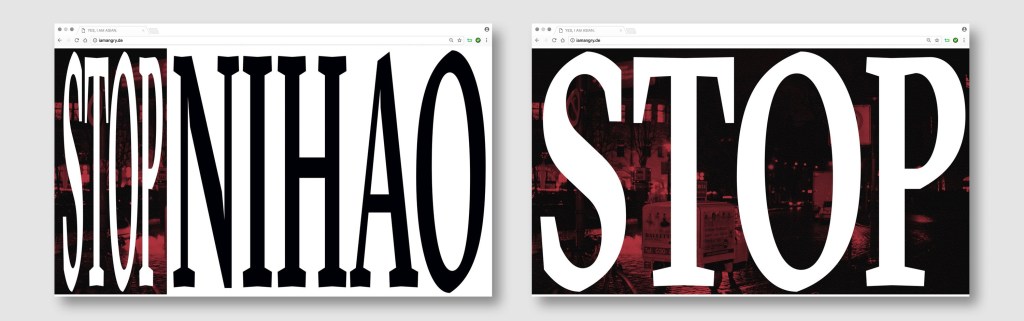
I Am Angry., (2016) by Jihee Lee & So Jin Park.

I am a firm believer that design has the power to create an impact. I am not talking huge, world-changing impact, just enough to spark a little fire in someone’s heart. On Good Taste vs. Good Design, reciting Crozier (1994), it mentioned that design is a lifestyle, something aesthetically pleasing or fashionable. I would argue that this definition does not capture what design is in today’s society. In recent years, the interest in design for social good or social change (later referred to as social design) has been growing within the design professions and the design education community, as mentioned in an essay titled Social Design: From Utopia to the Good Society by Victor Margolin. Design has a bigger purpose than to entertain humankind, designers are now finding ways to contribute to society.

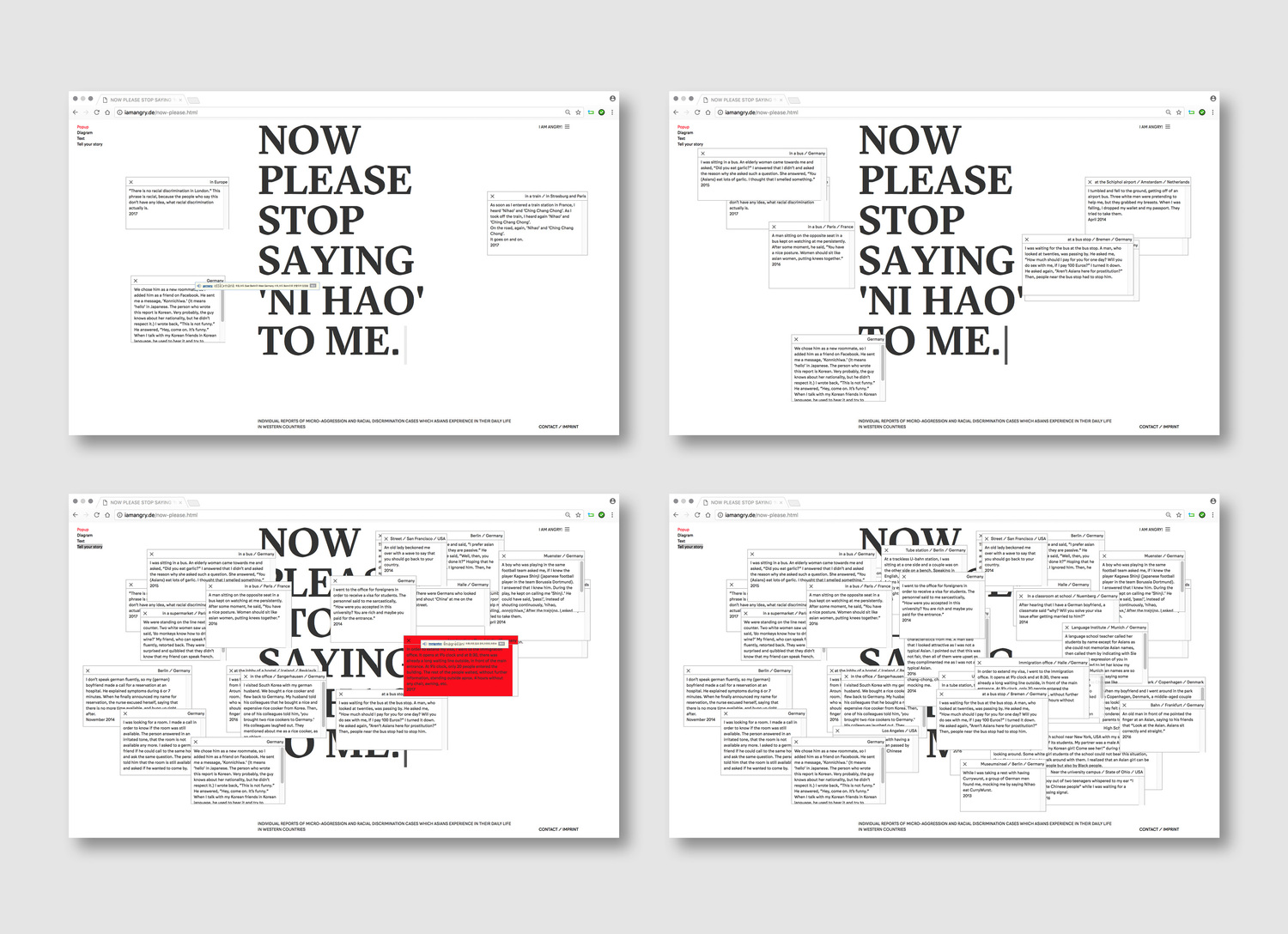
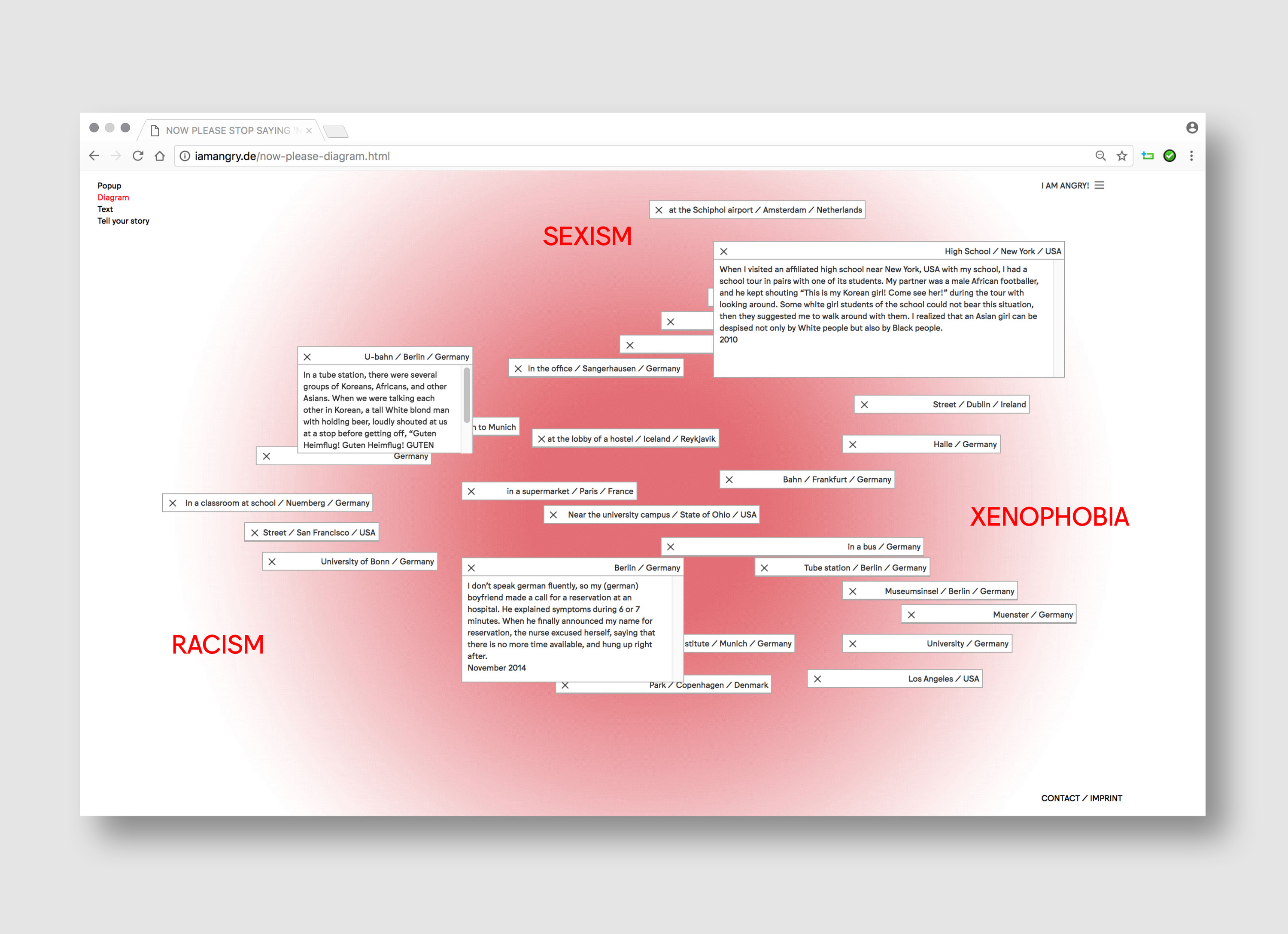
I am looking at Jihee Lee as my source of inspiration. Lee is a Hamburg based graphic designer from Seoul, South Korea. One of her works that made an impact on me is I Am Angry., (2016), which is a collaborative work between her and another designer, So Jin Park. I Am Angry. is a campaign that is based on microaggression, everyday racism, and discrimination against Asians. They came up with the idea for a platform where people with Asian heritage could share their experiences.

I Am Angry., (2016) by Jihee Lee & So Jin Park.

I think this is an excellent example of how designers can help contribute to society based on a specific problem. Lee as a designer had put the unsaid into words, turning an experience into a personal issue, making this personal issue into a common one, and bringing it into the public by inventing a platform where everyone can tell their stories, all while being very successful from a graphical viewpoint. I cannot disregard the fact that as human beings, we are attracted to visuals. Therefore, as designers, we have the capability to talk about and to shine a light on a particular topic; not necessarily to find a solution, but to try and make the world slightly a better place.

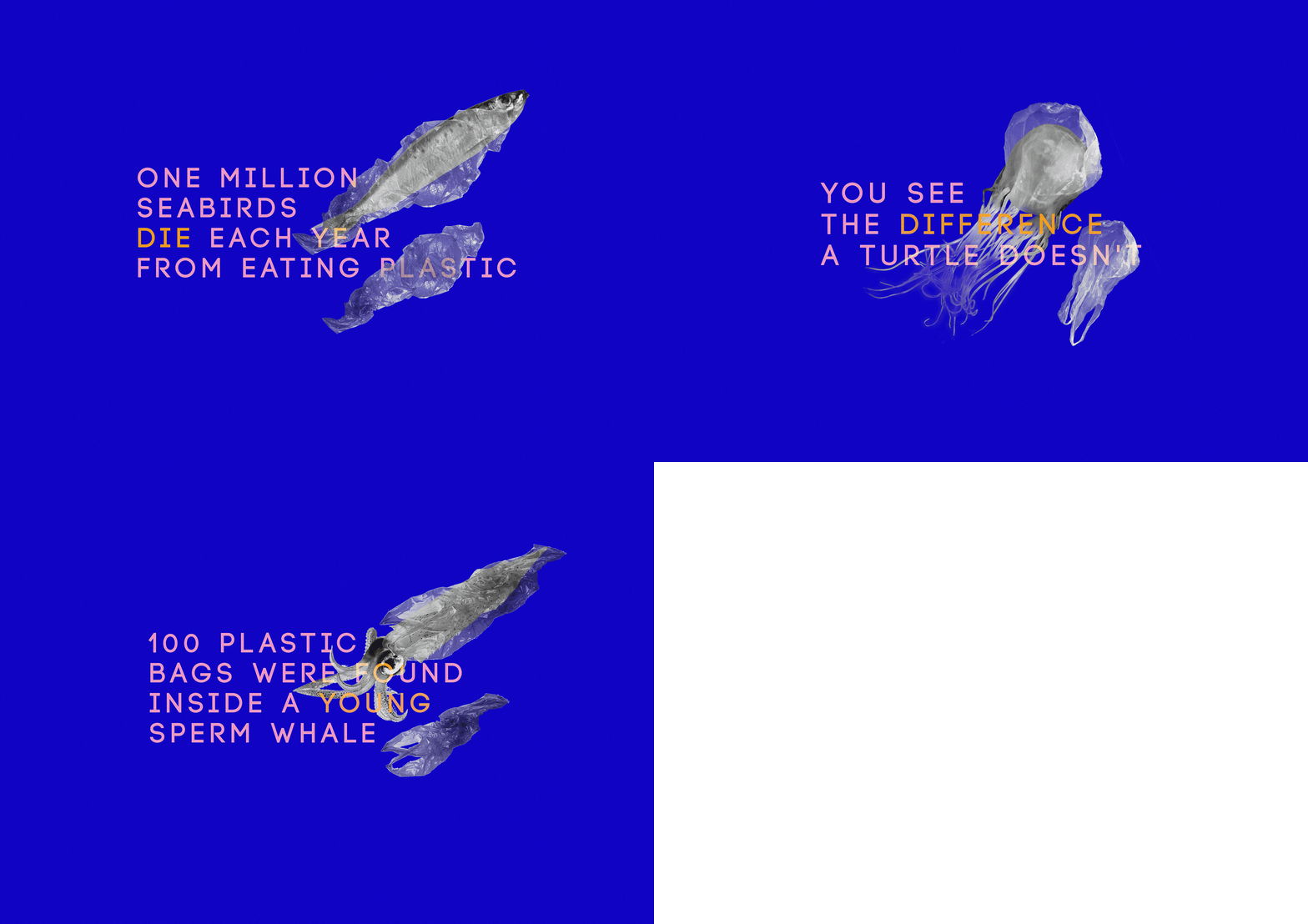
Our Waste, (2018) by Alma Santang

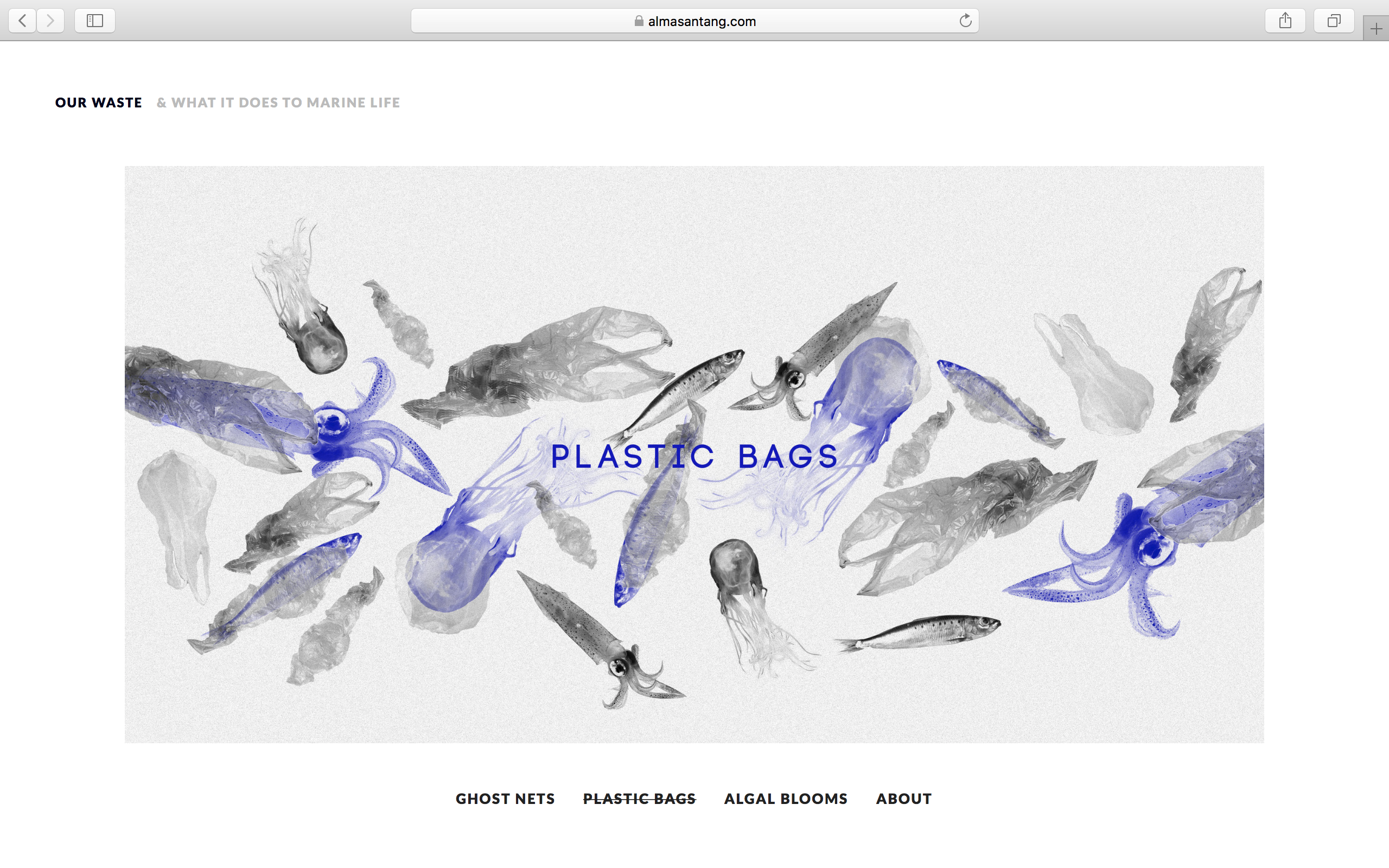
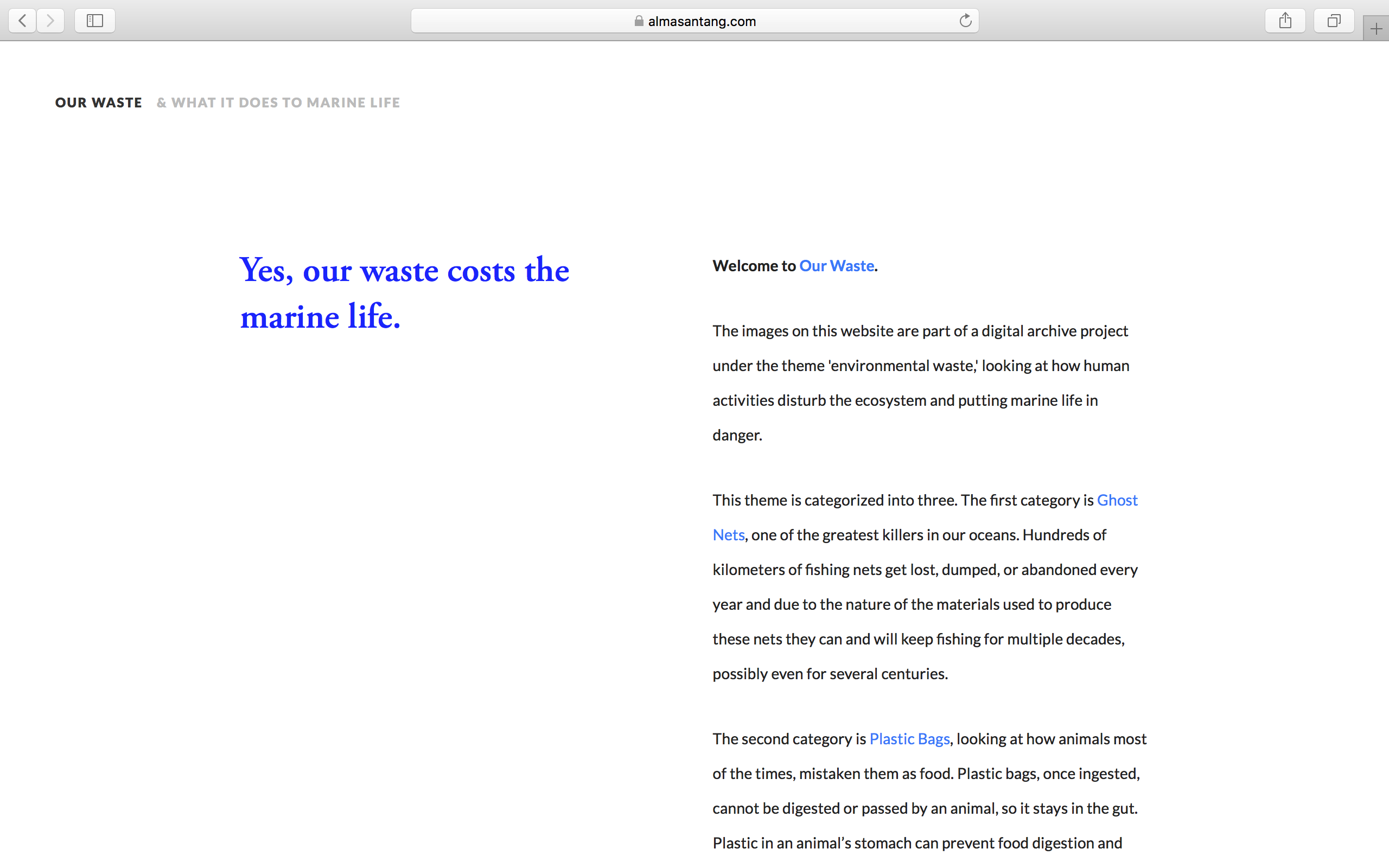
I personally resonate with the idea of social design as I tend to find myself drawn to social or environmental issues, which influenced my design practice. Our Waste is one of the projects I did which was based on an environmental issue. I created a platform which showcases how human activities disturb the ecosystem and putting marine life in danger. While this platform might not create a real-life impact like Lee’s I Am Angry., it might still put an effect on someone’s lifestyle (by trying to be more eco-friendly for instance).

Our Waste, (2018) by Alma Santang

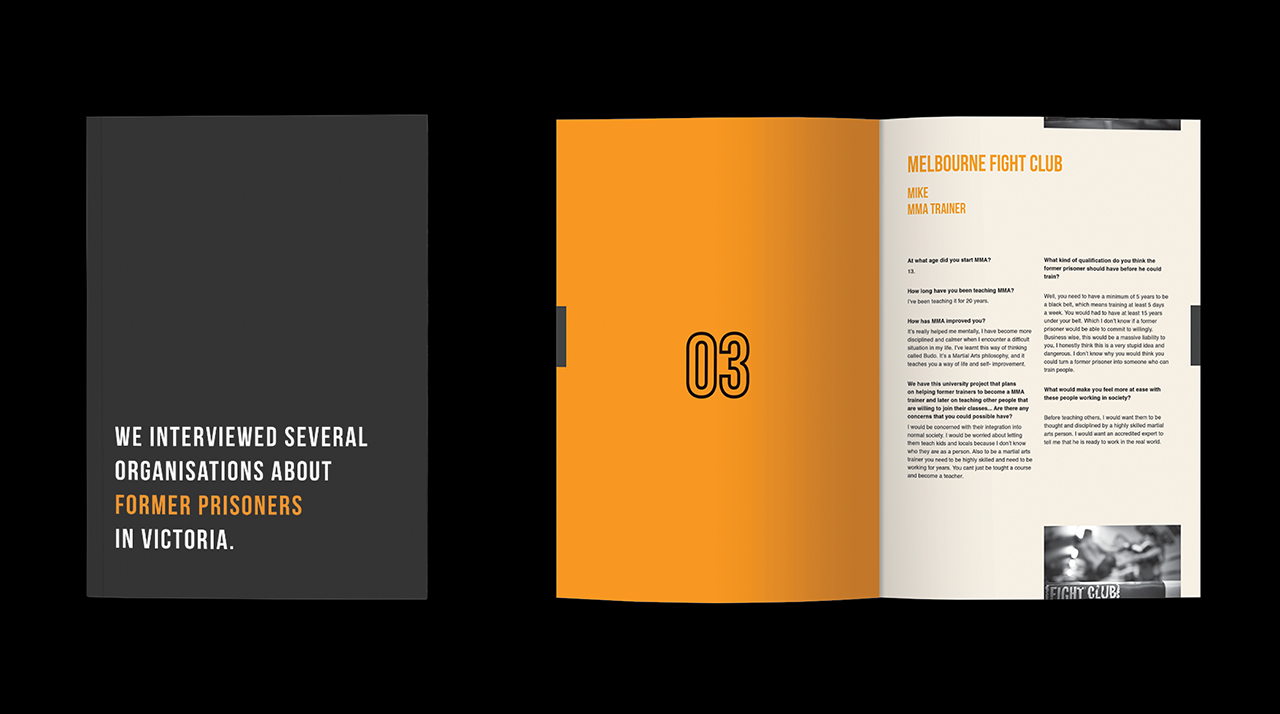
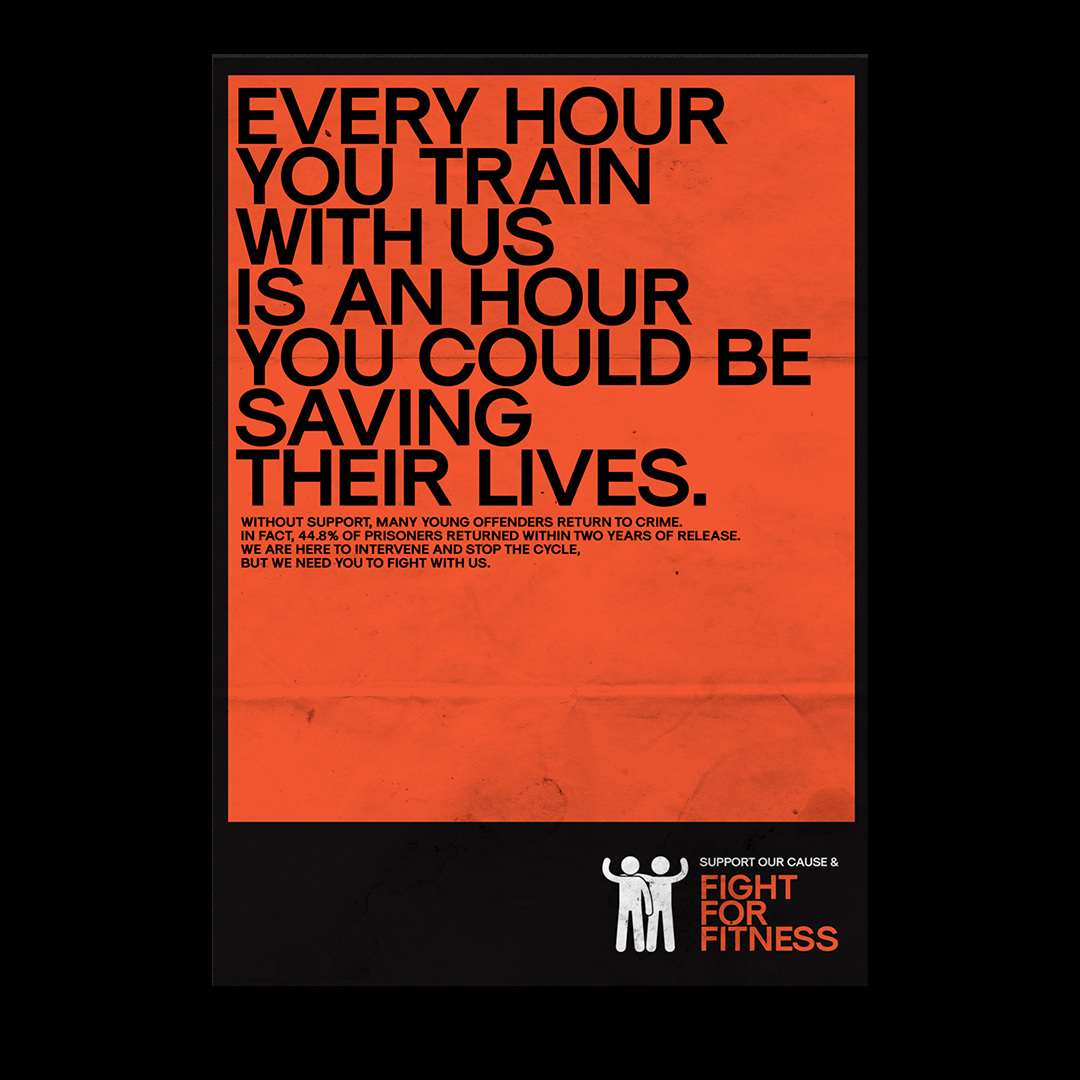
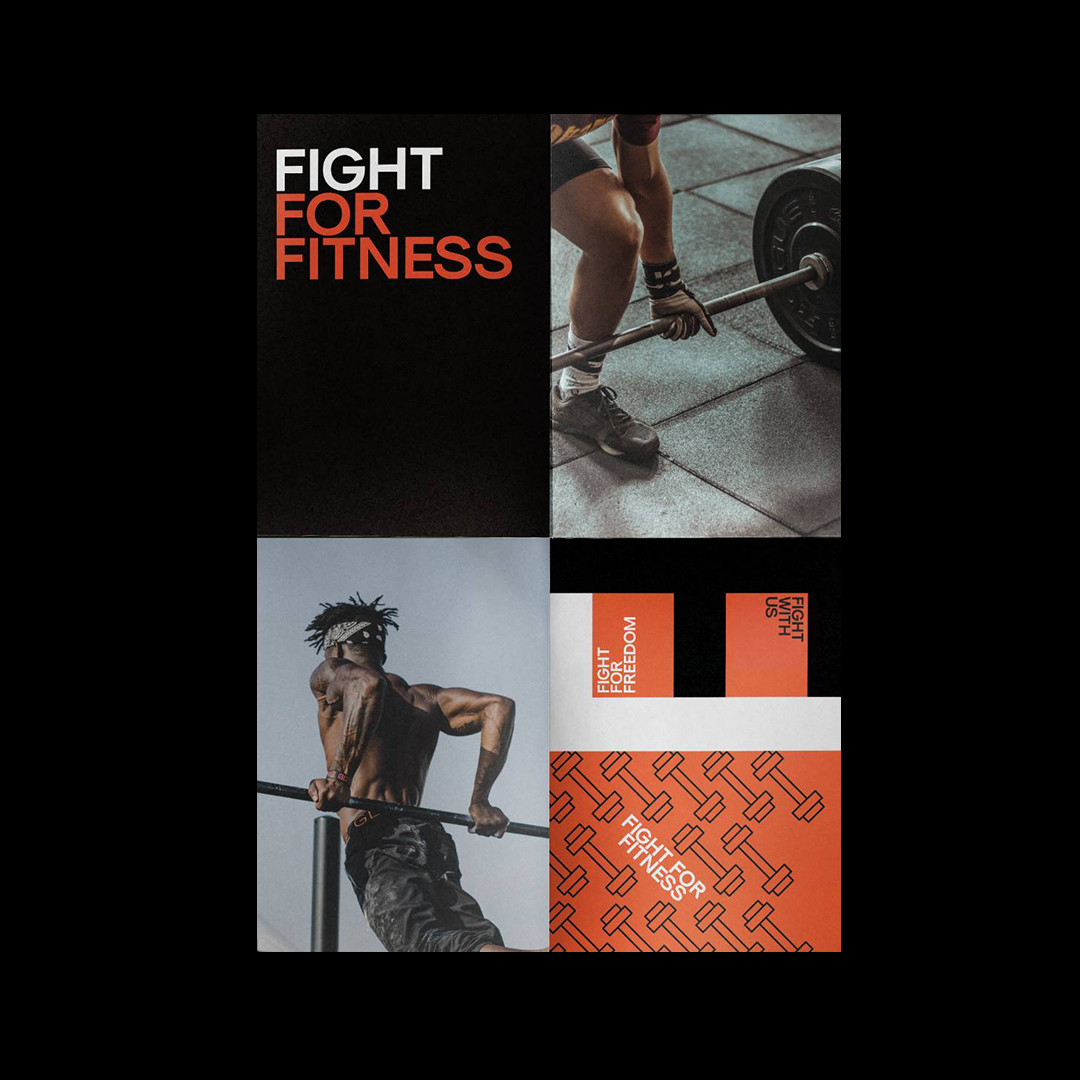
On another project that I did, I conducted research on former prisoners—focusing on their employability rates—by contacting several organisations in the field. The result from this 12-weeks long research was a proposed design solution, Fight for Fitness, a program to help reduce youth incarceration by utilising fitness. It is a personal training service that aims to close the gap between former prisoners and the community, by using fitness to replace segregation with opportunity and hope. The idea is that by completion of the program, the participants would be certified personal trainers. However, this type of non-profit design was not about the design outcome itself; it was about the people we were helping. It was not design for the sake of designing a solution; it was about designing for social good.

Fight for Fitness, (2018) by Alma Santang

Andrew Shea, on Designing for Social Change, said that the process of helping communities often motivates designers to work on similar projects in the future. This ripple effect in the design community could place graphic designers in key positions across industries where they could make a positive impact. The idea of social design and the developing discourse around it forces me to rethink what design is and as a designer, I will continue to help create impact in society in any way I could; with a hope that the water will continue to ripple.

References:

Engholm, Ida. Salamon, Karen Lisa. “Design thinking between rationalism and romanticism: a historical overview of competing visions.” Artifact, Volume 4:1 (2017): E1.1-E1.18.

Christoforidou, Despina. Olander, Elin. Warell, Anders. “Good Taste vs Good Design: A Tug of War in the Light of Bling.” The Design Journal, Volume 15:2 (2012): 185-202.

Shea, Andrew. Designing for Social Change. New York: Princeton Architectural Press, 2012.

Brillembourg, Alfredo. Clarke, Alison. Fuad-Luke, Alastair. Julier, Guy. Margolin, Victor. Verbeek, Peter-Paul. Design for the Good Society: UM 2005-2015. Rotterdam: nai010, 2015.

Margolin, Victor. “Social Design: From Utopia to the Good Society.” In Design for the Good Society: UM 2005-2015, 28-42. Rotterdam: nai010, 2015.

Cultural Ownership: “From Here I Saw What Happened and I Cried” – Carrie Mae Weems

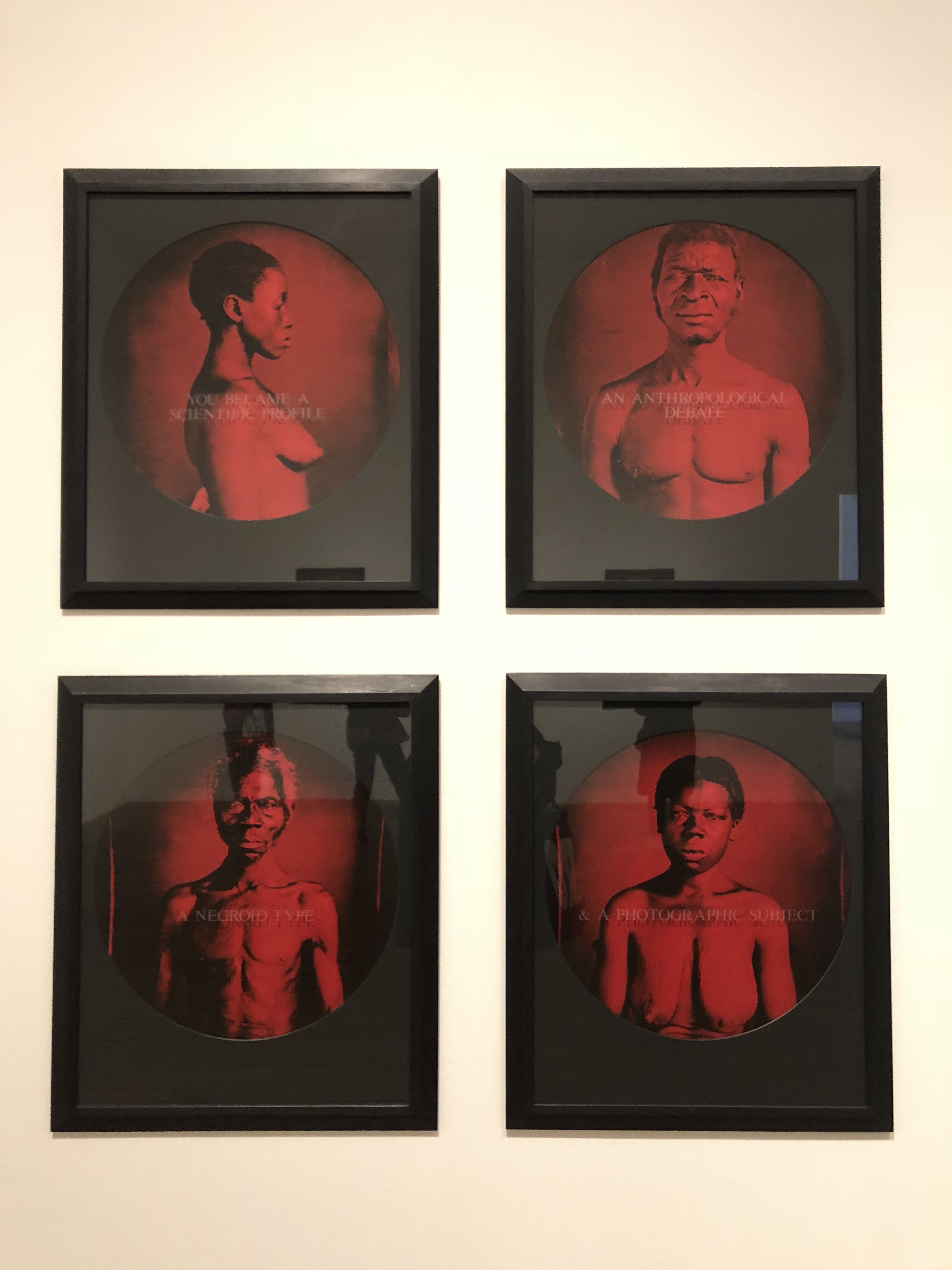
During my time in England in late October of 2018, I attended the Tate Modern, a large well known museum of modern art, where Carrie Mae Weems’ “From Here I Saw What Happened and I Cried” series was displayed. The collection of photography was shot by Louis Agassiz in the 1950s as a means to show the relationship Anglo-America had with their slaves, however Carrie re-photographed the images through a red filter and engraved captions in order to give a voice to the African American people [1].

The red filter in the photos reflected a very raw and serious emotion from the Indigenous subjects. It emanates a shockingly confronting image, especially alongside the bare nude nature of the subjects. Many of the subjects in the images stared back at me, with intensity yet silence, unable to voice their hurt. The engraved captions complimented the images by supplying volume to the spoken silence. In their vulnerable states, we are able to receive communication and story from those who never had such opportunity. It is a retelling of experiences, but that are not to be taken lightly, as they carry suffering, pain and loss.

The Australian Indigenous Design Charter of Communication Design (AIDC:CD) was developed to reinforce need for equality and appropriate cultural representation in design. Through this process it is recommended that Indigenous projects should be Indigenous led, and that Aboriginal and Torres Strait Islanders should be included more in any Australian design process. Through the International Indigenous Design Charter (IIDC) it is clear that such intentions are to be reflected internationally towards all Indigenous cultures.

The nature of Weems’ work reflects the intentions of the AIDC:CD, as it emphasises the urgency of not overlooking the past traumatic experiences of others and that through  appropriate design processes, it is possible to achieve inclusivity, equality, higher ethical standards and respecting cultural ownership.

Juliana Luna Mora’s The Yoga Industry, discusses the glorification of the yoga industry, and how a form of exercise has become a multibillion dollar industry [3]. It is disappointing to see a practice morphed into a ways of consumerism. It is equivalently disappointing when Indigenous art is appropriated into stereotypical objects such as souvenirs and generic prints, so it is pleasing to see Weems make a stance like this and demonstrate the importance of the perspective of the Indigenous people themselves and to not let them be overlooked. 

Weems, being an African American woman herself, clearly draws from her desire to appropriately represent where she came from, and although her work may be confronting and saddening, it does get the message across. I am glad that she passed on these messages. From seeing this, and learning about the AIDC, I am learning more and more about the appropriate representations of Indigenous cultures and feel more confident in how to go about the design process when such cultures are involved.  

[1] Museum of Modern Art, Carrie Mae Weems: From Here I Saw What Happened and I Cried, date accessed: 1 April 2019, https://www.moma.org/learn/moma_learning/carrie-mae-weems-from-here-i-saw-what-happened-and-i-cried-1995/

[2] Indigenous Architecture and Design Victoria, Design Institute of Australia, Deakin University – Institute of Koorie Education, School of Communication and Creative Arts. Australian Indigenous Design Charter – Communication Design.

[3] Juliana Luna Mora, “The yoga industry: a conscious luxury experience in the transformation economy,” (PhD thesis, Monash University, n.d.)